MAA Webinar TOMORROW: In and Beyond the Digital: Career Pathways for Humanists

In and Beyond the Digital: Career Pathways for Humanists

A Medieval Academy of America Webinar

Wednesday, May 13, 2020
12-1 PM EDT
Zoom link: https://us02web.zoom.us/j/85149755063
This webinar is free and open to the public. It will be recorded and posted.

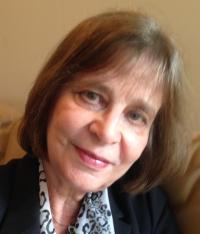
In this moment of global crisis, medievalists and all those who work in the humanities face a period of increased uncertainty about the environments in which they work and operate. The National Endowment for the Humanities is a federal agency dedicated to supporting humanistic endeavors across the nation. In this talk, Hannah Alpert-Abrams from the Office of Digital Humanities will speak about career pathways for humanists in and beyond the digital, and about the role of the humanities in uncertain times. Dr. Alpert-Abrams’ presentation will be followed by a discussion period, moderated by the MAA’s Digital Humanities and Multimedia Committee. Although members of the MAA’s Graduate Student Association are the primary audience for the presentation, all are welcome. Graduate student supervisors and those working with job-seekers are especially encouraged to join.

For more information, please contact Laura Morreale, Chair, Digital Humanities and Multimedia Committee, at lmorreale3@gmail.com.

Posted in Announcements | Leave a comment

Western Michigan University – Publication Prizes

Western Michigan University’s Medieval Institute has announced the winners of the Szarmach, Gründler, and La corónica publication prizes: wmich.edu/medievalcongress/prizes.

Posted in Announcements | Leave a comment

Mise-En-Page in Medieval Manuscripts – Thursday, May 28, 2020 at 2:00 PM (EST)

Mise-En-Page in Medieval Manuscripts

Thursday, May 28, 2020 at 2:00 PM to 2:40 PM (EST)

https://www.memberplanet.com/events/bsa/mise-en-page

Investigating mise-en-page is a key area of manuscript studies. It includes a description
and evaluation of each component of the manuscript’s internal design. Such features
include the pricking and ruling for the writing grid; the arrangement of ‘information
retrieval tools’, like enlarged initials, rubrics, and intertextual space; and, when
contemporary, paratextual features, like running headers and chapter numbers.

What manuscript scholars can learn from mise-en-page can be underestimated,
as we often tend to look principally at script and decoration in and of themselves. The
arrangement of the writing grid, the placement of initials, and the use of particular tools
can indicate place of origin; while certain features, such as running headers, or where
the text is placed relative to the ruled line, can indicate date. Sometimes it is also
possible to ascertain the function of a manuscript from its mise-en-page.

In this webinar, Elaine Treharne, the Roberta Bowman Denning Professor of
Humanities at Stanford University, will introduce participants to the basics of manuscript
mise-en-page, discussing manuscripts from the tenth to the fifteenth centuries. The
webinar will highlight the core things to look out for, and show how attention to the
tiniest of details can happily complement other palaeographical and codicological skills
in our research.

Posted in Announcements | Leave a comment

Upcoming MAA Webinars

We hope you will join us for this week’s MAA Webinars:

In and Beyond the Digital: Career Pathways for Humanists (13 May 2020, 12-1 PM EDT)

The Mother of All Pandemics: The State of Black Death Research in the Era of Covid-19  (15 May 2020, 1 – 3 PM EDT)

Both webinars are open to the public and do not require registration. Click the links above for more information and instructions for attending the webinars.

Posted in Announcements | Leave a comment

Recipient of the 2020 Bonnie Wheeler Fellowship

The Bonnie Wheeler Fellowship Fund is pleased to announce that historian Caroline Dunn (Clemson University) is the recipient of the 2020 Bonnie Wheeler Fellowship for her project Ladies-In-Waiting in Medieval England.

The fellowship (bonniewheelerfund.org) provides recognition and financial assistance to tenured women medievalists throughout the nation who need time and resources to complete a significant work of research that may help them break through the “glass ceiling” and achieve promotion.

A special feature of the Bonnie Wheeler Fellowships is the designation of a mentor for the fellow. Katherine French, J. Frederick Hoffman Professor of History at the University of Michigan, serves as Dunn’s mentor.

Posted in Announcements | Leave a comment

Cara News – University of Michigan
, Medieval and Early Modern Studies

University of MichiganMedieval and Early Modern Studies
1029 Tisch, 435 S. State St., Univ. of Michigan
Ann Arbor, MI 48109-1003
Phone: 734-763-2066  //  Fax: 734-647-4881

Program Associate: Terre Fisher (telf@umich.edu)

Faculty Contact, 2019-2021: Achim Timmermann (achimtim@umich.edu)

Department of History of Art University of Michigan
Ann Arbor MI 48109-1003
Phone: 734-763-6112

For further information about programs, degrees, and affiliated faculty, please visit our website: www.lsa.umich.edu/mems/

Lectures and Events:

In 2019-2020, guest lecturers/presenters included Camillo Gomez-Rivas (University of California, Santa Cruz); Patricia Akhimie (Rutgers University); Erik Inglis (Oberlin College); Kevin van Bladel (Yale University); Elizabeth Hebbard (Indiana University); Charles Hirschkind (University of California, Berkeley); Cernal Kafadar (Harvard University); Charles Sanft (University of Tennessee, Knoxville); Nicolas Fernandez Medina (Penn State University); Valentina Denzel (Michigan State University); Sara McDougall (City University of New York); Julia Rubanivich (The Hebrew University of Jerusalem).

Conferences, special lectures, and ongoing colloquia included SEP: “Islamic Law in Movement: Saints, Merchants and Technocrats: The Diffusion of Malikism in the Islamic West”; “The Qualities of Breeding: Race and Conduct in The Merchant of Venice”; “Reading Storied Ground in Medieval Rome”; “It began with a Picture, or Inventing Stories to Make Sense of Images in Medieval Europe.” OCT: “A Whiff of Nirvana: Why Chinese Buddhists were not Vegans”; “Horror and Enchantment” international symposium; “The Reshaping of Persian after the Seventh-Century Arabian Conquest and Colonization”; “The Lyric Authority of Goats and Women”; “What a 12th Century Muslim says to at 21st Century Christian in Andalusia: Inheriting a complex Religious Identity”; “Calvary in Kitzingen: Dragging Your Cross through Eighteenth-Century Franconia”; “Vampire Trouble is More Serious Than the Mighty Plague: A Comparative Look at the History of Evil and Mischief, Inspired by Evliya Celebi (1611- ca. 1684).” NOV: “The Emperor Has No Voice: Imperial Utterance in Excavated Han Documents”; “Between Life and Death: The Cultural Politics of Early Modern Spanish Medicine, 1770-1808.” DEC: Book Workshop with Prof. Alexander Knysh, U-M Islamic Studies; “Engaging Images: Art History and Anthropology in Conversation.” JAN: “Down and Out and Pregnant in Medieval France.” FEB: “Traditions Entwined: Writing Judeo-Persian Poetry in fourteenth-Century Iran.” Additionally, as usual we offered the Medieval Lunch Series (organized by Forum on Research in Medieval Studies [FoRMS], roughly monthly); FoRMS Reading Group (once per term); and the Premodern Colloquium (monthly). EVENTS IN MARCH AND APRIL CANCELLED DUE TO COVID 19.

Annual budget: $34,000

Posted in CARA | Leave a comment

Medievalism in the Age of COVID-19: A Collegial Plenitude

More than 40 colleagues from around the globe recently shared their current projects, news, reflections, shout outs, and vignettes in Medievalism Studies and Medieval Reception Studies. The compilation is an invitation to colleagues everywhere to stay in touch and continue our work. The plenitude of short entries is available for reading, viewing, and sharing at https://medievallyspeaking.blogspot.com/2020/05/medievalism-in-age-of-covid-19.html

With collegial regards,
Richard Utz, President
International Society for the Study of Medievalism

Posted in Announcements | Leave a comment

MAA News – Upcoming Webinars

A crowded cemetery in London after the Black Death. From James le Palmer’s encyclopedia, Omne bonum (ca. 1360-ca. 1375). [London, British Library, MS Royal 6.E.VI , vol. 1, f. 267vb (detail)]

As the semester winds down and restrictions begin to be lifted in different locales, we hope you are all well and that you are staying safe. Although we cannot greet each other at Kalamazoo or Leeds, we hope you will join us for two upcoming webinars:

In and Beyond the Digital: Career Pathways for Humanists (13 May 2020, 12-1 PM EDT)

The Mother of All Pandemics: The State of Black Death Research in the Era of Covid-19  (15 May 2020, 1 – 3 PM EDT)

Both webinars are open to the public and do not require registration. Click the links above for more information and instructions for attending the webinars.

Posted in MAA Newsletter | Leave a comment

MAA News – Membership Dues Relief

Thanks to an extraordinary anonymous donation, 2020 membership dues will be waived for all members in the following membership categories: Students, Retired, Independent, Unemployed, Part-Time, and K-12 Educator. Members in these categories who have already renewed for 2020 will have their membership automatically extended to 31 Dec. 2021. We are extremely grateful to this generous MAA member for providing dues relief to members who may be suffering from financial precarity during this difficult period.

Please note that it may take several weeks before all of the impacted memberships are updated.

Posted in MAA Newsletter | Leave a comment

MAA News – 2021 MAA Annual Meeting Call for Papers

96th Annual Meeting
Medieval Academy of America 
Indiana University, Bloomington
15-18 April, 2021

Call for Papers

The 96th Annual Meeting of the Medieval Academy of America will take place on the campus of the Indiana University in Bloomington, Indiana. The meeting is jointly hosted by the Medieval Academy of America and the Medieval Studies Institute of the Indiana University.  The conference program will feature a diverse range of sessions highlighting innovative scholarship across the many disciplines contributing to medieval studies.

The Program Committee invites proposals for papers on all topics and in all disciplines and periods of medieval studies. Any member of the Medieval Academy may submit a paper proposal; others may submit proposals as well but must become members in order to present papers at the meeting. Special consideration will be given to individuals whose field would not normally involve membership in the Medieval Academy.

The program committee encourages medievalists of all professional standing to submit abstracts. We are particularly interested in receiving submissions from those working outside of traditional academic positions, including independent scholars , emeritus or adjunct faculty, university administrators, those working in academic-adjacent institutions (libraries, archives, museums, scholarly societies, or cultural research centers), editors and publishers, and other fellow medievalists.

Click here for the Call for Papers and submission instructions: https://maa2021.indiana.edu/

Posted in MAA Newsletter | Leave a comment