MAA News – MAA Publication Subvention Awarded

We are very pleased to announce  that the 2018 Medieval Academy Publication Subvention has been awarded to Rena Lauer (Oregon State University) to support the publication of her forthcoming monograph, Colonial Justice and the Jews of Venetian Crete (Philadelphia: University of Pennsylvania Press).

The Medieval Academy Book Subvention Program provides grants of up to $2,500 to university or other non-profit scholarly presses to support the publication of first books by Medieval Academy members. For more information, click here. For a full list of subvented books, click here.

Posted in MAA Newsletter | Leave a comment

MAA News – Belle Da Costa Greene Fund

The Medieval Academy of America is very pleased to announce the establishment of the Belle Da Costa Greene Fund.

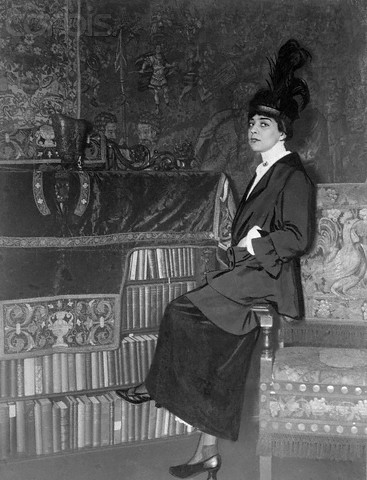
Belle Da Costa Greene (1883-1950) was a prominent art historian and the first manuscript librarian of the Pierpont Morgan collection. She was also the first known person of color and second woman to be elected a Fellow of the Medieval Academy of America (1939). According to the Morgan Library & Museum website, “Greene was barely twenty when Morgan hired her, yet her intelligence, passion, and self-confidence eclipsed her relative inexperience, [and] she managed to help build one of America’s greatest private libraries.” She was, just as importantly, a black woman who had to pass as white in order to gain entrance and acceptance into the racially fraught professional landscape of early twentieth-century New York. Her legacy highlights the professional difficulties faced by medievalists of color, the personal sacrifices they make in order to belong to the field, and their extraordinary contributions to Medieval Studies.

The Belle Da Costa Greene Award of $2,000 will be granted annually to a member of the Medieval Academy of America for research and travel. This is one of several incipient actions designed to make the Medieval Academy of America a more welcoming place for all medievalists.

Click here to donate to the Belle Da Costa Greene Fund.

Posted in MAA Newsletter | Leave a comment

MAA News – Call for CARA News

What’s happening on campus? The Committee on Centers and Regional Associations (CARA) wants to know!

Please send a report about this year’s medieval studies programming in your department, regional association, or center to the Medieval Academy of America. We will publish your update on the Medieval Academy News website (http://TheMedievalAcademyBlog.org), our hub for updates, calls for papers, and announcements. All submissions will be tagged as CARA news and will be retrievable as a group using this URL:

https://www.themedievalacademyblog.org/category/cara/

By distributing that URL widely through social media, the MAA newsletter, email, etc., we will easily be able to promote your program to the Academy’s 3,700 members and more than 11,000 Twitter-followers.

To submit your update, please follow these instructions:

1) Send your report in the body of an email message. You may include as many links as you wish (full URLs please, not embedded). If you have your own newsletter published online, please include that link as well.

2) Do not attach files or images to your email message.

3) Both the subject and the first line of your email should read: CARA News: <name of your institution/program/center/association>. For example, “CARA News: The Medieval Academy of America”

4) Send your update to: info@themedievalacademy.org

For more information about CARA, please see our website: https://medievalacademy.site-ym.com/?page=CARA

Thank you!
Anne Lester, CARA Chair

Posted in MAA Newsletter | Leave a comment

MAA News – Good News From Our Members

Amiri Ayanna (Brown University) and Melissa Reynolds (Rutgers Univ.-New Brunswick) have each been awarded an ACLS/Mellon Dissertation Completion Fellowship.

If you have good news to share, please contact Executive Director Lisa Fagin Davis (LFD@themedievalacademy.org)

Posted in MAA Newsletter | Leave a comment

New Exhibition: “Picturing a Lost Empire: An Italian Lens on Byzantine Art in Anatolia, 1960–2000” opening in Istanbul

New Exhibition: “Picturing a Lost Empire: An Italian Lens on Byzantine Art in Anatolia, 1960–2000” opening in Istanbul

Koç University’s Research Center for Anatolian Civilizations (ANAMED) and Sapienza University of Rome are proud to present the result of their collaborative efforts: ‘Picturing a Lost Empire: An Italian Lens on Byzantine Art in Anatolia, 1960–2000.’ This exhibition focuses on the research on Byzantine art carried out by Italian scholars in the second half of the twentieth century and examines its mutual relationship with the history of Byzantine art historiography in Turkey. Featuring a selection of previously unpublished archival photographs of extraordinary monuments preserved in Anatolia, the exhibition can be visited at ANAMED in Istanbul from 1 June to 31 December 2018.

Between 1966 and 2000, Italian art historians traveled across the historical regions of Turkey in order to explore Byzantine monuments and works of art. These trips resulted in a substantial number of photographs, later collected in the Center for Documentation of Byzantine Art History of Sapienza (CDSAB). Curated by Livia Bevilacqua and Giovanni Gasbarri, the exhibition draws extensively on the photographs and other archival materials of the CDSAB, focusing especially on four historical regions: eastern Turkey; Lycia; Mesopotamia and Tur ‘Abdin; Cilicia and Isauria. Visitors are invited to follow this unique route from Rome to the East, to rediscover the remains of a lost empire and to step into the scenic landscape that surrounds them.

Picturing a Lost Empire: An Italian Lens on Byzantine Art in Anatolia, 1960-2000

1 June–31 December 2018
ANAMED Arched Gallery, Floor -1
Curators: Livia Bevilacqua, Giovanni Gasbarri
ANAMED Gallery Curator: Şeyda Çetin
Exhibition Design: Emrah Çiftçi, BAREK

For further information: anamed.ku.edu.tr/en
#PicturingALostEmpire

Posted in Announcements | Leave a comment

Jobs for Medievalists

Jobs for Medievalists at the Institute for Religion and Critical Inquiry, ACU

We are delighted to announce that the Institute for Religion and Critical Inquiry at ACU is forming a new research group in Medieval and Early Modern Studies.

We now seek senior and junior researchers to join the group. Positions are research only, based in Melbourne, and 5-year fixed term or continuing depending on experience.

There are two application processes:

  1. Professor or Associate Professor (Program Director). We seek a dynamic and collegial scholar with an international reputation in an area of Medieval or Early Modern Studies (MEMS) to lead and mentor staff, produce outstanding research, and help shape and develop the new research program.Remuneration: Professorial salary is AUD176,678 + 17% employer superannuation contribution. The Associate Professor salary scale starts at AUD137,156 + 17% employer superannuation contribution. The position also attracts a research allowance.

For further information and to apply, please see here.

  1. Research Fellows or Senior Research Fellows. Research Fellows and Senior Research Fellows of demonstrated research excellence will work together with the Program Director to develop collaborative research, national and international networks, and produce their own research.Remuneration: Research Fellow salary starts at AUD96,477 + 17% employer superannuation contribution. Senior Research Fellow starts at AUD120,882 + 17% employer superannuation contribution. In addition, the roles attract a research allowance.

    For further information and to apply, please see here.

The Institute is a research organisation with scholars working across Biblical and Early Christian Studies (up to Byzantium), Philosophy, and Religion and Theology. Several scholars in these groups have interests in MEMS, and we hope that members of the new team will be motivated to initiate research projects across the different areas of the Institute.

Posted in Jobs for Medievalists | Leave a comment

CARA News – Duke Center for Medieval & Renaissance Studies

Duke’s Center for Medieval & Renaissance Studies has completed another outstanding year of endeavor!

One of Leonardo Da Vinci’s flying machine models: a human powered glider capable of flapping.

Highlight – “The Stymphalian Project.” One of our undergraduate students, a double major in Mechanical Engineering and Medieval & Renaissance Studies, pursued honors work that stemmed from a senior ME project that was originally conceived as a MEDREN topic—on Da Vinci’s concepts and notes for a human flying machine. The student’s ME senior project team designed and constructed an “ornithopter,” a glider drone based on aerodynamic properties that would allow it to glide and then flap to keep its motion going. The MEDREN major on the team wrote up an honors thesis that discussed the project’s aims, historical context, aerodynamic concepts, and design process. The project team took its inspiration from an initial attempt to replicate Da Vinci’s design concept based on his observations of nature (large sea birds as gliders and bats’ flapping wings), but they quickly discovered that Da Vinci had no concepts of aerodynamics with which to avail himself, and so they shifted to design a unique glider (like Da Vinci envisioned) using modern aerodynamic engineering concepts, which could make use of flapping motion to extend the glider’s flight and keep it aloft. This was a highly complex design project that, In the end, failed to function as a flapping machine. No one in fact has ever successfully designed such a glider! But the intellectual process and bold attempt produced insights into Da Vinci’s imaginary conception, the complexity of natural bird wings, and the limitations of mechanical engineering.

To read about what went on in the 2017-18 academic year, see our recent online newsletters (with plenty of images):

https://mailchi.mp/duke/fall-2017-newsletter (fall 2017)

https://mailchi.mp/duke/fdwzna2lp4 (winter/spring 2018)

Posted in CARA | Leave a comment

International Workshop – Between Women: Female Networks, Kinships and Power

When: 31 May – 1 June 2018

Where: SFB 1167, Poppelsdorfer Allee 24, University of Bonn

Organized by Emma Bérat and Irina Dumitrescu, as part of the SFB 1167 “Macht and Herrschaft: Premodern Configurations in a Transcultural Perspective”, University of Bonn

Forged by blood, friendship, religious fellowship and political affinity, women’s relationships played essential roles in constructing women’s power in the pre-modern world. Yet we still know little about relationships between women, and the networks of political and religious influence such relationships created. This international workshop brings together scholars from the fields of art history, history, literature and religion to explore women’s biological, religious, secular, imaginary and historical kinships. We will consider how women transmitted their power to other women through time and across space, and how women’s networks were imagined, constructed and performed. Presentations focus on sources from Britain, Central Asia, Ethiopia, France, Germany, Iberia, Iran, spanning the sixth to seventeenth centuries.

All welcome. Please contact Emma Bérat, eoloughl@uni-bonn.de, by 21 May to register.

Image: London, British Library, Royal 14 B IV, f. 6r. Royal Genealogical Roll, England c.1300-1340.

Posted in Workshops | Leave a comment

CARA News –

University of MichiganMedieval and Early Modern Studies

1029 Tisch, 435 S. State St., Univ. of Michigan
Ann Arbor, MI 48109-1003
Phone: 734-763-2066  //  Fax: 734-647-4881

Program Associate: Terre Fisher (telf@umich.edu)

Faculty Contact, 2017-2019: Christian de Pee (cdepee@umich.edu) Department of History,
University of Michigan
Ann Arbor MI 48109-1003
Phone: 734-763-6968

For further information about programs, degrees, and affiliated faculty, please visit our website: www.lsa.umich.edu/mems/

Lectures and Events:

In 2017-2018, guest lecturers included Jean Campbell (Emory University), Geraldine Heng (University of Texas at Austin), Michael Flier (Harvard University), Massimo Montanari (University of Bologna), Marina Brownlee (Princeton University), Carla Della Gatta (University of Southern California); Kathryn Schwarz (Vanderbilt); Christa Patton (Queens College), Lyndal Roper (University of Oxford).

Conferences, special lectures, and ongoing colloquia included “Non-Human Materials before Modernity” (Oct); “Exhibiting the Reformation” (Sep) introductory lecture to the exhibit “ Reforming the Word: Martin Luther in Context” (Oct); Pisanello, Adrian Stokes, and the Image of the Threshold” (Oct); “Reading the World in Deep Time” (Oct); “Rus’ in Celluloid: Takes on Andrei Tarkovsky’s Andrei Rublev” (Oct); “ AMfecanerica, or AmericanMfecane, 1650-1850: What Can Historians of Eastern Native America Learn from Southern Africanists?” (Oct);  “Eating Italy: A History of Italian Food and Italian Identity” (Nov); “Exploring Resistance through Medieval and Early Modern Culture” Early Modern Colloquium (Mar); “ Baroque Harp Master Class and Early Music Lecture (Mar); “Portraits of Martin Luther, From Lucas Cranach to Today” (Apr); Komonjo Workshop on the History of Medieval Japanese Commoners (July-Aug); Medieval Lunch Series (run by Forum on Research in Medieval Studies; roughly monthly); FoRMS Reading Group (once per term); and the Premodern Colloquium (monthly).

Posted in CARA | Leave a comment

Call for Sessions: Mary Jaharis Center Sponsored Panel, 5th Forum Medieval Art

The Mary Jaharis Center for Byzantine Art and Culture seeks proposals for a Mary Jaharis Center sponsored session at the 5th Forum Medieval Art, Bern, September 18–21, 2019. The biannual colloquium is organized by the Deutsche Verein für Kunstwissenschaft e.V.

The theme for the 5th Forum Medieval Art is Peaks, Ponti & Passages. Bern—looking out to peaks Eiger, Mönch, and Jungfrau, situated at the border to the Romandy, and having a long-standing tradition in bridge-building—embodies certain notions of translations, entanglements, and interactions. The conference will highlight such themes, focusing on forms and means of exchange, infrastructure, political and religious relationships, and the concrete reflections of these connections through objects. Methodological challenges will also be paramount, such as questioning how to write a history of encounters between artists, artworks, materials, and traditions.

Many mountain regions, and especially the Alps, have a long history as sites of transfers and interferences. Today, mountains and glaciers are the locations revealing most rapidly the consequences of climate change. They raise our awareness of similar changes in the past. Mountain regions were and are traversed by several ecological networks, connecting cities, regions, and countries, as well as different cultures, languages, and artistic traditions. Mountains, with their difficult passages and bridges, structured the ways through which materials and people were in touch. Bridges were strategic targets in conduct of war, evidence of applied knowledge, expression of civic representation, and custom points—both blockades and gates to the world.

Peaks in the historiography of Art History mark moments of radical change within artistic developments, the pinnacles of artistic careers, and high moments in the encounters of different traditions. Since the unfinished project of Walter Benjamin, who obtained his PhD in Bern, the passage has also been introduced as a figure of thought in historiography. The passage describes historical layers as spatial constellations, in which works of art, everyday culture, religious ideas, definitions of periods and theories of history encounter.

We invite session proposals that fit within the Peaks, Ponti & Passages theme and are relevant to Byzantine studies. Additional information about the Forum Medieval Art is available at mittelalterkongress.de.

Session proposals must be submitted through the Mary Jaharis Center website (https://maryjahariscenter.org/sponsored-sessions/5th-forum-medieval-art). The deadline for submission is May 30, 2018. Proposals should include:

**Title
**Session abstract (500 words)
**Proposed list of session participants (presenters and session chair)
**CV

Applicants will be notified of the status of their proposal by June 1, 2018. The organizer of the selected session is responsible for submitting the session proposal to the Forum by June 8, 2018.

If the proposed session is approved, the Mary Jaharis Center will reimburse will reimburse a maximum of 5 session participants (presenters and session chair) up to $300 maximum for residents of Switzerland, up to $600 maximum for EU residents, and up to $1200 maximum for those coming from outside Europe. In order to receive funding, session organizers and co-organizers must participate in the panel as either a participant or the session chair. Funding is through reimbursement only; advance funding cannot be provided. Eligible expenses include conference registration, transportation, and food and lodging. Receipts are required for reimbursement.

Please contact Brandie Ratliff (mjcbac@hchc.edu), Director, Mary Jaharis Center for Byzantine Art and Culture with any questions

Posted in Announcements | Leave a comment