MAA News – Upcoming Deadlines

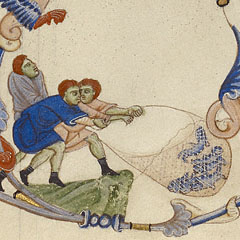
Initial N: from James I of Aragon Overseeing a Court of Law: Unknown Spanish, about 1290 - 1310. MS. LUDWIG XIV 6, FOL. 72V

Initial N: from James I of Aragon Overseeing a Court of Law: Unknown Spanish, about 1290 – 1310. MS. LUDWIG XIV 6, FOL. 72V

MAA Dissertation Grants (deadline 15 February):
The nine annual Medieval Academy Dissertation Grants support advanced graduate students who are writing Ph.D. dissertations on medieval topics. The $2,000 grants help defray research expenses. Click here for more information.

Schallek Awards (deadline 15 February):
The five annual Schallek awards support graduate students conducting doctoral research in any relevant discipline dealing with late-medieval Britain (ca. 1350-1500). The $2,000 awards help defray research expenses. Click here for more information.

MAA/GSC Grant for Innovation in Community-Building and Professionalization (deadline 15 February):
The inaugural MAA/GSC Grant will be awarded to an individual or graduate student group from one or more universities. The purpose of this grant is to stimulate new and innovative efforts that support pre-professionalization, encourage communication and collaboration across diverse groups of graduate students, and build communities amongst graduate student medievalists. Click here for more information.

Olivia Remie Constable Award (deadline 15 February)
Two Olivia Remie Constable Awards of $1,500 each will be granted to emerging junior faculty, adjunct or unaffiliated scholars (broadly understood: post-doctoral, pre-tenure) for research and travel. Click here for more information.

Applicants for these and other MAA programs must be members in good standing of the Medieval Academy. Please contact the Executive Director for more information about these and other MAA programs.

Posted in MAA Newsletter | Leave a comment

MAA News – Graduate Student Committee Self-Nominations

Fishermen. Abbey Bible. J. Paul Getty Museum, MS 107. Italian, probably Bologna, about 1250 - 1262. Tempera and gold leaf on parchment.

Fishermen. Abbey Bible. J. Paul Getty Museum, MS 107. Italian, probably Bologna, about 1250 – 1262. Tempera and gold leaf on parchment.

The GSC was established in 2008 “to act on behalf of the graduate student members of the Academy in voicing their concerns about medieval studies and promoting their participation both within the Academy and the broader academic community.” Now is your chance to get involved in the GSC leadership by applying to serve on the GSC Committee. Click here for more information about the self-nomination process (deadline 31 January).

Posted in MAA Newsletter | Leave a comment

MAA News – NEH Public Scholar Program

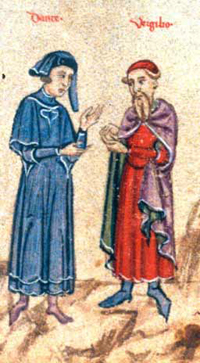
"Dante and Virgil in Conversation," from Oxford: Bodleian Library, MS. Holkham Misc. 48, p. 67. © Bodleian Library, University of Oxford.

“Dante and Virgil in Conversation,” from Oxford: Bodleian Library, MS. Holkham Misc. 48, p. 67. © Bodleian Library, University of Oxford.

The National Endowment for the Humanities (NEH) has announced a new grant opportunity, the Public Scholar Program, intended to support well-researched books in the humanities that have been conceived and written to reach a broad readership. Books supported through the Public Scholar Program might present a narrative history, tell the stories of important individuals, analyze significant texts, provide a synthesis of ideas, revive interest in a neglected subject, or examine the latest thinking on a topic. Most importantly, they should present significant humanities topics in a way that is accessible to general readers.

The Public Scholar Program is open to both independent scholars and individuals affiliated with scholarly institutions. It offers a stipend of $4,200 per month for a period of six to twelve months. The maximum stipend is $50,400 for a twelve-month period. Applicants must have previously published a book or monograph with a university or commercial press, or articles and essays that reach a wide readership.

Application guidelines and a list of F.A.Q.’s for the Public Scholar Program are available on the NEH’s website at http://www.neh.gov/grants/research/public-scholar-program. The application deadline for the first cycle is March 3, 2015. Recipients may begin the term of the grant as early as October 1, 2015 or as late as September 1, 2016.

The official press release for the new program is available here:
http://www.neh.gov/news/press-release/2014-12-01.

Posted in MAA Newsletter | Leave a comment

MAA News – Holiday Office Closures

The Medieval Academy office will be closed Dec. 24 – Jan. 2. All of us in the Medieval Academy office wish you a very happy holiday season. We look forward to working with you in 2015.

Posted in MAA Newsletter | Leave a comment

Call for Papers – Travel and Translation in the Middle Ages

A Call for Papers:
Travel and Translation in the Middle Ages
March 28, 2015 at Yale University

Abstracts from graduate students are now being accepted for the 32nd Annual New England Medieval Studies Consortium Graduate Student Conference, the theme of which will be “Travel and Translation in the Middle Ages.” In light of recent endeavors such as the Global Chaucers project, the growing interest in the multilingual cultures of England, and the upcoming anniversaries of two great medieval councils, Fourth Lateran (1215) and Constance (1415), “travel” and “translation” are immediately relevant to many branches of medieval studies.

The organizers hope that this capacious topic will elicit proposals for papers from all disciplines of Medieval Studies.  We expect to have three to five concurrent panels of three papers each, and we welcome panelists to consider topics as varied as translation theory and comparative studies, manuscript transmission and paleography, and musicology and liturgical studies.  We also welcome papers dealing with any aspect of pilgrimage, migration, trade, relics and holy objects, crusade, religious warfare, and maritime culture.  Further, we look forward to receiving proposals that take more theoretical approaches to ideas of travel and translation in the medieval period.

The conference will feature a plenary lecture by Professor Cecilia Gaposchkin (Dartmouth), as well as a prize for best graduate student paper.

Papers are to be no more than twenty minutes in length and read in English.  All proposals must be submitted by graduate students.  Abstracts of no more than 250 words should be sent by e-mail to newenglandmedievalstudies.2015@gmail.com.

The deadline for submissions is January 5, 2015.  Graduate students whose abstracts are selected for the conference will have the opportunity to submit their paper in its entirety for consideration for the Alison Goddard Elliott Award.


Posted in Call for Papers | Leave a comment

Travel Grants Available at the David M. Rubenstein Rare Book & Manuscript Library

The David M. Rubenstein Rare Book & Manuscript Library is accepting applications for its 2014-2015 travel grants.

TheSallie Bingham Center for Women’s History and Culture, theJohn Hope Franklin Research Center for African and African American History and Culture,  theJohn W. Hartman Center for Sales, Advertising & Marketing History, and the History of Medicine Collections will award up to $1,000 per recipient to fund travel and other expenses related to visiting the Rubenstein Library. The Rubenstein also offers the Eleanore and Harold Jantz Fellowship, a $1500 award for researchers whose work would benefit from use of the Jantz Collections.

The grants are open to undergraduate and graduate students, faculty, independent scholars, artists, and activists who live more than 100 miles from Durham, NC and whose research projects would benefit from access to collections held by one of the centers.

Please note that the Rubenstein Library will be closed to the public from July 1st, 2015 through August 23rd, 2015, while we relocate to our newly renovated space. These dates are subject to change.

More details—and the grant application—may be found on Rubenstein grants website. Recipients will be announced in April 2015.

Posted in Announcements | Leave a comment

Jobs for Medievalists

Assistant Professor of English

Assistant professor, Medieval literature and language, with preferred background in digital humanities. Anticipated vacancy at Rhode Island College beginning fall 2015, pending budgetary approval, full-time, tenure track position. Required:  Ph.D. in English or related field with specialization in Medieval literature and language, with work and/or substantial preparation in digital humanities. The successful candidate would be expected to teach period courses, along with History of the Language, Modern Grammar, and our pre-1800 British survey; a demonstrated familiarity with and work in digital humanities relative to these areas is strongly preferred. An ongoing commitment to scholarly research, departmental and college service, and student advising is expected. Application deadline: January 23, 2015. IMPORTANT: for full job description, and application procedures, see our web site at https://employment.ric.edu. Candidates must apply on-line, using Rhode Island College’s PeopleAdmin Applicant Tracking system.  www.ric.edu

Posted in Jobs for Medievalists | Leave a comment

Call for Papers – The Many Forms of the Decameron: Interpretations, Translations and Adaptations

CALL FOR PAPERS AND ARTWORKS

Italian Graduate Conference

THE MANY FORMS OF THE DECAMERON: INTERPRETATIONS, TRANSLATIONS AND ADAPTATIONS

24 / 25 / 26 APRIL 2015

Keynote speakers:
Victoria Kirkham (University of Pennsylvania)
Patrick Rumble (University of Wisconsin – Madison)
Eugenio Refini (Johns Hopkins University)

The conference seeks to explore Boccaccio’s Decameron, its translatability into different media, languages, and historical contexts. The discussion will not be limited to the Decameron and its adaptability, but will also explore the broader concept of translation as well as the relationship between media and authorship, bringing together a network of scholars from various disciplines.

The event will feature standard graduate conference panels and keynote lectures from experts of different media, but will also incorporate film screenings, theatrical performances, and other events. To that end, students and artists with original adaptations of the Decameron (films, paintings, novel, short stories, sculptures, music, comics, scripts, …) are also invited to submit their works that will be included in different ways in the conference.

Examples of topics that will be covered include, but are not limited to, the following:

– Translating the Decameron
– Boccaccio in different literary genres and literature (i.e. Chaucer, Shakespeare)
– The Decameron and film: high cinema and sexploitation (from Righelli, to Pasolini, to Lealand).
– The Decameron and theater
– The Decameron and music
– The Decameron and the visual arts
– Translation vs. adaptation
– Re-interpretations vs. misreadings
– The short novel and its adaptability
– The Decameron’s reception and fortune across Europe, USA, and Worldwide
– The Decameron as adaptation: sources, intertextuality and citations
– Remaking the Decameron: medievalism and neomedievalism
– Other adaptations: censorship, editing and the textual tradition of the Decameron

THE DEADLINE FOR SUBMISSIONS IS FEBRUARY 15TH, 2015

Please submit an abstract of no more than 200 words together with your information (name, title, affiliation, e-mail and telephone number) and audiovisual requests to jhu.boccaccio@gmail.com for a panel presentation.Presentations should be limited to 15-20 minutes and given in Italian or English.

To submit any other creative work, contact us at jhu.boccaccio@gmail.com to arrange a suitable exposition of your work.

CONTACTS:
The Italian Graduate Conference Committee – Johns Hopkins University
Email: jhu.boccaccio@gmail.com
Website: http://grll.jhu.edu/2014/11/19/italian-graduate-conference-call-for-papers/

Posted in Call for Papers | Leave a comment

Call for Papers – Cartularies in Medieval Europe: Texts and Contexts

Cartularies in Medieval Europe: Texts and Contexts
International Conference
Lisbon, Torre do Tombo – Faculdade de Letras da Universidade de Lisboa
11th-12th June 2015

Over the last two decades, cartularies have been seen as an object of study in themselves, not only for the wealth of information they provide or for the problems of authenticity, but as organized ‘deposits’ of memory and of control of property. This meeting aims at creating an opportunity for all those involved in Medieval cartularies to discuss concrete experiences of studying and editing European cartularies from the 12th-13th centuries. Without dismissing a global overview of this phenomenon, we aim at approaching the topic through specific case studies and by taking into account the different ways in which medieval institutions built their own memory. Therefore, it is also essential to pay attention to non-diplomatic texts copied in or written in close relation to the cartularies (e.g. hagiography or historiography), and to the codices in terms of paleography, codicology and decoration.

Researchers from different areas of knowledge are invited to present papers on topics focusing on the following themes:

  1. Memory, archives and cartularies: models and aims in the organization of corpora.
  2. From the archive to the codex: the selection, organization and use / re-use of documents;
  3. Cartularies and non-diplomatic texts: hagiography, historiography, annals.
  4. Visual Culture: decorations, seals and signa.
  5. Analyzing and editing: experiences, projects, databases.

The conference will be organized in plenary sessions with keynote speakers and parallel sessions with papers.

  • Working languages: Portuguese, Spanish, English, French and Italian.
  • Papers presentations: 20 minutes.

The conference will be organized in plenary sessions with keynote speakers and parallel sessions with papers.

  • Working languages: Portuguese, Spanish, English, French and Italian.
  • Papers presentations: 20 minutes

We welcome:

  • individual proposals for a 20-minute paper (ca. 500 words);
  • joint proposals for thematic panels consisting of 3 papers (ca. 350 words per paper).

Please include the following information with your proposal:

  • the full title of your paper / of your panel and respective papers;
  • an abstract (ca. 500 words per paper), eventually with a short list of

bibliographical references;

  • a short bio blurb (ca. 200 words).

Please note that:

  • All paper proposals will be peer-reviewed;
  • Deadline for proposals: February 28, 2015;
  • Proposals should be submitted by e-mail in MS Word or PDF format to medievalcartularies@letras.ulisboa.pt, with the subject header: Abstract proposal.

Registration

  • Registration for paper presentation speakers: 80 Euros (two lunches included).
  • Registration without paper presentation (entitled to conference materials and certificate of attendance): 15 Euros.
  • Student fee: 10 Euros.
  • All speakers are responsible for their own travel arrangements and accommodation; relevant information about hotels will be provided later.
  • Accepted speakers should pay the registration fee after notification of acceptance. Deadlines and methods of payment will be given later.
Posted in Call for Papers | Leave a comment

Call for Papers – Saint Louis Conference on Manuscript Studies

The Vatican Film Library invites paper submissions or session proposals for the 42nd Saint Louis Conference on Manuscript Studies, to be held at Saint Louis University in St. Louis, MO, 16–17 October 2015. The conference is organized annually by the Vatican Film Library and its journal, Manuscripta, and is the longest running conference in North America devoted exclusively to medieval and Renaissance manuscript studies. The two-day program each year offers sessions on a variety of themes relating to medieval book production, distribution, reception, and transmission in such areas as paleography, codicology, illumination, textual transmission, library history, cataloguing, and more.

Guest Speaker for 2015:

Stella Panayotova, Keeper, Department of Manuscripts and Printed Books, Fitzwilliam Museum, Cambridge

Papers or session proposals should address the material aspects of late antique, medieval, or Renaissance manuscripts. Submissions may address an original topic or a session theme already proposed. Papers are 20 minutes in length and a full session normally consists of three papers. If you are interested in organizing one of these sessions, or wish to suggest a paper or session of your own, please contact us as soon as possible.

PROPOSED SESSIONS

Submissions are welcome for any of the following sessions already proposed.

  • Old Book, New Book: Refurbished Manuscripts in the Middle Ages

Even when they were tailored to the taste of specific patrons, it was understood that manuscripts would outlast their owners: they were future family heirlooms, to be circulated in networks of gift exchange, inheritance, and resale. In what ways did the patrons and producers of manuscripts anticipate the inevitable change of hands? Under what circumstances did new owners expand or alter legacy manuscripts, and how did they respond to the taste of previous owners? This session calls for papers that examine the social, political, and intellectual import of secondhand medieval books.

  • Gravity vs. Levity

“Man is a rational, moral animal, capable of laughter.” (Notker Labeo, d. 1022).

While this may be considered a truism by some, the question of the role played by humor in medieval manuscripts remains somewhat indistinct. Is a joke in a manuscript ever just a joke? Subversive, witty, parodic, didactic, and broadly entertaining imagery is the focus of this session.  What role did humor play in society and how is that displayed in a concrete fashion within the pages of books?

  • A Good Read: The Production of Vernacular Texts in Thirteenth- and Fourteenth-Century Italy and their Public

While there is a great deal of documentary evidence for the production and readership of vernacular texts in Italy in the fifteenth century, we know relatively little about their thirteenth- and fourteenth-century patronage and the process of their production. Nonetheless, a considerable number of prose and verse manuscripts written in French, Franco-Italian, or Franco-Venetian survives, often resplendently illustrated and obviously produced for wealthy patrons. See the Fordham University website created to explore this topic: http://www.fordham.edu/academics/programs_at_fordham_/medieval_studies/french_of_italy/index.asp

This panel seeks papers that consider the thirteenth- and fourteenth-century production and circulation of these manuscripts in Italy, discuss their patrons and readers; and examine the organization of their production by individuals or workshops based in urban, court, or private milieus. At this time university textbooks were being produced under university supervision for quality control; what evidence can we find for the regulation of quality in this manuscript genre?

Please send a title and an abstract of not more than 200 words to Susan L’Engle (lengles@slu.edu) by 1 March 2015. Those whose proposals are accepted are reminded that registration fees and travel and accommodation expenses for the conference are the responsibility of speakers and/or their institutions.

Posted in Call for Papers | Leave a comment