Postdocs: Hebrew and Arabic Literature

The Maison des Science de l’Homme Lorraine is offering 6 month post-doctoral contracts in Medieval Hebrew and Medieval Arabic Literature at €2400 per month.

Deadline for Application: a June 2014
Start of Contract: 1 September 2014
All nationalities are welcome to apply.

For more information, see: http://www.msh-lorraine.fr/actualites/details/article/deux-offres-de-contrat-post-doctoral.html

Posted in Announcements | Leave a comment

Call for Papers – 2015 Medieval Academy Annual Meeting

CALL FOR PAPERS

2015 ANNUAL MEETING OF

THE MEDIEVAL ACADEMY OF AMERICA

HOSTED BY

  THE MEDIEVAL INSTITUTE 

of the 

UNIVERSITY OF NOTRE DAME

MARCH 12-14, 2015

The Program Committee invites proposals for papers on all topics and in all disciplines and periods of medieval studies. Any member of the Medieval Academy may submit a paper proposal, excepting those who presented papers at the annual meetings of the Medieval Academy in 2013 or 2014; others may submit proposals as well but must become members in order to present papers at the meeting. Special consideration can be given to individuals whose specialty would not normally involve membership in the Medieval Academy.

Location: The Medieval Institute has one of the preeminent library collections for medieval studies in North America, and the University of Notre Dame’s Snite Museum of Art will showcase an exhibit on the reconstruction of a 15th-century Breton Book of Hours by the Library’s Department of Special Collections. The campus Digital Visualization Theater will be used for a 360-degree visual and aural presentation on the cosmology of Hildegard of Bingen, while the University’s DeBartolo Performing Arts Center, with five venues for film, theater, and music, will offer meeting attendees the chance to enjoy a variety of performing arts activities. Notre Dame is located about two hours’ drive from Chicago, with commuter train service available. Scholars may wish to extend their visit and take advantage of the opportunity for research or sightseeing.

Theme: “Medieval Studies across the Disciplines” will provide a conceptual focus for the meeting. The Medieval Academy welcomes innovative sessions that cross traditional disciplinary boundaries or that use various disciplinary approaches to examine an individual topic. To both facilitate and emphasize interdisciplinarity, the Call for Papers is organized in “threads.” Sessions listed under these threads have been proposed to or by the Program Committee but the list provided below is not meant to be exhaustive or exclusive.

The complete Call for Papers with additional information, submission procedures, selections guidelines and organizers is available here.

Please contact the Program Committee at MAA15@nd.edu with any questions.

THREADS AND SESSIONS:

Anniversaries
1. Dante’s Intellectual Formation
2. Lateran IV
3. Magna Carta
4. The Battle of Agincourt
5. The Council of Constance and the Great Western Schism
6. Jan Hus and the Council of Constance

The Cosmos and the Globe
7. Hildegard of Bingen’s Cosmic Egg
8. Configuring the Cosmos, Diagramming the World
9. Eco-Criticism
10. Representing and Reacting to Landscapes
11. The Medieval Globe
12. Global Exchange in the Middle Ages
13. New Light on the Stars: Medieval Cosmology

Universities

14. Theology in the University: Illustrations from the 13th to 15th Centuries
15. Artes and Philosophy in the University:Illustrations from the 13th to 15th Centuries
16. Gender and the Medieval University
17. Medieval Biblical Exegesis
18. Mystical Theology 75 Years after Gilson

The North Sea
19. North Sea Currents: Latin and Vernacular
20. Reading the Icelandic Sagas Differently
21. Insular Monasticism
22. North Sea Currents: Travelers and Travelers’ Tales
23. Anglo-Saxon Ecologies
24. Danelaw Cultures
25. Archaeology
26. Architecture

Language and Regional Identity
27. Continuity of English in the Multilingual Middle Ages
28. Insularity and Language: Case Studies (e.g., Sicily, Bohemia, Iberia, Northern England)
29. Performance and Embodiment of Medieval German Literature

Medieval Latin Literature
30. Rhetoric in the Middle Ages
31. Dictionary of Latin from Regional English Sources
32. Songs with Latin Texts
33. Chronicles
34. Prose Genres

Manuscript Studies
35. English Manuscript Studies
36. Women in the Scriptorium
37. The New Philology at Twenty-Five
38. The Interdisciplinary Codex
39. Margins/Marginalia
40. The Future of the Critical Edition
41. The Middle Ages Meets Digital Humanities: Text Editing

Posted in Annual Meeting, Call for Papers | Leave a comment

Jobs for Medievalists

The Professorship of Medieval and Renaissance English

University of Cambridge

The Board of Electors to the Professorship of Medieval and Renaissance English invite applications for this Professorship to take up appointment on 1 October 2014 or as soon as possible thereafter. Preference will be given to persons whose work is connected with medieval English literature (1066-1550)

Candidates will have an outstanding research record of international stature in medieval and early modern English literature and the vision, leadership, experience and enthusiasm to build on current strengths in maintaining and developing a leading research presence. They will hold a PhD or equivalent postgraduate qualification.

Standard professorial duties include teaching and research, examining, supervision and administration. The Professor will be based in Cambridge. A competitive salary will be offered.

Further information is available by clicking the Apply link below or contact the Academic Secretary, University Offices, The Old Schools, Cambridge, CB2 1TT, (email: ibise@admin.cam.ac.uk).

Applications, consisting of a letter of application, a statement of current and future research plans, a curriculum vitae and a publications list, along with details of three referees should be made online no later than 24 February 2014.

Informal enquiries about this Professorship may be directed to Professor David Trotter, Chair of the Faculty of Board of English, email chair@english.cam.ac.uk.

Click here for Employer Profile

Posted in Jobs for Medievalists | Leave a comment

MAA News – Speculum News

As a new feature of the Newsletter, we will summarize in this space the latest

Speculum publication news. Members can access Speculum online free of charge as a perquisite of membership. The easiest way to do so is through the Medieval Academy website; click here for instructions. You will need to sign into the Academy’s website using your member name and password, after which no further sign-ins will be necessary. Once you make your way to the Cambridge University Press Speculum site, you can sign up for Speculum-related notifications if you wish. If not, you can simply read below about what’s new:

October 2013: By now, you should have received the print edition of volume 88.4 (October 2013). This issue (and the entire Speculum archive) is available online.

January 2014: Articles and reviews from volume 89.1 (January 2014) are available now to members in advance of printing, using CUP’s FirstView feature.

Please note: articles and reviews available in FirstView have not yet been assigned permanent page numbers. Page numbers are assigned once the volume is in print.

Posted in MAA Newsletter | Leave a comment

MAA News – Executive Director Search

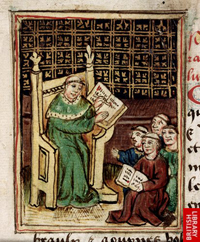
Master and scholars. British Library, MS Royal 19 A IX f. 4

Master and scholars. British Library, MS Royal 19 A IX f. 4

The Medieval Academy of America invites applications to serve as Executive Director of the world’s largest scholarly organization devoted to the study of the Middle Ages. The Executive Director is appointed for a five-year term by the Council; the term is renewable.

The position of Executive Director is of vital importance to the successful fulfillment of the mission of the Medieval Academy of America. As its highest-ranking professional employee, the incumbent is responsible for representing the organization’s members, their elected leadership, and the vibrant programs in Medieval Studies whose role in contemporary society and culture we support. Working from the Academy office in Cambridge, Massachusetts, in collaboration with and reporting to the organization’s elected Board (a sixteen-member Council which includes the officers – president, first- and second-vice presidents, and treasurer), the Executive Director proposes, develops and implements policies and programs addressing the present and future needs of a national and international community of medieval scholars.

Responsibilities include advancing the interests of the Academy and implementing policies in conjunction with the elected Officers and Council, overseeing the Academy’s governance and membership services, supervising Academy finances and fundraising efforts, promoting membership growth, facilitating the work of Academy committees, coordinating the Annual Meeting and meetings of the Council and Executive Committee, and managing the Academy office and staff. A fuller description of the position is available on request from the chair of the search committee.

Position qualifications include:
-Proven leadership skills
-Excellent oral and written communication abilities
-Demonstrated ability to direct an office and supervise staff
-Knowledge of financial systems and non-profit accounting
-Ability to engage the Academy’s various constituencies in a positive, tactful manner          -Strategic planning and organizing skills
-Knowledge of and experience in dealing with current challenges confronting higher education and learned societies.

In addition to meeting the above criteria, the ideal candidate will possess a PhD in a recognized sub-discipline of Medieval Studies and have a distinguished record of publications in that field. Compensation will be based on qualifications and comparable to that of administrative leaders in similar institutions.

Nominations, including self-nominations, are welcome. Interested parties should submit applications including a curriculum vitae, a statement outlining plans for the development of the organization, and three names (with contact information) of individuals who can speak to the applicant’s qualifications, to directorsearch@themedievalacademy.org or as hard copy to the Academy office, 17 Dunster St., Suite 202, Cambridge, MA 02138, USA addressed to Director Search. Screening of applications will begin 15 February 2014. EEO/AA

Posted in MAA Newsletter | Leave a comment

MAA News – 2014 Annual Meeting

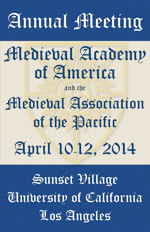
annualmeeting2014The Center for Medieval and Renaissance Studies at the University of California Los Angeles is pleased to host the 2014 Annual Meeting of the Medieval Academy of America, which will be held jointly with the annual meeting of the Medieval Association of the Pacific at UCLA on April 10-12, 2014. The meeting’s theme is “Empires and Encounters.”

The program will include four plenary sessions:

Presidential Address: Richard Unger, University of British Columbia
Opening Plenary Session: Susan Boynton, Columbia University
Fellows Plenary Session: Margaret Mullett, Dumbarton Oaks
CARA Plenary Session

The meeting will conclude with a private reception at the Getty Villa in Malibu on Saturday evening. The annual meeting of CARA delegates will take place on Sunday.

Registration is now open. The Program, registration link and hotel information can be found here:

http://www.cmrs.ucla.edu/medieval_academy/index.html

We hope you will join us for what promises to be a very successful meeting.

Posted in MAA Newsletter | Leave a comment

MAA News – Jacqueline Brown Retires

On behalf of the staff, members and leadership of the Medieval Academy, I want to offer my thanks to Jacqueline Brown for her thirty-three years of service to Speculum and the Academy. Since 1981, she has edited hundreds of articles and more than 9,000 book reviews, guiding hundreds of authors from submission to publication. With her uncompromising attention to detail and consistency and her commitment to grammatical and rhetorical rigor, Jackie has earned the respect and gratitude of all who have worked with her. We are particularly grateful for her service these last eight months, when she stepped into the role of Acting Editor with little notice and proceeded to return the journal to a regular publication schedule without compromising the high standards for which Speculum is known. All of us in the office will miss her, and we wish her good luck in her retirement.

– Lisa Fagin Davis, Acting Executive Director

Posted in MAA Newsletter | Leave a comment

MAA News – New Editor of Speculum

To the Memberssspence of the Medieval Academy:

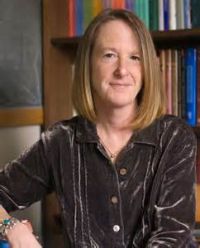
The Council, on the recommendation of a search committee chaired by Richard Unger, is pleased to announce the appointment of Professor Sarah Spence as the new editor of Speculum.

Sarah Spence has just taken early retirement from her post as Professor of Classics and Comparative Literature at the University of Georgia, where she was Distinguished Research Professor from 2009 to 2013.  A specialist particularly in troubadour poetry, Spence’s scholarship and professional activities demonstrate a great range, from classical antiquity to the Renaissance and beyond.  Her career has been marked not only by an impressive list of publications but also by skill in working collegially.  She has an extensive history as an editor.  In addition to two co-edited volumes of critical essays, Spence has developed particular expertise as a journal editor.  She was founding editor of Literary Imagination and held that post for eight years.  Before that, she was managing editor of Tenso.  After leaving Literary Imagination, Spence took on Vergilius for three years, raising its quality and readership.  Editing has thus been a major thread in Spence’s career, rivaling her activities as scholar and teacher.  Editing and the study of literature, while they are twin strands in her career, have never been divided.  Her interest in encouraging younger scholars to send their work to Speculum, though they may be daunted by the idea of publishing in the field’s most prestigious journal – famed (as it should be) for its rigorous standards – has the potential to establish new directions.  Her wide experience and genuine pleasure in the nitty-gritty of nurturing and editing articles hold great promise for her term as the editor of Speculum.

The task of the search committee proved a difficult one.  Making a choice among the ten applicants, individuals with varied and distinguished credentials, took longer than anyone had anticipated.  After extensive, careful, and thoughtful deliberation the committee made its recommendation to appoint Sarah Spence. The Academy is grateful to all ten members who applied for their willingness to serve and their interest in the organization. We owe a special debt of gratitude to the members of the search committee – Christopher Baswell, Susan Einbinder, Cynthia Hahn, and Cary Nederman – for their hard work over the last months and their contributions to the difficult decision that has now been made.

Sarah Spence is enthusiastic about this appointment and is very much looking forward to her new role as editor of Speculum. We are sure you will join us in wishing her all the best in her service to the Academy.

Richard Unger, President
William Chester Jordan, First Vice-President
Barbara Newman, Second Vice-President

Sarah Spence: Curriculum Vitae

Posted in MAA Newsletter | Leave a comment

Call for Papers – Origines et mutationes circa principio Mare Balticum

Transfer of people, ideas, technologies and religion in the Baltic Sea Region between VIII-XVII centuries. We hereby have the pleasure to invite you to the international conference aimed at wide range of researchers, e.g. from Ph.D. Candidates to Professors, giving each of them an opportunity to exchange knowledge or start new research projects.

The focus of the conference is “transfer”, which best explains the changes Baltic Sea region has undergone from VIII to XVII centuries.

Presentations & Conference proceedings are divided into 4 main groups:

1. Transfer of People: Settlement process, Trade, Logistics, Diplomacy
2. Transfer of Ideas: Law, Tradition & Customs, Political Concepts
3. Transfer of Technology: Land & Maritime Craft, Agriculture, Medicine
4. Transfer of Religion: Dispersion of pagan beliefs; Christianization process

Place: Gdańsk – Old Town, Poland
Host – University of Gdańsk
Date: 10th – 13th September 2014 (note: date may change slightly)
Language: English
Abstracts: Paper proposals (max 700 signs with spaces) or 3-papers panel proposals (1800 signs) should be sent till 1st March 2014
Registrations: baltic.conf@gmail.com
Application Form: Please type your Scientific Title, Full name & surname, University or Institution.
Alternatively please send www.academia.edu link.
Further information will be passed to participants in early March 2014.
Presentations: Max. 20 minutes
Proceedings: Max. 12 pages, with summary, scientific apparatus & bibliography should be sent till 15th October 2014 A.D.

Posted in Call for Papers | Leave a comment

EpiDoc Workshop

EpiDoc Workshop, London, April 28-May 1, 2014

We invite applications for a 4-day training workshop on digital editing of epigraphic and papyrological texts, to be held in the Institute of Classical Studies, London, April 28-May 1, 2014. The workshop will be taught by Gabriel Bodard (KCL), Simona Stoyanova (Leipzig) and Charlotte Tupman (KCL). There will be no charge for the teaching, but participants will have to arrange their own travel and accommodation.

EpiDoc (epidoc.sf.net) is a set of guidelines for using TEI XML (tei-c.org) for the encoding of inscriptions, papyri and other ancient documentary texts. It has been used to publish digital projects including the Inscriptions of Aphrodisias, the US Epigraphy Project, Vindolanda Tablets Online and the Duke Databank of Documentary Papyri. The workshop will introduce participants to the basics of XML markup and give hands-on experience of tagging textual features and object descriptions in TEI, as well as use of the tags-free Papyrological Editor (papyri.info/editor).

No technical skills are required, but a working knowledge of Greek or Latin, epigraphy or papyrology and the Leiden Conventions will be assumed. The workshop is open to participants of all levels, from graduate students to professors or professionals.

To apply for a place on this workshop please email charlotte.tupman@kcl.ac.uk with a brief description of your reason for interest and summarising your relevant skills and background, by Friday, February 21st, 2014.

Posted in Workshops | Leave a comment