Harlaxton Medieval Symposium 2022

Harlaxton Medieval Symposium 2022
Death and Dying
Monday 15 – Thursday 18 August
Harlaxton Manor, Lincolnshire, UK

The Harlaxton Medieval Symposium is an interdisciplinary gathering of academics, students and enthusiasts which meets annually to celebrate medieval history, art, literature and architecture. Speakers at this year’s conference will focus on death in the later Middle Ages in both its practical and devotional aspects. Among themes to be explored are the ways in which death occurs (sickness, accident and murder), preparations for death (wills, testaments and executors’ papers), and devotional practices in lifetime and after death. Rituals and ceremonies associated with the moment of death and its aftermath will include funeral practices, chantries, monuments and monumental sculpture. Papers will relate both to England and to Continental Europe before the Reformation.

Speakers are: Ann Adams, Amy Appleford, Richard Asquith, Julia Boffey, Jane Bridgeman, Clive Burgess, Trevor Dean, Tony Edwards, Nicholas Flory, Lydia Hansell, Andrew Kirkman, Julian Luxford, Michael Michael, Lisa Monnas, Ann Payne, Henry Summerson, Linda Voigts and Nicholas Watson. This year’s Pamela Tudor-Craig Memorial Lecture will be delivered by Julian Gardner.

We are also pleased to continue our commitment to encouraging scholars in the early stages of their careers with two Dobson Scholarships available to PGRs or ECRs (within two years of completing a PhD) to cover conference costs. Awards will be made based on the academic excellence of applicants and the relevance of the symposium theme to their research. The application form can be downloaded on our website and the deadline for applications is 31 May 2022, to allow unsuccessful applicants the opportunity to source funding from elsewhere.

We will also be continuing our annual postgraduate poster competition, to allow PGRs and ECRs to share aspects of their research with delegates at the symposium. This has been a great success in previous years, allowing for the exchange of ideas in a friendly and academically-rigorous environment. Posters can relate to any area of Medieval Studies and do not necessarily have to connect to the theme of the symposium. Awards of the Dobson Scholarship are contingent upon presenting a poster, but we urge all PGRs and ECRs attending the symposium to take this opportunity.

Further details, including a full programme and booking/application forms, are available on our website: www.harlaxton.org.uk

Enquiries should be directed to the Secretaries: harlaxtonsymposium@gmail.com
Posted in Symposiums | Leave a comment

Call for Proposals: Early Global Insularities

Call for Proposals: Early Global Insularities
Viator Special Cluster
Editors: Sara Torres and Nahir I. Otaño Gracia

Early Modern literatures are suffused with references to fantastical, miraculous, and topographical islands, from the isle of Avalon in Arthurian legend, to Dante’s Purgatorio, to the pilgrimage site of St. Patrick’s Purgatory in Lough Derg, Ireland. Some texts imagine islands as archipelagos and networks—linked coastal zones where merchants, missionaries, and migrants mingle in local ports. Islands can be replicable, itinerant, or phantasmagorical (St. Brendan’s Isle), tied to the temporalities of liturgy or climate. They can, like the Fortunate Isles, float tantalizingly at the edges of cartographic knowledge and cultural epistemes, beckoning us beyond the thresholds of human knowledge. Other texts, such as Thomas More’s Utopia, focus on the spatial autonomy of islands, emphasizing their disjunctive status as unique in culture or in social organization, exceptionalist in outlook or in ideology. Such sites, conspicuously separate from surrounding polities and politics, draw attention to cultural difference or utopian possibility, and can facilitate the nostalgic affect that transforms a kingdom such as England into a “sceptered isle”—fantasies that can be used to exclude other communities or reinforce endogenous practices. At the heart of the idea of islands is an exploration of the nature and extent of our relationship as individuals to society at large, and of cultures to one another.

Islands occupy a sometimes ambiguous place in center-periphery models, and it’s our hope that by “centering” insularity as a topography, a literary conceit, and a disciplinary trope, we can explore both the range of “islands” in medieval and medievalist texts as well as the possibilities of working in an archipelagic scholarly community. In a time of climate crisis, the precarity of islands and archipelagoes (so often the sites of colonial violence) brings a sense of urgency to our reappraisal of the historical ideation of insularity and the relationship of the local to the global.

We invite proposals on topics broadly related to our theme of “Insularity and Early Globalities” and especially encourage contributions from early career scholars and scholars whose work spans multiple geographical regions and linguistic traditions.

Possible topics include:

  • Mythical islands in medieval, medievalist, or early modern literature
  • Iberian insolarios, coastal contact zones, and archipelagic regions
  • Mediterranean studies, Blue studies, and ecological commentaries on coasts or islands
  • Reflections on how geographical thought shapes premodern and early modern theories of race
  • Islands, periodization, and disruptive temporalities
  • Decolonizing approaches to early global insularities
  • Disciplinary insularity and its discontents
  • Reflections on teaching premodern or early modern literature from scholars working within “insular” institutional or geographical spaces

Proposals should be no more than 500 words in length and should be submitted by email to sara.torres@converse.edu and nahir@unm.edu with “Viator Proposal” in the subject line by 15 July 2022. The authors of selected proposals will be notified by 31 August 2022. Contributors will have the opportunity to workshop essays-in-progress in November 2022. Completed essays will be expected by 20 January 2023. Tentative publication date 2024.

Posted in Call for Papers | Leave a comment

MAA News – From the President

Dear Academy Members,

I hope Spring is bringing all of you the cheer of blossoms and of warmer days. I write hoping to encourage all of you—especially our female members—to consider submitting your work to Speculum.

Before the pandemic, roughly equal numbers of female and male medievalists offered articles to Speculum. However, from the onset of the COVID crisis in March 2020 through the end of 2021, a disturbing gender imbalance emerged. As Editor Katherine L. Jansen recently reported at the annual meeting, of the articles submitted over those twenty-two pandemic months, “only 90 (39%) were from women, while 143 (61%) were from men, revealing a gender disparity of almost 59%.” While the reasons for this disparity are complex, it seems reasonable to speculate that women medievalists, like career women more generally, have had their ability to work negatively affected by the pandemic, and in particular by care-giving duties.

Members of the MAA Council have informally discussed how the Academy might help all care-givers to get back to publishing their work, but I would be grateful to hear from those of you experiencing pandemic-related setbacks in research and writing: what kinds of assistance would make a difference for you?

In the meantime, I encourage every woman reading this who has a research article in preparation to submit it to Speculum. The journal also welcomes co-authored papers. Your scholarship is a gift to all of us.

Maureen C. Miller (mcmiller@berkeley.edu), President of the Medieval Academy of America

Posted in MAA Newsletter | Leave a comment

MAA News – MAA @ Kzoo

As always, the Medieval Academy of America will have a strong presence at the International Congress on Medieval Studies, taking place online from May 9 – 14.
1) The 2022 Medieval Academy Plenary Lecture will be delivered by Geraldine Heng (University of Texas at Austin), “An Ordinary Ship and Its Stories of Early Globalism,” on Tuesday, May 10 at 3:00 PM EDT. The lecture will be followed by a discussion with Prof. Heng. Two associated sessions on The Global Middle Ages will take place on May 11 at 5 PM EDT (Session 189) and 7 PM EDT (Session 205).

2) The MAA Graduate Student Committee is sponsoring a roundtable discussion on “Medieval Studies and the Community: Scholarship and Outreach” on May 11 at 5 PM EDT (Session 184). An informal gathering for graduate students will take place on May 9 at 7 PM EDT.

3) CARA (the Committee on Centers and Regional Associations) is sponsoring two roundtables: “Magistri et Artifices: Defining Excellence in the Medieval Studies Classroom” on May 9 at 3 PM EDT (Session 57) and “Insularity and Regionality in the Global Middle Ages” on May 12 at 3 PM EDT (Session 238).

Click here for more information. We hope to “see” you there!

Posted in MAA Newsletter | Leave a comment

MAA News – 2023 Medieval Academy Meeting Call for Papers

98th Annual Meeting of the Medieval Academy of America
The Grand Hyatt, Washington, DC
23-26 February, 2023

The 98th Annual Meeting of the Medieval Academy of America will take place at the Grand Hyatt Washington in downtown Washington, DC. The meeting is jointly hosted by the Medieval Academy of America and a consortium of medievalists from DC, Northern Virginia, and Maryland.

The conference program will feature sessions highlighting innovative scholarship across the many disciplines contributing to medieval studies. The Program Committee invites proposals for papers on all topics and in all disciplines and periods of medieval studies and medievalism, including on the themes and strands proposed below. Any member of the Medieval Academy may submit a paper proposal; others may submit proposals as well but must become members in order to present papers at the meeting. Special consideration will be given to individuals whose field would not normally involve membership in the Medieval Academy. We are particularly interested in receiving submissions from those working outside of traditional academic positions, including independent scholars, emeritus or adjunct faculty, university administrators, those working in cultural heritage institutions (libraries, archives, museums, scholarly societies, or cultural research centers), editors and publishers, and other fellow medievalists. The Program Committee seeks to construct a program that fully reflects and expands the diversity of the Medieval Academy’s membership with respect to research areas and representation.

Plenary addresses will be delivered by Suzanne Conklin Akbari, Professor of Medieval Studies, Institute for Advanced Study, Princeton; Anne Dunlop, Herald Chair of Fine Arts at the University of Melbourne; and Maureen Miller, Professor of History, University of California, Berkeley, and incoming president of the Academy.

Click here for the full call for papers.

Posted in MAA Newsletter | Leave a comment

MAA News – MAA @ Leeds

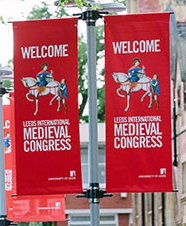
If you’re going to be at the Leeds International Medieval Congress this year, please join us on Tuesday, 5 July, 19.00-20.00 for the Annual Medieval Academy of America Lecture: Carol Symes (Dept. of History, University of Illinois, Urbana-Champaign): “Médiévistes sans frontières – Shifting Medieval Boundaries at Multiple Scales”

Afterwards, join Prof. Symes and MAA governance and staff members for the Medieval Academy’s open-bar wine reception.

The Medieval Academy’s Graduate Student Committee roundtable, “Gatekeeping the Middle Ages: Accessing, Congrolling, and Disseminating the Medieval Past in the Modern World,” will take place on Monday, 4 July, from 19.00-20:00.

We hope to see you there!

Posted in MAA Newsletter | Leave a comment

MAA News – Good News From Our Members

Esther Liberman Cuenca (University of Houston-Victoria) has received the Andrew W. Mellon Junior Faculty Fellowship at the Institute for Advanced Study for the 2022-23 academic year, as well as the Franklin Research Grant from the American Philosophical Society.

Charlene M. Eska has been awarded a 2022 Guggenheim Fellowship to support her work on a critical edition and translation of Dubhaltach Mac Fhirbhisigh’s seventeenth-century legal glossary. This glossary, which is partially based on versions of legal texts no longer extant, provides us with some insight into an otherwise lost world of medieval Irish legal scholarship.

Carolyn J. Quijano (Columbia Univ.) has been awarded a Rome Prize in Medieval Studies from the American Academy in Rome.

Several MAA members have recently been awarded grants from the National Endowment for the Humanities:

Amanda Luyster (College of the Holy Cross) has received a grant in support of the exhibition, “The Crusades and the Chertsey Combat Tiles: A Medieval Masterpiece Reconstructed.”

NEH Summer stipends have been awarded to:

Anne Heath (Hope College), “The Holy Tear of Christ: Visual and Performance Culture at the Benedictine Abbey of La Trinité, Vendôme, c. 1150-1550”

Anna Harrison (Loyola Marymount University), “Paradox and Love in the Thought of Bernard of Clairvaux (1090–1153)”

James Blasina (Swarthmore College), “Gender, Nation, and Empire in Music for St. Katherine of Alexandria, 1050-1400”

If you have Good News to share, please send it to Executive Director Lisa Fagin Davis.

Posted in MAA Newsletter | Leave a comment

CARA News – University of Michigan
 / Medieval and Early Modern Studies

University of MichiganMedieval and Early Modern Studies
1029 Tisch, 435 S. State St., Univ. of Michigan
Ann Arbor, MI 48109-1003
Phone: 734-763-2066 // Fax: 734-647-4881

Program Associate: Terre Fisher (telf@umich.edu)

Faculty Contact, 2021-2022: Enrique Garcia Santo Tomas (enriqueg@umich.edu)

Romance Languages and Literatures, University of Michigan, Ann Arbor MI 48109-1003 Phone: 734-764-5344

For further information about programs, degrees, and affiliated faculty, please visit our website: www.lsa.umich.edu/mems/

Lectures and Events:

In 2021-2022 due to continuing COVID concerns, most events were conducted via Zoom. Lecturers/presenters included U-M graduate students Zachary Kopin (History), Bethany Donovan (History), Frank Espinosa (History), Taylor Sims (History) and Hayley Bowman (History), as well as faculty members Ryan Szpiech (Romance Languages and Mideast Studies), George Hoffmann (Romance Languages and Literatures, French), Gottfried Hagen (Mideast Studies), and Kenneth Mills (History), Nora Grundtner (Humanities Institute). Outside speakers included Ariel Fox (Chinese Literature, East Asian Language, U Chicago); Juan Carlos Flores (Philosophy, University of Detroit-Mercy). Justin Stearns (NYU-Abu Dhabi), Adam Clulow (University of Texas-Austin); Jin Xu (History of Art and Asian Studies, Vassar College), Michael Johnston (Purdue University), Richard Pegg (Asian Art, The MacLean Collection), Lorraine Daston (Max Planck Institute; U Chicago), Yuhua Wang (Harvard University), Michele Matteini (Art History, NYU), Zaroui Pogossian (University of Florence), Sachiko Kawai (National Museum of Japanese History), Adriana Vazquez (UCLA; American Academy in Rome), Akinwumi Ogundiran (University of N Carolina-Charlotte).

Special lectures and ongoing U-M colloquia featured in OCT: “The Cornucopian Stage: Dramas of Endless Surplus in Early Modern China”; “Great Lakes Adiban Society Workshop.” NOV: “Revealed Sciences: Religion, Science, and the Occult in Early Modern Morocco”; “The Massacre and the Conspiracy: Locating the Japanese Diaspora in Seventeenth Century Southeast Asia.” DEC: “A Vineyard Garden in the Afterlife: The Shi Jun/Wirkak Tomb (580 CE) and Viticulture on the Silk Road.” JAN: “The Blue Maps of China.” FEB: “The Secret History of Rules: Algorithms, Laws, and Paradigms”; “The Rise and Fall of Imperial China: The Social Origins of State Development”; “Glitches in Art Historical Flow, ca. 1750.” MAR: “Shaping the Landscape or Invisible Landscapes? Some Medieval Armenian Monastic Complexes between Past and Present”; “Uncertain Powers: Sen’yōmon-in and Landownership by Royal Women in Early Medieval Japan”; “Arcadia Brasiliensis: Landscape and Colonial Dislocation in the Poetry of Cláudio Manuel da Costa”; “‘The Things to Come’: Francisco Solano Faces Irremediable Humanity.” APR: “Little Ice Age and the Oyo Empire: An Unfinished Process of Recovery in West Africa, ca. 1420-1840.”

Additionally, as usual we supported meetings of the Premodern Colloquium on the following topics: “Anti-Aljamiado: Transliterating Arabic in the Antialcoranes”; “Love of Wisdom, Ancient Sources, and Innovation in Medieval Philosophy: Contemplative Desire according to Henry of Ghent”; “A Matter of Jurisdiction: ‘Guelfs and Ghibellines’ in the French Wars of Religion”; “‘As though death should every hour approach’: Reformation Adaptations in English Women’s Wills”; “Manuscript to Print in England: Reconsidering the Divide”; “An Ottoman Encyclopedist as Public Intellectual: Katib Chelebi (1609-1657)”; “‘Con mis manos’: Multi-Sensory Mysticism in the Seventeenth-Century Spanish World.”

Annual budget: $34,000

Posted in CARA | Leave a comment

Call for Sessions: Mary Jaharis Center Sponsored Panel, 58th International Congress on Medieval Studies

To encourage the integration of Byzantine studies within the scholarly community and medieval studies in particular, the Mary Jaharis Center for Byzantine Art and Culture seeks proposals for a Mary Jaharis Center sponsored session at the 58th International Congress on Medieval Studies, Western Michigan University, Kalamazoo, May 11–13, 2023. We invite session proposals on any topic relevant to Byzantine studies.

The 58th International Congress on Medieval Studies will include traditional in-person sessions, virtual sessions, and new blended-format sessions that make it possible for speakers to present and audiences to attend both in-person and online.

Session proposals must be submitted through the Mary Jaharis Center website (https://maryjahariscenter.org/sponsored-sessions/58th-icms). The deadline for submission is May 16, 2022.

If the proposed session is approved, the Mary Jaharis Center will reimburse a maximum of 4 session participants (presenters and moderator) up to $600 maximum for scholars based in North America and up to $1200 maximum for those coming from outside North America. Funding is through reimbursement only; advance funding cannot be provided. Eligible expenses include conference registration, transportation, and food and lodging. Receipts are required for reimbursement. For scholars participating remotely, the Mary Jaharis Center will reimburse participants for conference registration.

For further details and submission instructions, please visit https://maryjahariscenter.org/sponsored-sessions/58th-icms.

Please contact Brandie Ratliff (mjcbac@hchc.edu), Director, Mary Jaharis Center for Byzantine Art and Culture with any questions.

Posted in Call for Papers | Leave a comment

CALL FOR PAPERS: Special issue on Translation in and from the Middle Ages

Medieval Studies is a particularly fruitful field of study, especially in combination with other areas, Translation Studies being no exception. Indeed, the combination of these two areas is of extreme importance, providing a better understanding of medieval texts, as well as a broader understanding of the meaning, value, and consequences of translation within this timeframe. Despite its importance, medieval translation remains poorly researched and promoted in academia. In an effort to fill this gap, submissions are invited for a special issue of the open-access journal, Translation Matters, on the subject of Translation in and from the Middle Ages.
We welcome articles dealing one of the following topics:

  • The phenomenon of translation during the Middle Ages:
    • Theoretical articles exploring the concept of translatio in the Middle Ages, as well as the theory behind the practice of translation in the medieval period
    • Case studies dealing with the translation or transmission of different texts, genres or concepts between two or more medieval vernaculars or between Latin (or another lingua franca or lingua sacra) and a vernacular
    • Medieval matters and cycles involving translational processes
  • The translation of medieval texts into contemporary languages:
    • Theoretical articles exploring methodologies, strategies and problems of the translation of medieval texts into contemporary languages
    • Case studies on the translation of specific texts or concepts
    • Contemporary reception and neo-medievalism: theory and practices.

Articles, in English or in Portuguese, should be 6000-8000 words in length, including references and footnotes, and be formatted in accordance with the guidelines given on the journal’s website. Papers should be uploaded onto the site by 31st October 2022. http://ojs.letras.up.pt/index.php/tm/index.

Posted in Call for Papers | Leave a comment