
The 28th Biennial Conference of the Middle Ages and Renaissance Studies Program at Barnard College
Saturday, December 3, 2022
PLENARY SPEAKERS:
Kristina Richardson (CUNY)
Mitchell B. Merback (Johns Hopkins)
2022 marks a dubious anniversary: exactly one thousand years ago, in 1022, 13 Cathars were burned at Orléans—the first recorded instance of such punishment of Christian heretics. Exactly five hundred years later, a new sign of internal dissension erupted: In 1522, Martin Luther published his German translation of the New Testament, and in the same year, the Diet of Nuremberg staged an ultimately unsuccessful papal effort to suppress Luther, who had been declared a heretic in the 1521 Edict of Worms. Europe was far from unique in such efforts to suppress internal divisions, which also had a long history in the Middle East, where, for example, during the Mihna in the ninth century CE, the Abbasid caliph had similarly attempted to enforce a theological orthodoxy through centralized or systematized forms of persecuting heresy—attempts that, as in Europe, ultimately failed.
In the Middle Ages and Renaissance, as now, cultures often negotiated their identities by protecting their boundaries against external threats, but equally by marking, and often trying to suppress, enemies within. This conference will focus on cultural anxieties generated by internal challenges, both within the boundaries of a polis and within the boundaries of an individual, exploring how binaries like internal/external, enemy/ally, and related terms, become unstable or unpredictable vectors across periods of time. We invite paper proposals that speak to this issue in its most capacious sense, not only in the religious sphere but equally in the arts, literature, history, and history of science.
Please submit an abstract of 250-300 words and a 2-page CV by March 30, 2022 to Rachel Eisendrath, reisendr@barnard.edu.
PLEASE NOTE THAT, IF THE PANDEMIC ALLOWS, THIS CONFERENCE WILL BE HELD IN PERSON AT BARNARD COLLEGE in NYC. We will announce by the end of summer 2022 if instead we have to hold the conference on Zoom.
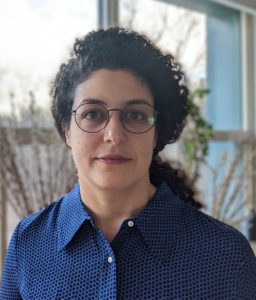 The Medieval Academy of America is very pleased to award the 2022 Schallek Fellowship to Alexandra Atiya (University of Toronto). Atiya’s dissertation, “Economic and Spiritual Conflict in Medieval East Anglian Drama,” investigates the relationship between economic conflicts and dramatic forms in late-medieval morality and miracle plays. Focusing on the depiction of trade, labor rebellion, and corruption in plays including the Croxton Play of the Sacrament, Mankind, Wisdom, and The Castle of Perseverance, she argues that contemporary economic conflicts are more than just topical villains or vices slotted into a didactic model of drama; rather, they seem to shape the plays’ variegated and unusual dramatic forms. Building on recent work that re-evaluates the morality play genre, her dissertation employs close reading of play texts, analysis of manuscript evidence, and research into relevant historical contexts to examine the blurring of moral boundaries and the adaptability of allegory in late-medieval performance.
 Editors:


