
MAA News – Birgit Baldwin Fellowship

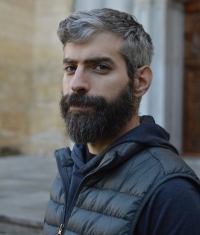
The Medieval Academy of America is very pleased to announce that the 2020-2022 Baldwin Fellowship has been awarded to Leland Grigoli (Brown Univ.), “Colonial Technologies in the Medieval Monastery: The Cistercian Order and the Centralization of Power in Champagne, Occitania, and Catalunya, 1115-1314.” The Birgit Baldwin Fellowship in French Medieval History was established in 2004 by John W. Baldwin and Jenny Jochens in memory of their daughter Birgit and is endowed through the generosity of her family. The Baldwin Fellowship provides a grant of $20,000 per year for up to two years to support a graduate student in a North American university who is researching and writing a significant dissertation for the Ph.D. on any subject in French medieval history that can be realized only by sustained research in the archives and libraries of France. Leland’s summary of his topic follows:

My dissertation focuses on how medieval monastic institutions, and particularly the houses of the Cistercian order, were integral components in the creation and propagation of structures of power. Looking at three different case studies-Champagne, Occitania, and Catalunya-I show that the success of the Cistercian Order in each region was due not only to a newfound religious zeal and more efficient economic organization, but also in particular, localized negotiations with a region’s centralizing powers. The earliest Cistercian foundations, those in Champagne, created a standard approach for securing their holdings, using their mastery of the written word to cultivate relationships of mutual obligation both upward, with counts and bishops, and downward, with local landholders, forming outposts of colonial control. Similarly, those monasteries later founded in Catalunya focused on creating similar ties with one centralizing power, the Crown of Aragón.

Such approaches, however, did not work in Occitania. The Cistercian houses there were hampered by a weak, land poor episcopacy, an entrenched local nobility who were already patrons of local monasteries, and a sophisticated notarial culture with an entirely different relationship to the written word than that found in the north. Much of Occitanian Cistercians’ behavior in the lead-up, execution, and aftermath of the Albigensian Crusade was part of their efforts to overcome these difficulties. Cistercian monasteries in the Midi drew their monks not from the disinterested local nobility, but from the newly-ascendant ranks of wealthy tradesmen and burghers. Unable to gain support from the region’s bishops, they convinced the papacy to depose them and elected Cistercian monks to Occitanian sees. Failing to find any regional centralizing powers interested in their cause, they offered themselves as local mediators to the kings of England, France, and Aragón, each of whom claimed Occitania. And against the notaries and consuls, as well as to all of these other ends, Cistercians deployed the language of heresy.

Following Capetian intervention in the crusade, the Order did not simply fade back into the countryside and allow the new mendicant orders to take up their banner. Profiting handsomely in both coin and land from their role as mediators at the Treaty of Paris, Occitanian Cistercians worked with the region’s new Capetian rulers to concentrate the region’s “heretical” peasantry into new towns or bastides, a policy with striking similarities to the Spanish empire’s reconcentración of aboriginals in the New World. By the reign of Philippe le Bel, the Midi was a Capetian colony, its productive rural expanse administered by the Cistercian Order.

The historiographic impact of this argument is twofold. First, it provides a new narrative for understanding not only Cistercian engagement in crusade and conquest in Occitania, but the phenomenal success of the Order itself over the twelfth and thirteenth centuries. Second, it serves as a corrective to the common narrative which sees secular and religious authority as opposing (or at least highly distrustful) forces in the course of the creation of medieval states, emphasizing the important role of monastic history in the slow centralization of power following the Carolingian collapse. This project thus provides new avenues for studying the interactions between secular and religious spheres in the medieval and early modern world.

Posted in MAA Newsletter | Leave a comment

MAA News – Travel Grants

We are pleased to announce that the following Travel Grants have recently been awarded:

Travis Baker, “Was Paucapalea Married?” (16th International Congress of Medieval Canon Law, 19-25 July 2020, St. Louis, MO);

Emma O’Loughlin Bérat, “‘Upon the ground…was born’: Outdoor Childbirth in History Writing” (International Medieval Congress, University of Leeds, 6-9 July 2020, Leeds, UK);
Lori Jones, “Manuscript to Print to Manuscript: Remaking Medieval Medical Knowledge Across Temporal, Linguistic, and Material Boundaries” (International Medieval Congress, University of Leeds, 6-9 July 2020, Leeds, UK);

Heather Elizabeth Crowley, “Growing, Growing, Gone: Reconstructing Agricultural Cultivation Areas in the Latin Kingdom of Jerusalem” (International Medieval Congress, University of Leeds, 6-9 July 2020, Leeds, UK);

Rodrigo Garcia-Velasco, “Muslim communities, multilingual administration and Islamicate practices in twelfth-century Christian Iberia” (95th Annual Meeting of the Medieval Academy of America, 26-28 March 2020, UC Berkeley);

Josephine van den Bent, “Mongol Mamluks — Friend or Foe?” (95th Annual Meeting of the Medieval Academy of America, 26-28 March 2020, UC Berkeley).

Medieval Academy of America Travel Grants support Academy members who hold PhDs but are not in full-time faculty positions, or who are adjuncts without access to institutional funding, attend conferences to present their work. The deadline for the next round of applications is 1 May 2020, for meetings to be held between 1 September 2020 and 15 February 2021. Click here for more information.

Posted in MAA Newsletter | Leave a comment

MAA News – MAA/CARA Conference Grant

The 2020 MAA/CARA Conference Grant has been awarded to the Texas Medieval Association Annual Conference, October 2-4, 2020, sponsored by the Texas Medieval Association (TEMA) and directed by Kathryne Elizabeth Beebe. The annual MAA/CARA Conference Grant supports regional or consortial medieval studies symposia.

Click here for more information.

Posted in MAA Newsletter | Leave a comment

MAA News – Upcoming Application Deadlines

Belle Da Costa Greene Award (deadline 15 February)
Applications are now being accepted for the inaugural Belle Da Costa Greene Award supporting research by medievalists of color.

The Belle Da Costa Greene Award of $2,000 will be granted annually to a member of the Medieval Academy of America for research and travel. The award may be used to visit archives, attend conferences, or to facilitate writing and research. The award will be granted on the basis of the quality of the proposed project, the applicant’s budgetary needs (as expressed by a submitted budget and in the project narrative), and the estimation of the ways in which the award will facilitate the applicant’s research and contribute to the field. Special consideration will be given to graduate students, emerging junior scholars, adjunct, and unaffiliated scholars. Click here for more information. Click here to make a donation in support of the Greene Award.

Olivia Remie Constable Award (deadline 15 February):
Four Olivia Remie Constable Awards of $1,500 each will be granted to emerging junior faculty, adjunct or unaffiliated scholars (broadly understood: post-doctoral, pre-tenure) for research and travel. Click here for more information.

MAA Dissertation Grants (deadline 15 February):
The nine annual Medieval Academy Dissertation Grants support advanced graduate students who are writing Ph.D. dissertations on medieval topics. The $2,000 grants help defray research expenses. Click here for more information.

Schallek Awards (deadline 15 February):The five annual Schallek awards support graduate students conducting doctoral research in any relevant discipline dealing with late-medieval Britain (ca. 1350-1500). The $2,000 awards help defray research expenses. Click here for more information.

MAA/GSC Grant for Innovation in Community-Building and Professionalization (deadline 15 February):
The MAA/GSC Grant(s) will be awarded to an individual or graduate student group from one or more universities. The purpose of this grant is to stimulate new and innovative efforts that support pre-professionalization, encourage communication and collaboration across diverse groups of graduate students, and build communities amongst graduate student medievalists. Click here for more information.

Applicants for these and other MAA programs must be members in good standing of the Medieval Academy. Please contact the Executive Director for more information about these and other MAA programs.

Posted in MAA Newsletter | Leave a comment

MAA News – GSC Annual Meeting Bursaries

Are you interested in attending the 2020 MAA Annual Meeting but need some financial assistance to get to Berkeley?

Thanks to the generosity of the Graduate Student Committee, which has opted to re-allocate a portion of its annual budget towards this program, the Medieval Academy is offering graduate student travel bursaries of $200-300 to support attendance at the Medieval Academy Annual Meeting at UC Berkeley, 26-28 March 2020. To apply, you must be a graduate student member of the Medieval Academy and explain why attendance at the meeting is important to your research.

Applications must be received by January 31. Click here to apply!

N.B.: This travel funding is for students who are NOT presenting at the meeting but would like to attend.

Posted in MAA Newsletter | Leave a comment

MAA News – GSC Self-Nomination Deadline

Apply by January 15 to join the 
MAA Graduate Student Committee!

We want you on the GSC! We are accepting applications for three two-year positions. In addition to creating the GSC newsletter, we also organize mentoring exchanges, publicize funding opportunities and CFPs on social media, and organize graduate-student themed panels at Kalamazoo, Leeds, and the Annual Meeting. Please do not hesitate to reach out if you have any questions. Don’t miss the January 15th deadline!

Click here to apply:
https://www.medievalacademy.org/page/GSCSelfNomForm

Sincerely,

Jillian Bjerke
Chair, Graduate Student Committee

Posted in MAA Newsletter | Leave a comment

MAA News – Good News from our Members

Joseph T. Snow, Prof. Emeritus from Michigan State University and based in Madrid since 2003 has been awarded the “Premio Manuel Criado de Val” in the celebration of the XXVIII Premios Nacionales “Cultura Viva”. There are, every two years, fifteen such awards (music, art, narrative, medicine, architecture, etc). The Criado de Val award is for consistently high quality work in the area of medieval Spanish literature.

Posted in MAA Newsletter | Leave a comment

Statement in Opposition of the Targeting of Cultural Heritage Sites

The Medieval Academy of America joins our sister learned societies in opposing President Trump’s threat against cultural heritage sites in Iran. Please read the statement below and contact your congressional delegation using the form at the bottom of the page.

https://www.americananthro.org/ParticipateAndAdvocate/AdvocacyDetail.aspx?ItemNumber=25357#/8/

Posted in Announcements | Leave a comment

Medieval Academy of America Governance Election Results

To the members of the Medieval Academy of America:
I am very pleased to announce the results of the 2020 governance election, which closed at 11:59 PM on Jan. 2:

President: Renate Blumenfeld-Kosinski (French & Italian, Univ. of Pittsburgh (Emerita))
1st VP: Thomas Dale (Art History, Univ. of Wisconsin)
2nd VP: Maureen Miller (History, Univ. of California at Berkeley)

Council:

Lisa Bitel (Religion, University of Southern California)
Seeta Chaganti (English, Univ. of California, Davis)
Geraldine Heng (English & Comparative Literature, Middle Eastern Studies & Women’s Studies, Univ. of Texas at Austin)
Laura Morreale (French and Italian, Independent Scholar)

Nominating Committee:

Alison Beach (History, The Ohio State University)
Cord Whitaker (English, Wellesley College)

627 ballots were cast electronically and 9 were submitted by mail. This represents voter turnout of about 19%.

My thanks to all who voted and to all who stood for election, and my congratulations to all who were elected.

Lisa Fagin Davis
Executive Director, Medieval Academy of America

Posted in Academy Elections | Leave a comment

2019 Annual Fund

Medieval Academy of America
2019 Annual Fund

The landscape of Medieval Studies is more dynamic than ever, rich with the voices of scholars of all identities, disciplines, and areas of specialty. And though the field of Medieval Studies has faced difficult challenges in 2019, the Medieval Academy of America has responded with both public advocacy and increased support of our members.

In 2019, we disbursed nearly $100,000 in support for student, contingent, and unaffiliated scholars. But our work is only possible when our community of supporters comes together to drive our mission forward. As the year draws to a close, we hope you will partner with the Medieval Academy of America to continue and expand our work through your 2019 end-of-year giving.

Your donation to the Medieval Academy of America supports the critical work that is at the heart of our mission. Many of our members receive little to no institutional support, and donations from supporters like you enable us to expand funding and programming for contingent and unaffiliated scholars, for our student members, and for junior scholars, with travel grants, research funding, and publication subsidies.

With your help, we will be able to continue our work, strengthening Medieval Studies and supporting medievalists in North America and around the world. Please make a donation today.

https://medievalacademy.org/donations/

Ruth Mazo Karras, President
Lisa Fagin Davis, Executive Director
p.s. If you have already made a donation, please accept our thanks for your support!

Posted in MAA | Leave a comment