Call for Papers
International Conference “The Medieval Literary Canon in the Digital Age”
Ghent University, 17–18 September 2018
We invite submission of abstracts for the international conference “The Medieval Literary Canon in the Digital Age,” to be held at Ghent University from 17-18 September 2018.
An often repeated promise of the digital humanities, in the wake of the “computational turn,” is that the wide availability and accessibility of historical texts would enable scholars to breach the restrictions of a literary canon. The present international conference wishes to explore how exactly the digital humanities can provide such insights for medieval studies, in which such a promise raises critical questions.
(1) In spite of the computational turn, much of the digital scholarship for the Middle Ages still seems to hinge on well-conserved and therefore well-known theological and literary authorities, whose texts have been reproduced continuously in subsequent editions and translations. To what extent does today’s computational research manage to escape the straitjacket of the traditional canon?
(2) Considering that in the past decades, medieval scholars have become increasingly sensitive to the materiality of textual transmission in the Middle Ages, the virtual, normative and reductive character of a digital environment are not always compatible to their research interests.
As the emancipation of the digital humanities from their merely supportive role is proclaimed increasingly, and as the tools for digital medieval studies proliferate (e.g. digital scholarly editing, computational stylistics, digital palaeography, digital stemmatology, …), this conference welcomes papers —based on either case studies or broader research questions— that both problematize the specialized character of medieval literary production and demonstrate the potential for computational criticism to “breach” or “widen” the medieval canon through digital tools.
Full details on the topic and discussion of the conference are available on the conference website: http://www.mcda.ugent.be.
The conference, to which we will accept 8 scholars in addition to the confirmed speakers (cfr. infra) will consist exclusively of plenary sessions, with ample time for discussion. The conference committee encourages proposal submissions by both established and junior researchers. Please send abstracts (ca. 300 words) and a five line biography via email to Jeroen De Gussem (jedgusse.degussem@UGent.be) by the 10th of May. Participants will receive a notification concerning the acceptance of their application by the end of May.
We expect from our applicants that they have the ability of covering their own travel costs. Accepted speakers are offered lunches and an invitation to our conference dinner. Accepted speakers from abroad (any country other than Belgium) will also be offered up to 3 hotel nights in Ghent.
The following invited speakers have confirmed their participation: Godfried Croenen (University of Liverpool) / Maciej Eder (Pedagogical University of Kraków) / Julie Orlemanski (University of Chicago) / Peter Robinson (University of Saskatchewan) / Karina van Dalen-Oskam (University of Amsterdam) / David J. Wrisley (New York University Abu Dhabi)
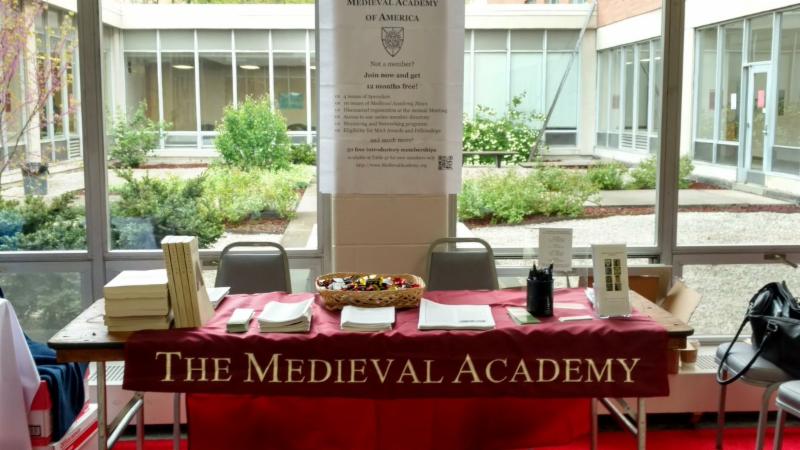 As always, the Medieval Academy of America will have a strong presence at the 2018 International Congress on Medieval Studies (May 10-13).
 The latest issue of Speculum is now available on the University of Chicago Press Journals website.
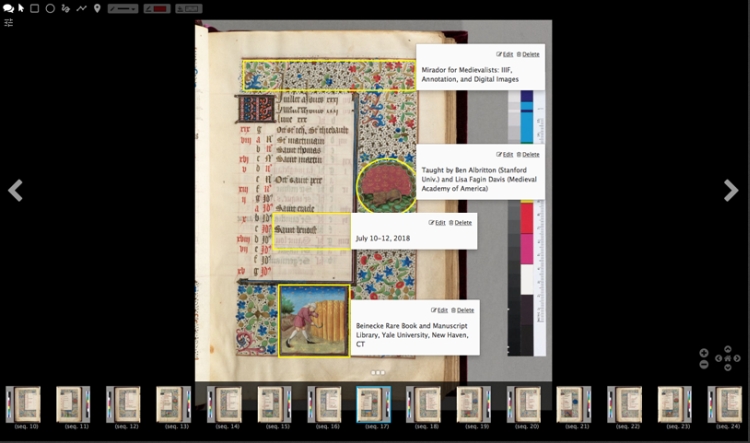 We are now accepting applications for this digital humanities workshop co-sponsored by The Medieval Academy of America and the Beinecke Rare Book and Manuscript Library. Co-taught by Benjamin Albritton (Computing Info Systems Analyst, Stanford University Libraries) and Lisa Fagin Davis (Executive Director, Medieval Academy of America), the workshop will take place at the Beinecke Rare Book and Manuscript Library at Yale University from 10-12 July 2018.
 The Medieval Academy of America seeks to appoint an Editor for Speculum. The position is configured as part-time, requiring around 25 hours per week. The Editor is appointed for an expected five-year term, subject to acceptable yearly performance reviews, with the possibility of a second five-year term by mutual agreement. The editor should be an established scholar with academic credentials in some field(s) of medieval studies, broadly defined, with good organizational and decision-making skills. Experience in journal or book editing will be helpful but not necessary. The new editor should plan on taking office in the late Spring of 2019, and at the latest by July 1, 2019. Terms and conditions are to be negotiated, as is the physical location of the Editor.


