
MAA News – Upcoming MAA Fellowship and Grant Deadlines

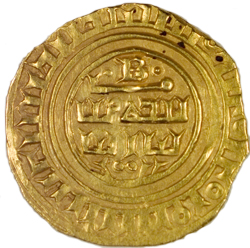
Tripoli, Bohemond VI or VII, gold bezant, 1251-87. Courtesy of Princeton University Numismatic Collection.

Tripoli, Bohemond VI or VII, gold bezant, 1251-87. Courtesy of Princeton University Numismatic Collection.

The Medieval Academy of America has long provided a variety of benefits of membership, including numerous fellowships, prizes and grants for travel, research and publications. Please see the list below for prizes and fellowships with looming deadlines, then follow the links for complete descriptions and application information. We encourage all eligible members to apply for these grants. Please note that you MUST be a member in good standing as of Sept. 15 in order to be eligible for MAA awards.

We are pleased to announce that as of August 2015 all applications for Medieval Academy prizes, awards, and fellowships can (and must) be submitted using our online application system. Links to each form can be found on the Awards section of our website.

Schallek Fellowship

The Schallek Fellowship provides a one-year grant of $30,000 to support Ph.D. dissertation research in any relevant discipline dealing with late-medieval Britain (ca. 1350-1500). (Deadline 15 October 2016)

Travel Grants

The Medieval Academy provides a limited number of travel grants to help Academy members who hold doctorates but are not in full-time faculty positions, or are adjuncts without access to institutional funding, attend conferences to present their work. (Deadline 1 November 2016 for meetings to be held between 16 February and 31 August 2017)

Kindrick-CARA Award for Outstanding Service to Medieval Studies

The Robert L. Kindrick-CARA Award for Outstanding Service to Medieval Studies recognizes Medieval Academy members who have provided leadership in developing, organizing, promoting, and sponsoring medieval studies through the extensive administrative work that is so crucial to the health of medieval studies but that often goes unrecognized by the profession at large. This award of $1000 is presented at the Annual Meeting of the Medieval Academy. (Deadline 15 November 2016)

CARA Award for Excellence in Teaching

The CARA Award for Excellence in Teaching Medieval Studies recognizes Medieval Academy members who are outstanding teachers who have contributed to the profession by inspiring students at the undergraduate or graduate levels or by creating innovative and influential textbooks or other materials for teaching medieval subjects. (Deadline 15 November 2016)

Please see the MAA website for other grants and prizes offered by the Academy.

Posted in MAA Newsletter | Leave a comment

MAA News – Book Prize Deadlines

Haskins Medal

The Haskins Medal is awarded annually by the Medieval Academy of America for a distinguished book in the field of medieval studies. First presented in 1940, the award honors Charles Homer Haskins, the noted medieval historian, who was a founder of the Medieval Academy and its second President. The award is announced at the annual meeting of the Academy each spring. The medal was designed in 1939 by Graham Carey. (Deadline 15 October 2016)

John Nicholas Brown Prize

The John Nicholas Brown Prize, established by the Medieval Academy of America in 1978, is awarded annually for a first book or monograph on a medieval subject judged by the selection committee to be of outstanding quality. To be eligible, the author must be resident in North America.

John Nicholas Brown was one of the founders of the Medieval Academy and for fifty years served as its Treasurer. The prize established in his name consists of a certificate and a monetary award of $1,000. It is announced at the annual meeting of the academy each spring. (Deadline 15 October 2016)

Van Courtlandt Elliott Prize

The Van Courtlandt Elliott Prize, established by the Medieval Academy of America in 1971, is awarded annually for a first article in the field of medieval studies, published in a scholarly journal, judged by the selection committee to be of outstanding quality. To be eligible, the author must be resident in North America. Van Courtlandt Elliott was Executive Secretary of the Academy and Editor of Speculum from 1965 to 1970. The prize that bears his name consists of a certificate and a monetary award of $500. It is announced at the annual meeting of the academy each spring. (Deadline 15 October 2016)

Posted in MAA Newsletter | Leave a comment

MAA News – Awards Available to Medievalists

The Academy encourages its members to apply for grants and residential fellowships in these and other programs:

The American Academy in Rome

The American Council of Learned Societies

The American Philosophical Society

Getty Research Fellowships

Guggenheim Foundation

Institute for Advanced Study

Mellon Foundation

National Endowment for the Humanities

National Humanities Center

Additional funding opportunities for medievalists are posted on our blog. Please contact us at info@TheMedievalAcademy.org with additional programs and awards.

Posted in MAA Newsletter | Leave a comment

MAA News – Good News From Our Members

Debby Banham (Cambridge University) and Martha Bayless (University of Oregon) have won ACLS Collaborative Research Fellowships to collaborate on a book on bread as a cultural force in Anglo-Saxon England (see https://www.acls.org/research/cr.aspx?id=4378)

Thomas Barton (Univ. of San Diego) was awarded the Best First Book Prize in Iberian History for 2015-2016 from the Association for Spanish and Portuguese Historical Studies for his monograph, Contested Treasure: Jews and Authority in the Crown of Aragon (Penn State, 2015). This award considers all first books on Iberian history, from ancient to modern, written in English, Spanish, or Portuguese published between January 1, 2013, and December 31, 2015.

Cristina Maria Cervone (Univ. of Memphis) received a fellowship from the Stanford Humanities Center and will be working on Vernacular Poetics of Metaphor: Middle English and the Corporate Subject there next year.

Therese Martin was elected a Fellow of the Society of Antiquaries of London and was awarded a Spanish National Excellence in Research Grant (2016-2018) to direct a research project on “The Medieval Treasury across Frontiers and Generations: The Kingdom of León-Castilla in the Context of Muslim-Christian Interchange, c. 1050-1200.” The interdisciplinary team of scholars consists of Silvia Armando, Jerrilynn Dodds, Amanda Dotseth, Julie Harris, Jitske Jasperse, Elise Morero, Lawrence Nees, Pamela Patton, Mariam Rosser-Owen, David Wasserstein, and Ittai Weinryb. The first fruits of their research will be presented at a conference, with additional papers by María Judith Feliciano, Maribel Fierro, Eva Hoffman, Eduardo Manzano, and Ana Rodríguez, at Princeton University 19-20 May 2017.

Karen Pinto (Boise State Univ.) was awarded a 2016 Franklin Grant to conduct Islamic map research in Oriental manuscript libraries in Europe and the Middle East.

Lori J. Walters (Florida State Univ.) was awarded a twelve-month fellowship from the National Endowment for the Humanities and the American Council of Learned Societies to work on her new project, The Female Creator: Christine de Pizan and her Books.

The following members recently received awards from the American Council of Learned Societies (other ACLS awardees were announced in previous newsletters):

Melodie H. Eichbauer (Florida Gulf Coast Univ.), ACLS Collaborative Research Fellowship: “Codes, Communities, and Church: The Cultural Contexts of Medieval Law”

Dyan H. Elliott (Northwestern Univ.), ACLS Fellowship program: “Sexual Scandal and the Medieval Clergy”

Margaret Gaida (Univ. of Oklahoma), Mellon/ACLS Dissertation Completion Fellowship: “Encounters with Alcabitius: Reading Arabic Astrology in the Latin West, 950-1560”

Jacob Hobson (Univ. of California, Berkeley), Mellon/ACLS Dissertation Completion Fellowship: “Exegetical Theory and Textual Communities in Late Anglo-Saxon England”

Kathryn Kerby-Fulton (Univ. of Notre Dame), ACLS Fellowship program: “Medieval Interiorities and Modern Readers: Recovering Medieval Reading Practices for Understanding the Self”

Rebecca Maloy (Univ. of Colorado, Boulder), ACLS Fellowship program: “Sung in Honor of Sacrifice: Text, Melody, and Exegesis in the Iberian Offertory”

John K. Moore (Univ. of Alabama, Birmingham), ACLS Fellowship program: “His Majesty’s Prosecutor v. José Soller, Mulatto Pilgrim, for Impersonating a Priest and Other Crimes”: A Study, Critical Edition, and Translation

Congratulations to all! If you have something you’d like to share, please send your good news to Executive Director Lisa Fagin Davis (LFD@TheMedievalAcademy.org).

Posted in MAA Newsletter | Leave a comment

Call for Papers – “Fanfiction in Medieval Studies: What Do We Mean When We Say ‘Fanfiction’?”

Call for Papers
“Fanfiction in Medieval Studies: What Do We Mean When We Say ‘Fanfiction’?”
52nd International Congress on Medieval Studies
Kalamazoo, Michigan, May 11-14, 2017
Organizer: Anna Wilson, anna.wilson@utoronto.ca
Deadline Sept 15

Over the past three decades, there has been increasing interest in both Fan Studies and Medieval Studies in the relationship between medieval literary culture and fan fiction (popular, ‘unofficial’, fan-generated creative writing that participates in a pre-existing fictional ‘universe’ and uses its characters). Many Fan Studies scholars have seen fanfiction as the heir to the premodern literary tradition in which authors adapt, rework, reinterpret or otherwise engages with a pre-existing literary work. Fan Studies scholars often refer to the Aeneid’s reworking of Homer, romances in the Alexander or Arthurian traditions,  or specific works, such as Robert Henryson’s Testament of Cresseid, as ‘early fan fiction’. Fanfiction scholars have also claimed the medieval ‘active reader’, whose creativity spilled into glosses, commentaries and exegesis, as part of the history of fanfiction writers.  Some medievalists have chafed at inaccurate representations of medieval literary culture by Fan Studies scholars, while many others have found that the analogy between the literary activity of fan communities and medieval literary cultures generates valuable and thought-provoking questions that have informed their own research or teaching.

At the first ever session on fanfiction in Medieval Studies at ICMS 2016, papers on such diverse subjects as marginal commentary on The Book of John Mandeville and Chinese fan subtitles of Disney’s Mulan showed the fertility of the idea of fanfiction for reframing the medieval reader, reading communities, affect, and modern medievalisms. However, panellists returned over and over to the question of how to use the term ‘fanfiction’ productively and accurately when discussing medieval practices and texts. Our 2017 proposed session, “What Do We Mean When We Say Fanfiction?” will invite papers that discuss medieval texts and practices with reflection on the following questions: what characterises fanfiction or fandom before the rise of the technologies – the printing press, the photocopier, the internet – without which it is impossible to imagine modern fandom? is it the intensity of readerly affect? the mere fact of rewriting or reinterpretation of a pre-existing text? resemblance to modern fanfiction tropes? the existence of a ‘virtual community’ of readers? How might using the term ‘fanfiction’ occlude or erase important details of the way medieval readers experienced texts? How might it bring to the fore elements previously neglected?

For further reading in Fan Studies, an up-to-date bibliography is maintained on Zotero, affiliated with the journal Transformative Works and Cultures. It can be found here: https://www.zotero.org/groups/11806.

Please submit abstracts of 300 words or less, and a Participation Information Form (available here: http://wmich.edu/medieval/congress/submissions/index.html#PIF) to Anna Wilson (anna.wilson@utoronto.ca).

Posted in Call for Papers | Leave a comment

Beyond Word Exhibition Website

We are pleased to announce the launch of the Beyond Words website, which provides information about dates, venues, public programming, the symposium, and the catalogue of the upcoming exhibit Beyond Words: Illuminated Manuscripts in Boston Collections: http://BeyondWords2016.org

When the exhibit opens in mid-September, we will launch the object-centered portion of the website: a searchable database of all 260 manuscripts described in the catalogue, with essential metadata and images for each manuscript and, when available, codicological descriptions and full digital facsimiles.

Please visit the website regularly for updates and, if you use Twitter, follow @BeyondWords2016 for sneak-peeks, updates, and announcements. We hope to see you in Boston this fall.

– The Beyond Words Curatorial Team: Jeffrey Hamburger, William P. Stoneman, Anne-Marie Eze, Lisa Fagin Davis, and Nancy Netzer

Posted in Announcements | Leave a comment

Manuscripts in the Curriculum

Les Enluminures is sponsoring a unique program that enables colleges, universities, and other educational institutions in North America and Canada to borrow a select group of diverse manuscripts dating from the thirteenth century onwards for teaching. The pilot program will run for three years on a semester basis starting in January 2017. Central to its philosophy is the integration of real manuscripts into the curriculum in courses where students can work closely with original material under the guidance of a professor. Exhibition of the manuscripts is also envisioned. There is a nominal fee that contributes to out-of-pocket expenses of the program. A description of the program, the schedule, teaching guidelines, and descriptions of the manuscripts are available online: http://www.textmanuscripts.com/curatorial-services/manuscripts.

Posted in Announcements | Leave a comment

Call for Papers – Technical Communication in the Middle Ages

CFP: Technical Communication in the Middle Ages
International Congress on Medieval Studies (Kalamazoo, 2017)
Proposals due: September 15, 2016
Submit to Wendy Hennequin (mwhennequin@gmail.com)

Scholars have long recognized Chaucer’s “Treatise on the Astrolabe” as an early technical document, yet relatively few medieval texts have been discussed as specimens of technical communication. This session seeks to consider the traditions and conventions of medieval technical communication, as well as the connections between medieval and contemporary technical writing.

Possible texts for consideration might include (but are not limited to) penitential and conduct manuals, monastic rules, business correspondence, medical treatises, scientific and pseudo-scientific manuals (including alchemical and astrological ones), cookery books, law codes, and government and military documents. Papers should consider the texts as technical communication, but may focus on any aspect, including writing, layout, design, etc.

Please submit proposals to Wendy Hennequin (mwhennequin@gmail.com) by September 15, 2017.

Posted in Call for Papers | Leave a comment

Call for Papers – Numa, Numa: The Life and Afterlife of the Second King of Rome

Numa, Numa: The Life and Afterlife of the Second King of Rome
13-14 October, 2017, Ann Arbor MI

Organizers: Celia E. Schultz (University of Michigan) and Mark R. Silk (Trinity College)

This conference aims to help correct modern scholarship’s oversight of the second king of Rome, Numa Pompilius – the foundational figure of Roman religion who also enjoyed a remarkably long, varied, and rich nachleben in Western thought, literature, and art. From the first century BCE into the nineteenth century, Numa personified the good monarch and emblemized how religion should (or, in the case of early Latin Christian intellectuals, should not) function in society. His paramour, the divine nymph Egeria, became the ideal for a male leader’s female helpmeet and advisor.  Numa appears in genres as disparate as Italian Renaissance and early modern French works on political theory; at least two seventeenth-century operas; paintings by Poussin and Lorain; poems by Milton, Byron, and Tennyson; letters of John Adams; a late eighteenth-century novel by the French writer J.P.C. de Florian, and the important nineteenth-century Icelandic poem, Numa Rimur. We hope to attract papers representing the fields of Classics, Comparative Literature, History, Political Science, Religion, Art History, and Music.

The conference will held at the University of Michigan in Ann Arbor on 13-14 October 2017.

Among the subjects the conference will address are:

  1. The light Numa’s biography sheds on early Italic religion.
  2. Numa as a model of the good Roman emperor.
  3. Numa the bête noir of the Latin church fathers.
  4. How medieval and Renaissance humanists rehabilitated Numa as the father of civil religion.
  5. The use of Numa to criticize Christianity in the republican tradition.
  6. Numa as an exemplar for the papacy in the fifteenth and sixteenth centuries and for Enlightenment monarchy.
  7. The liaison of Numa and Egeria in art, poetry, and fiction.

We invite abstracts (500 words) for papers that will last 25 minutes. Abstracts should to be sent as email attachments to the conference account (numanumaconference@umich.edu) by 15 February, 2017. Notifications will be sent out no later than 15 March, 2017.

Confirmed speakers are Christopher Smith (British School at Rome), John J. Martin (History, Duke University), F. Jackson Bryce (Classics, Carleton College), Arelene Saxonhouse (Political Science, University of Michigan), Sara Ahbel-Rappe (Classical Studies, University of Michigan), Parrish Wright (Interdepartmental Program in Greek and Roman History, University of Michigan), Celia Schultz (Classical Studies, University of Michigan), Mark Silk (Religion, Trinity College), Jean-Marc Kehres (Language and Culture Studies, Trinity College).

Posted in Call for Papers | Leave a comment

Jobs for Medievalists

Johns Hopkins University, History Department search for an Assistant or Associate Professor in Medieval European History:

The Johns Hopkins University Department of History seeks a full-time tenure-track Assistant or tenured Associate Professor of  medieval European History, region and period open, beginning July 1, 2017.  We favor candidates whose research makes broad intellectual connections and/or spans regions, whose publications and academic profile are innovative and outstanding, and who will continue our excellence in both undergraduate teaching and the training of graduate students for academic positions.  The search committee  is committed to hiring candidates who, through their research, teaching and/or service will contribute to the  diversity and excellence of the academic community.  PhD is required by time of appointment.  Please submit a cover letter, c.v., three letters of recommendation, research statement, and writing sample to Interfolio at: https://apply.interfolio.com/36153.  Review of completed applications will begin November 30.

Johns Hopkins University is committed to the active recruitment of a diverse faculty and student body. The University is an Affirmative Action/Equal Opportunity Employer of women, minorities, protected veterans and individuals with disabilities and encourages applications from these and other protected group members.  Consistent with the University’s goals of achieving excellence in all areas, we will assess the comprehensive qualifications of each applicant.

Posted in Jobs for Medievalists | Leave a comment