MAA News – Speculum and The University of Chicago Press

speculumSpeculum‘s partnership with The University of Chicago Press begins with issue 91/1 (January 2016). The transition is well underway: the first Chicago issue is now in production, and members can expect to have access to print and on-line versions early in the new year.  From the editorial standpoint, the change-over has been seamless. The sharp-eyed reader will notice a few differences in the page layout, but, overall, the editorial team has been amazed at the apparent ease with which Chicago has produced a journal that looks and reads like any recent Speculum.

The transition to The University of Chicago Press will bring several positive changes. Readers can expect one or two color images in each print issue (as well as the full-color issue online).  In addition to print copies, online access to the full run of the Journal, and issues in downloadable e-Book formats, MAA members will receive discounts on Chicago Press publications as a benefit of their MAA membership, including 30% off all books (print or e-Book) published and distributed by the Press and 20% discounts on the online edition of The Chicago Manual of Style and selected journal subscriptions. In terms of authors’ rights, The University of Chicago Press supports and encourages authors’ own efforts to promote and disseminate their works.  There is no embargo for social media sites like Academia.edu or the author’s home page, or any deposit that supports peer-to-peer sharing of information. Further information about these benefits can be found on Chicago’s Speculum page, and details about the discounts will be available there early in January.

All aspects of submitting to Speculum, as reviewer or author, remain the same. Because Chicago uses Editorial Manager, the online submission program Speculum has been using for years, there will be no changes whatsoever to the submission process. Proof of this lies in the fact that Chicago has been overseeing submissions since August, and my guess is that few contributors have even noticed the change.

And the same is true for member access. When the January issue of Speculum appears online during the week of January 4, members will be able to access it through the Medieval Academy portal via their member login, exactly as before, and all back content will be available online.

We are excited about our collaboration with Chicago and look forward to a long-lasting and productive partnership.

Sarah Spence
Editor, Speculum

Posted in MAA Newsletter | Leave a comment

MAA News – 2016 Election of Officers and Councilors

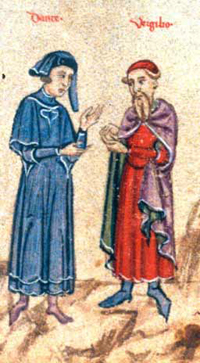
"Dante and Virgil in Conversation," from Oxford: Bodleian Library, MS. Holkham Misc. 48, p. 67. © Bodleian Library, University of Oxford.

“Dante and Virgil in Conversation,” from Oxford: Bodleian Library, MS. Holkham Misc. 48, p. 67. © Bodleian Library, University of Oxford.

Voting in the MAA elections is now open. This is one of the most important means that members have to impact both the MAA and the future of medieval studies in North America, as the Council and Officers of the Academy are responsible for establishing Academy policies and guidelines, overseeing the annual budget, and determining the direction of the organization, among other responsibilities. We have a very strong roster of candidates this year, including:

President: Carmela Vircillo Franklin (Classics, Columbia Univ.)

1st Vice-President: Margot E. Fassler (Music History and Liturgy, Univ. of Notre Dame)

2nd Vice-President: David Wallace (English and Comparative Literature, Univ. of Pennsylvania)

Council (four seats available):
Rick Barton (History, Univ. of North Carolina at Greensboro)
María Bullón-Fernández (English, Seattle Univ.)
Emily C. Francomano (Spanish, Georgetown Univ.)
Matthew Gabriele (History, Virginia Tech.)
Matthew Giancarlo (English, Univ. of Kentucky)
Sharon Kinoshita (French, Univ. of California, Santa Cruz)
Amy Livingstone (History, Wittenberg Univ.)
Jerry Singerman (Comparative Literature, Univ. of Pennsylvania Press)

Nominating Committee (two seats available):
Roland Betancourt (Art History, Univ. of California, Irvine)
Joyce Coleman (English, Univ. of Oklahoma)
Sean L. Field (History, Univ. of Vermont)
Fiona Griffiths (History, Stanford Univ.)

Biographies of all the candidates are available online. The deadline for receipt of your vote is 15 December 2015.

It is important to note that your ballot will be invalid if you vote for more than the allowable number of candidates indicated on the electronic ballot.

If you wish to cast a paper ballot instead, please contact me at LFD@TheMedievalAcademy.org. Thank you for participating in the election.

-Lisa Fagin Davis, Executive Director

Posted in MAA Newsletter | Leave a comment

MAA News – Renew Your Membership for 2016

shieldThe end of the year is now quickly approaching, and we encourage you to renew your membership in the Medieval Academy for 2016 as soon as possible. If you have not already renewed for 2016, please do so by 31 December 2015.

Click here to renew online. You will need to sign in with your username and password; if you have forgotten either, please contact us at info@themedievalacademy.org. While you’re online, don’t forget to take advantage of the reduced subscriptions to several online bibliographies and the ACLS Humanities E-Book Library that are available to Medieval Academy members. We invite you to take this opportunity to explore our website and, after signing in with your username and password, update your personal homepage so that you can connect with other members with similar interests. Members can now use their personal MAA homepage to indicate an interest in being considered to serve on one of our committees or to review books for Speculum. In this way we hope to engage more members in our work.

Since the Medieval Academy is a membership organization not affiliated with any other institution, we rely on the income received annually from member dues to maintain our program of publications, awards, grants, and conferences.

We are pleased to report that in 2015, with your contribution, the Academy increased its support of members, especially graduate students, through the numerous awards and fellowships offered annually, while continuing to streamline administrative functions and increase digital offerings. Funds awarded to graduate students topped $100,000 this year, including the new Olivia Remie Constable Awards, GSC/MAA Grant for Innovation, and the broadened MAA/CARA Summer Language Stipends program. These and other programs are made possible thanks to the efforts of our numerous volunteer committees, from the Speculum boards to the many awards committees, from the Committee on Centers and Regional Associations (CARA) to the Graduate Student Committee. We are particularly pleased to announce that, as of January 1, Speculum will be published in partnership with the University of Chicago Press.

You can easily pay your dues through the MAA website. The dues and donations categories are outlined on the website with links you can follow for further explanation. If you have already renewed, thank you. If you are a Corresponding Fellow, an Honorary Life Member, or a Life Member, no dues are payable, but we hope that you will consider making a gift to the Academy here. We encourage all members to consider supplementing their membership by becoming a Sustaining or Contributing member or by remembering the Academy with a bequest as part of our Legacy Society. In addition, you may want to give a gift membership to a colleague or student; please contact us at info@themedievalacademy.org for more information.

If you prefer to renew by mail, our traditional paper membership form can be printed here.

With a healthy fiscal outlook, increased digital offerings, and expanded services, the Medieval Academy has more to offer members than ever before. We sincerely hope that you will renew soon and continue your valued membership in the Academy. We look forward to working with you in developing the future of the Medieval Academy of America and of medieval studies in North America and beyond. Click here to renew.

Barbara Newman, President
Lisa Fagin Davis, Executive Director

Posted in MAA Newsletter | Leave a comment

MAA News – 2016 Annual Meeting

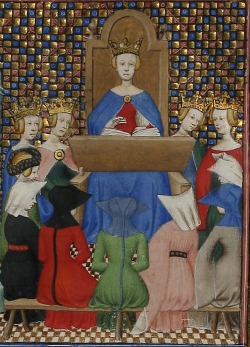
Boston Public Library, MS f. Med. 101, f. 1r detail, Christine de Pizan, Le livre des trois vertus

Boston Public Library, MS f. Med. 101, f. 1r detail, Christine de Pizan, Le livre des trois vertus

The 91st Annual Meeting of the Medieval Academy of America will take place on February 25-27 in Boston. The meeting will be hosted by the Medieval Academy of America, Boston College, Boston University, Brandeis University, Harvard University, Lesley University, The Mary Jaharis Center for Byzantine Art and Culture, the Massachusetts Institute of Technology, the University of Massachusetts, Boston, and Wellesley College.

The program will feature three plenary speakers: Barbara Newman (President of the Medieval Academy of America, John Evans Professor of Latin and Professor of English, Religious Studies, and Classics, Northwestern University); William Noel (Director, Kislak Center for Special Collections, University of Pennsylvania); and Robin Fleming (Professor of History, Boston College, and a 2013 MacArthur Fellow). In addition, the program will include fifty concurrent sessions in a wide variety of formats and covering a broad array of disciplines. Threads include Digital Humanities, Carolingian Studies, the Eleventh Century, Unfinished Works, Lyric Transformations, Medieval Ecologies, and Monasticisms. The Digital Humanities thread will include a special session in which participants will be able to interact with several different DH projects.

The Annual Meeting will take place at the Hyatt Regency Boston in the downtown Theater District. For the closing reception – certain to be an unforgettable evening – we will gather at the Isabella Stewart Gardner Museum, one of Boston’s greatest treasures.

The Program for the Annual Meeting is now available online, linked from the meeting website. The website includes a link to the Hyatt Regency Hotel, where you may reserve rooms at a discounted rate.

As a new feature this year, you can use Sched.org to access the Annual Meeting program. If you wish, you may set up a free Sched.org account that will allow you to plan your Annual Meeting schedule, bookmark sessions and events, and download them into your mobile calendar. Click here to start: https://maa2016annualmeeting.sched.org/

Meeting registration will open in mid-December. We hope you will join us for what is sure to be an excellent (and snow-free) Annual Meeting.

Posted in Annual Meeting, MAA Newsletter | Leave a comment

MAA News – Upcoming Deadlines: MAA Grants and Awards

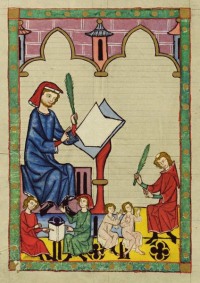
Der Schulmeister von Eßlingen, from Heidelberg, Cod. Pal. germ. 848, Große Heidelberger Liederhandschrift (Codex Manesse), Zürich, c.1300-c.1340, fol. 292v.

Der Schulmeister von Eßlingen, from Heidelberg, Cod. Pal. germ. 848, Große Heidelberger Liederhandschrift (Codex Manesse), Zürich, c.1300-c.1340, fol. 292v.

MAA Dissertation Grants (deadline 15 February):
The nine annual Medieval Academy Dissertation Grants support advanced graduate students who are writing Ph.D. dissertations on medieval topics. The $2,000 grants help defray research expenses. Click here for more information.

Schallek Awards (deadline 15 February):
The five annual Schallek awards support graduate students conducting doctoral research in any relevant discipline dealing with late-medieval Britain (ca. 1350-1500). The $2,000 awards help defray research expenses. Click here for more information.

MAA/GSC Grant for Innovation in Community-Building and Professionalization (deadline 15 February):
MAA/GSC Grants will be awarded to an individual or graduate student group from one or more universities. The purpose of this grant is to stimulate new and innovative efforts that support pre-professionalization, encourage communication and collaboration across diverse groups of graduate students, and build communities among graduate student medievalists. Click here for more information.

Olivia Remie Constable Award (deadline 15 February):
Four Olivia Remie Constable Awards of $1,500 each will be granted to emerging junior faculty, adjunct, or unaffiliated scholars (broadly understood: post-doctoral, pre-tenure) for research and travel. Click here for more information.

Applicants for these and other MAA programs must be members in good standing of the Medieval Academy. Please contact the Executive Director for more information about these and other MAA programs.

Posted in MAA Newsletter | Leave a comment

MAA News – GSC Committee Vacancies

Fishermen. Abbey Bible. J. Paul Getty Museum, MS 107. Italian, probably Bologna, about 1250 - 1262. Tempera and gold leaf on parchment.

Fishermen. Abbey Bible. J. Paul Getty Museum, MS 107. Italian, probably Bologna, about 1250 – 1262. Tempera and gold leaf on parchment.

The Medieval Academy of America is currently accepting self-nominations for vacancies opening up on the Graduate Student Committee (GSC) for the 2016-2018 term. The GSC comprises five members appointed for a two- year term on a rotating basis. Self-nominations are open to all graduate students, worldwide, who are members of the MAA and have at least two years remaining in their program of study.

GSC members are asked to attend the Committee’s annual business meeting at Kalamazoo for the duration of their term and to communicate regularly with the group via email and Skype. Ideal applicants are expected to work well both independently and as part of a team in a collaborative environment. Previous experience with organizing conference panels and social events, as well as facility with social and digital media are not required, but may be a benefit.

Information about the GSC and the self-nomination process is available here: https://medievalacademy.site-ym.com/?page=Grad_Students

New members will be selected by the Committee on Committees and confirmed by the Council of the Medieval Academy at the 2016 Annual Meeting in Boston, February 25-27. If you have any questions, please contact us at gsc@themedievalacademy.org.

Posted in MAA Newsletter | Leave a comment

MAA News – MAA@AHA

The Medieval Academy of America invites proposals for panels at the 2017 meeting of the American Historical Association in Denver, Colorado, January 5-8, 2017. The theme of the 2017 Meeting is “Historical Scale: Linking Levels of Experience.”

Each year the Medieval Academy co-sponsors with the AHA several sessions at this meeting that are likely to be of particular interest to MAA members and general interest to a broader audience.

There is a two-stage process. First, members of the Medieval Academy submit draft session descriptions to the MAA’s AHA Program Committee by emailing them to the committee chair, Samantha Kahn Herrick (sherrick@maxwell.syr.edu) by February 1, 2016. Descriptions should include the session title, session abstract, paper titles, names and affiliations of the organizer, presenters, and (if relevant) respondent.

Individual paper abstracts are requested but not required. Guidelines for sessions and submitting proposals can be found on the AHA website here.

Second, if approved by the committee, the organizer submits the session proposal directly to the AHA (using their on-line system) by the deadline of February 16, 2016, indicating that the session has the sponsorship of the Medieval Academy of America.

Please note that only sessions approved by the AHA Program Committee will appear as sponsored by the MAA and AHA on the program and that the MAA does not independently sponsor sessions.

Posted in MAA Newsletter | Leave a comment

MAA News – MAA Advocacy

The Medieval Academy has joined twenty-eight other American scholarly societies in opposing legislation designed to facilitate the carrying of guns on college campuses. We encourage our members in any state considering such legislation to bring the perspective of historians and educators to the debate. The joint statement is online here.

Posted in MAA Newsletter | Leave a comment

The MAA Opposes “Campus Carry” Legislation

The Medieval Academy joins twenty-eight other American scholarly societies in opposing legislation designed to facilitate the carrying of guns on college campuses.  We encourage our members in any state considering such legislation to bring the perspective of historians and educators to the debate. The joint statement is online here:

http://blog.historians.org/2015/11/american-scholarly-societies-joint-statement-campus-carry-legislation/#sthash.xJQ9bQ4u.dpuf

Posted in MAA | Leave a comment

Call for Papers – Medieval Textuality and its Material Display

WORDS – Medieval Textuality and its Material Display
Paris, June 30th – July 2nd 2016

Keynote Speakers:
Eric Palazzo (Université de Poitiers)
Geoffrey Koziol (University of California, Berkeley)

For its 13th Annual Symposium to be held in Paris, the International Medieval Society invites abstracts on the theme of Words in the Middle Ages. The digital humanities, while altering the landscape of Medieval Studies as a whole, have most importantly overhauled the concept, appearance, and analysis of words and texts. Between the increasing use of paperless media forms and the rise in the number of digital collections, medievalists are seeking to adapt to these new means of producing knowledge about the Middle Ages. At the same time, scholars in this field are also trying to outline the methodological and historical issues that affect the study of words, which now simultaneously exist in the form of primary sources, codices, rolls, charters and inscriptions, digitally reproduced images, and the statistical and lexicographical data made possible by storage platforms and analytical tools.

In parallel with the digital humanities, the 13th Annual IMS Symposium on WORDS aims to return to words themselves and to probe the intellectual, technical and aesthetic principles that underpin their use and social function in medieval graphical practices. By analysing the material and symbolic properties of a particular medium; the conditions in which texts become signs; and scribal expertise, this symposium will address questions that initially seem simple yet which define the very foundations of medieval written culture. What is a word? What are its components? How does it appear in a given medium? What is the relationship between word and text, word and letter, word and medium, word and reader? In a Middle Ages forever torn between economic and extravagant language, what is the status of the word and what kind of elements – visual or acoustic, linguistic or extralinguistic – does it contain?

This IMS Symposium will thus explore (but is not limited to) four broad themes with a particular focus on medieval France, Francia and post-Roman Gaul:

1)    Words and wording: medieval discourse on texts and writing; texts that reflect upon the act of writing (the poetic arts, prologues, colophons and signatures); the relationship between the writer (scribe, copyist, notary, stonecutter) and words, between copy and creation.

2)    Words in and of themselves: the word between alphabetical symbol/grapheme and other symbols; images and sounds of words (nomina sacra, punctuation, poetic features); musical notation (naming/interpretation of neumes, litterae significativae); variations of meaning e.g. between mots and paroles; hierarchies of writing and of content.

3)    Words and matter: the word and its format; the concept of the pagina, its definition, margins and limits, from manuscripts to inscriptions; the material turn and palaeography; writing and object, from book to amulet; the word beyond the text (images, heraldry, emblems, numismatics); impressions and the first printed texts, beyond the act of writing.

4)    Beyond words: content-less words (pseudo-writing, pseudo-alphabets, pseudo-texts); word, name and identity; etymologies; word games and wordplay; the middle-ground between word and text (calligrams, anagrams, epigrams); the relationship between words and music (verse, prose etc. as expressed in melodies).

Through these broad themes, we aim to encourage the participation of researchers with varying backgrounds and fields of expertise: historians, specialists in the auxiliary sciences (palaeographers, epigraphists, codicologists, numismatists) art historians, musicologists, philologists, literary specialists…By bringing together a wide variety of papers that both survey and explore this field, the IMS Symposium intends to bring a fresh perspective to the word in medieval culture.

Proposals of no more than 300 words (in English or French) for a 20-minute paper should be e-mailed to communications.ims.paris@gmail.com by 30th January 2016. Each should be accompanied by full contact information, a CV, and a list of the audio-visual equipment that you require.

Please be aware that the IMS-Paris submissions review process is highly competitive and is carried out on a strictly anonymous basis. The selection committee will email applicants in February to notify them of its decision. Titles of accepted papers will be made available on the IMS-Paris website. Authors of accepted papers will be responsible for their own travel costs and conference registration fee (35 euros, reduced for students, free for IMS-Paris members).

The IMS-Paris is an interdisciplinary, bilingual (French/English) organisation that fosters exchanges between French and foreign scholars. For the past ten years, the IMS has served as a centre for medievalists who travel to France to conduct research, work, or study. For more information about the IMS-Paris and past symposia programmes, please visit our website: www.ims-paris.org.

IMS-Paris Graduate Student Prize:
The IMS-Paris is pleased to offer one prize for the best paper proposal by a graduate student. Applications should consist of:

1) a symposium paper abstract/proposal
2) an outline of a current research project (PhD. dissertation research)
3) the names and contact information of two academic referees

The prize-winner will be selected by the board and a committee of honorary members, and will be notified upon acceptance to the Symposium. An award of 350 euros to support international travel/accommodation (within France, 150 euros) will be paid at the Symposium.

Posted in Call for Papers | Leave a comment