MAA News – Medieval Academy Books Update

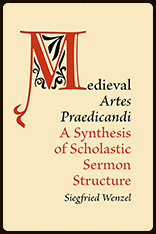
MAB114We are thrilled to announce the publication of Medieval Academy Books, Volume 114: Siegfried Wenzel, Medieval ‘Artes Praedicandi’: A Synthesis of Scholastic Sermon Structure (University of Toronto Press, 2015).

We are actively soliciting manuscripts for future publication. In general, Medieval Academy Books publishes philological studies, translations, and critical editions, from and in Latin as well as the vernacular. For more information about submitting your manuscript for consideration, please contact Sarah Spence, Editor of  Speculum and Director of Publications.

Posted in MAA Newsletter | Leave a comment

MAA News – Visiting Scholars

We invite you to submit information about international scholars who will be visiting your institution during the upcoming academic year.

This information will be posted on our website and will assist colleagues in Medieval Studies programs that do not currently provide visiting positions, offering them the possibility of inviting an international scholar to their campus to deliver a lecture without incurring the expense of an international airfare.

Please click here to access the Visiting Scholar Form.

Posted in Uncategorized | Leave a comment

MAA News – GSC Awards at Annual Meeting

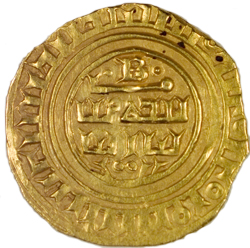
Tripoli, Bohemond VI or VII, gold bezant, 1251-87. Courtesy of Princeton University Numismatic Collection.

Tripoli, Bohemond VI or VII, gold bezant, 1251-87. Courtesy of Princeton University Numismatic Collection.

At the 2015 Annual Meeting, the award for Best Graduate Student Paper was awarded to Karen Fuller, Univ. of Notre Dame, for “Reading the Scribe, The Homemade Book: a Family of Scribe-Annotators in the MS Digby 145 Piers Plowman”

Student Travel Bursaries were awarded to:

Lars Christensen, University of Minnesota, “Escaping the Musical-Dynastic Cycle: A Chinese Emperor’s View of Music Historiography”

Miles Hopgood, Princeton Theological Seminary, “Marginal Structuring and the Princeton Mandevie: Scribal Commentary through Shaping Text Perception”

Emily Kesling, Univ. of Oxford, “Irish Influence and Forbidden Charms in Anglo-Saxon England”

Ingrid Pierce, Purdue Univ., “Hearing Voices in Julian of Norwich’s A Revelation of Love”

Posted in MAA Newsletter | Leave a comment

MAA News – Travel Grant Deadline

Medieval Academy Travel Grants allow independent scholars and unaffiliated faculty to travel to conferences to present their work. The deadline for meetings taking place between 1 September 2015 and 28 February 2016 is May 1. Click here for more information.

Posted in MAA Newsletter | Leave a comment

MAA News – MAA/CARA Summer Language Scholarships

The Medieval Academy of America’s Committee on Area and Regional Associations (CARA) is pleased to announce that the Summer Language Scholarship program has been expanded for 2015 to allow more students to apply for support. The MAA/CARA Summer Language Scholarships support graduate students participating in summer courses in medieval languages or manuscript studies.

The stipend will be paid directly to the program to offset a portion of the tuition cost and is contingent on acceptance into the program. Applicants must be members of the Medieval Academy in good standing with at least one year of graduate school remaining and must demonstrate both the importance of the summer course to their program of study and their home institution’s inability to offer analogous coursework. Click here for more information. The due date for applications is 10 May.

Posted in MAA Newsletter | Leave a comment

MAA News – 2016 Annual Meeting Call for Papers

Image from Wikimedia Commons

Image from Wikimedia Commons

The 2016 Annual Meeting of the Medieval Academy will take place in Boston from February 25-27.

The Program Committee invites proposals for papers on all topics and in all disciplines and periods of medieval studies. Any member of the Medieval Academy may submit a paper proposal, excepting those who presented papers at the annual meetings of the Medieval Academy in 2014 or 2015; others may submit proposals as well but must become members in order to present papers at the meeting. Special consideration will be given to individuals whose field would not normally involve membership in the Medieval Academy.

Location: Boston is home to numerous universities, art museums, and performing arts companies. Hosted by several Boston-area institutions, the meeting will convene at the Hyatt, across the street from the renovated Opera House and in the heart of Boston’s theater district. The final reception will be held at the Isabella Stewart Gardner Museum.

Theme(s): Rather than an overarching theme, the 2016 meeting will provide a variety of thematic connections among sessions. The Medieval Academy welcomes innovative sessions that cross traditional disciplinary boundaries or that use various disciplinary approaches to examine an individual topic. To both facilitate and emphasize interdisciplinarity, the Call for Papers is organized in “threads.” Sessions listed under these threads have been proposed to or by the Program Committee but the list provided below is not meant to be exhaustive or exclusive.

Proposals: Individuals may propose to offer a paper in one of the sessions below, a full panel of papers and speakers for a listed session, a full panel of papers and speakers for a session they wish to create, or a single paper not designated for a specific session.

Sessions usually consist of three 25-minute papers, and proposals should be geared to that length, although the committee is interested in other formats as well (poster sessions, digital experiences, etc). The Program Committee may choose a different format for some sessions after the proposals have been reviewed.

The complete Call for Papers with additional information, submission procedures, selections guidelines, and organizers is available here. The due date for proposals is May 1.

Please contact the Program Committee at MAA2016@TheMedievalAcademy.org with any questions.

Posted in Annual Meeting, MAA Newsletter | Leave a comment

MAA News – Award Announcements

The American Council of Learned Societies has just announced its 2015 Fellows, and several members of the Medieval Academy are among them:

Andrew J. Albin (Assistant Professor, English, Fordham University) – Richard Rolle’s Melody of Love: Alliterative Translation and Commentary

Albrecht Diem (Associate Professor, History, Syracuse University) – Norm and Community: Early Medieval Monastic Rules and the Development of Regular Observance

Elina Gertsman (Associate Professor, Art History and Art, Case Western Reserve University) – Figuring Absence: Empty Spaces in Late Medieval Art

Thomas F. Madden (Professor, History, Saint Louis University) – The Lion and the Cross: Crusade, Memory, and Identity in Medieval and Early Modern Venice

Tanya Stabler Miller (Associate Professor, History and Political Science, Purdue University, Calumet) – Men, Women, and Religious Education in Medieval France

Several members of the Medieval Academy have recently been awarded grants from The National Endowment for the Humanities:

Jeffrey Hamburger (Project Director, working with William P. Stoneman, Lisa Fagin Davis, Nancy Netzer, and Anne-Marie Eze), Pages from the Past: Illuminated Manuscripts in Boston-Area Collections (Museums, Libraries, and Cultural Organizations Implementation)

Jenny Adams (Univ. of Massachusetts, Amherst), Student Debt and University Life in Medieval Oxford (Summer Stipend)

Jennifer Feltman (independent scholar), Moral Theology and the Cathedral: Sculpted Programs of the Last Judgment in Thirteenth-Century France (Summer Stipend)

Damian Fleming (Purdue University at Fort Wayne), Understanding Hebrew Alphabets in Early Medieval Manuscripts (Summer Stipend)

The National Science Foundation has made a major award to Patrick Geary (Institute for Advanced Study) and Krishna Veeramah (Stony Brook University) to “use advanced ancient DNA analysis to clarify the nature of the medieval ‘barbarian’ societies from which many modern-day Europeans still trace their national identities.”

Posted in Grants & Prizes, MAA Newsletter | Leave a comment

MAA News – Winners of the Olivia Remie Constable Awards

remieWe were honored to announce the first winners of the Olivia Remie Constable Awards at the Annual Meeting at the University of Notre Dame in March, an appropriate and poignant locale given Remie’s close association with UND’s Medieval Institute:

Laura Carlson, “The Hispani in Francia: Identity & Intellectual Exchange in the Carolingian Empire (ca. 711-850)”

Katherine Dimitrova, “Woven at the Crossroads of Culture: Avignon’s Role in Tapestry Production and Patronage during the Great Papal Schism (1378-1417)”

Maire Johnson, for travel to the 2015 International Congress on Celtic Studies, “Ruadan vs. Diarmait: Mixed Maledictory Arts, Hagiographical Style”

Jacqueline Anne Stuhmiller, for travel to the 2015 Kalamazoo Congress, “Animal Lovers: Bestiality in the Middle Ages”

Posted in Grants & Prizes, MAA Newsletter | Leave a comment

MAA News – New Publisher of Speculum

speculumOn 12 March, the Council of the Medieval Academy of America approved a 5-year-contract with the University of Chicago Press to serve as publisher of Speculum from 2016 – 2020 (Volumes 91 – 95). This decision was made after much due diligence on the part of Editor Sarah Spence, the Speculum Board, and an ad hoc committee. In making their recommendation, Spence and the Committee cited Chicago’s willingness to allow authors to publish final, copyedited versions of Speculum articles on personal and departmental websites, as well as their development of a robust and responsive interface that will offer improved support for authors and editorial staff. In addition, Chicago offers color cover and color images online, as well as eight color images per print volume at no additional expense to MAA. Spence also noted that Chicago’s tiered pricing matches the cost of Speculum to institutional budgets, making the journal more affordable for smaller institutions. In recommending the University of Chicago Press to the Council, the ad hoc committee concluded: “Chicago has throughout its institutional history had a deep commitment to international scholarship. As such, it seems a fitting symbol for the place of medieval studies in American scholarship: centrally-located in the country while clearly marking its roots in the European tradition. The press’s interest in publishing Speculum speaks to this interest in reaching as broad an intellectual community as possible, both within the United States and around the world.”

We will immediately begin working with UCP and our current publisher, Cambridge University Press, to ensure a seamless transition, and members and authors can rest assured that subscriptions, digital access, and authors’ services will be uninterrupted. Our commitment to the highest levels of scholarship in the pages of Speculum remains unchanged, and we look forward to working with the University of Chicago Press.

Posted in MAA Newsletter, Speculum | Leave a comment

MAA News – The Medieval Academy Annual Meeting

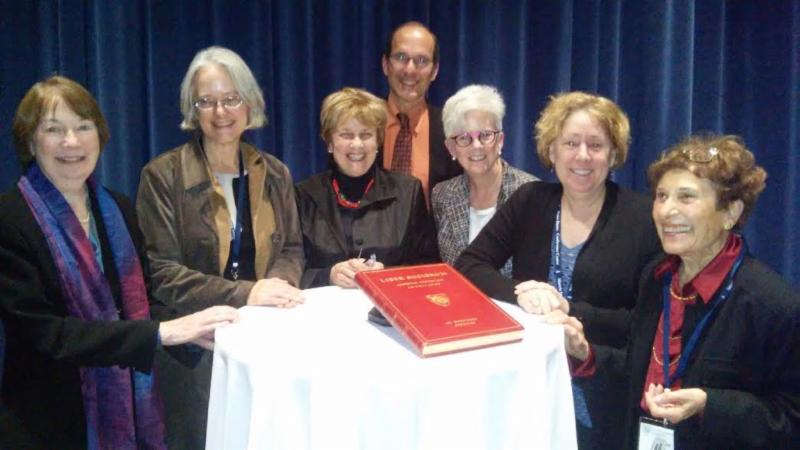
The 2015 Class of Fellows of the Medieval Academy (L-R): Katherine O'Brien O'Keeffe, Sharon Farmer, Margot Fassler, David Nirenberg, Maureen Miller, Robin Fleming, and Helen Damico (not pictured: Richard Kaeuper, Anders Winroth, and Corresponding Fellows Paul Brand, Constant Mews, and Felicity Riddy)

The 2015 Class of Fellows of the Medieval Academy (L-R): Katherine O’Brien O’Keeffe, Sharon Farmer, Margot Fassler, David Nirenberg, Maureen Miller, Robin Fleming, and Helen Damico (not pictured: Richard Kaeuper, Anders Winroth, and Corresponding Fellows Paul Brand, Constant Mews, and Felicity Riddy)

Speculum Editorial Assistant Sam Boss shares his thoughts on last month’s Annual Meeting in South Bend:

The 2015 Annual Meeting of the Medieval Academy of America, held from March 12-14 this year at the University of Notre Dame, was a resounding success. Nearly five hundred participants contributed to the exciting series of panels and discussions on subjects ranging from the mundane and material elements of monastic life to digital tools for studying the Middle Ages. The concentration of senior scholars who were sharing work and offering commentary was a reflection of the strength of the Medieval Academy, and as a first-time attendee at the Annual Meeting, I was grateful to have the opportunity to hear from medievalists whose scholarship I have admired and benefited from as a doctoral candidate in the history department at Brown University. As an editorial assistant at Speculum, I was also excited to meet so many of those with whom I have corresponded while trying to line up book reviewers and process submissions, and I found it gratifying to hear from many of those I spoke to that the reviews section of the journal continues to serve as one of the most trusted sources of information about new trends in medieval studies.

Many of the latest developments in the field were on display in the sessions held over the course of the three days of the conference. Efforts to expand the scope of medieval studies to more fully integrate scholarship on Eastern Europe, Byzantium, and the Islamic World have contributed to some of the most exciting research of recent years, and many of the panelists at the Medieval Academy Meeting presented new findings on non-western and non-traditional source materials. The two sessions held in honor of the late Olivia Remie Constable featured the innovative analysis of cross-cultural interactions within the Mediterranean that characterized her own work, while also including moving tributes from the many who had benefited from her guidance and friendship during her tenure as Professor of History and Director of the Medieval Institute at Notre Dame. Having never been to South Bend before, I was impressed not only by the size of the medieval studies program at Notre Dame, but also by the warmth of the welcome I received from faculty, graduate students, and staff of the Medieval Institute over the three days of the meeting. The enduring strength of the community seems a great tribute and testament to Professor Constable’s leadership and her lasting contributions to medieval studies.

The preparation and organizational work done both by local staff and members of the Medieval Academy helped each of the panels and events at the meeting to run seamlessly. All of the sessions I went to were very well-attended, and they were followed by extensive discussion that continued on well after time allocated for questions had formally ended. Compared to larger conferences, the Medieval Academy Meeting offers an intimacy and community that facilitates discussion and efforts to promote further scholarly collaboration. I started to recognize many familiar faces as I moved between sessions, and I realized that my research interests aligned with a few people I kept bumping into over the course of the meeting. Several of the sessions I attended were the products of conversations during last year’s Medieval Academy meeting, and I had many opportunities to discuss ideas for panels for the next annual conference in Boston with like-minded scholars. The number of vendors was also smaller than would be found at the international conferences at Kalamazoo and Leeds, but this also makes the Medieval Academy meeting an ideal opportunity to talk with acquisitions editors and pitch book ideas.

Of course, there was a great deal of official Medieval Academy business to be attended to at the meeting as well, including the presentation of the major book awards and article prizes, reports from Medieval Academy Executive Director Lisa Fagin Davis and

Speculum Editor Sallie Spence, as well as planning sessions for the upcoming fiscal year and publication cycle. In Saturday’s keynote address, the Medieval Academy’s outgoing President, Professor William Chester Jordan, offered a consistently rich and fascinating account of Saint Louis’ experiences in captivity and its influence over his rule, which will appear in full in the July 2015 issue of Speculum. But even after all was said and done, there was still plenty of time left to eat, drink and be merry, and the beautiful spreads prepared by the catering staff at Notre Dame provided some much needed fuel over the course of the three days of the meeting. The graduate student committee also put on a lively social that offered an enjoyable opportunity to build ties within the medieval studies community in a less formal setting.

I enjoyed meeting other young scholars from all over the country and beyond, learning about the exciting new developments within their fields, and sharing ideas for creative teaching strategies. But it is also worth noting that the conference wasn’t neatly stratified by age or rank – I was pleasantly surprised to see panels that featured scholars presenting their dissertation research with others who are as likely to be candidates for the Haskins Medal. This kind of collaboration seems to be a great embodiment of the Medieval Academy’s mission and the strong role that the annual meeting plays in building connections that solidify the medieval studies community.

Posted in Annual Meeting, MAA Newsletter | Leave a comment