Graduate Scholar-in-Residence Program

From The Newberry:

The Newberry Graduate Scholar-in-Residence program encourages PhD candidates in the humanities to conduct research in our collection and to join our community of scholars for a full academic year. We invite graduate students with advanced to PhD candidacy to apply for this status, with preference given to those whose dissertation projects are well advanced. Graduate Scholars-in-Residence at the Newberry are expected to be “in residence” at the Newberry at least 10 hours per week from September to May, which will enable them to make good use of the collection and participate in the Newberry’s intellectual community. Like postdoctoral Scholars-in-Residence, Graduate Scholars-in-Residence should be willing to provide a small amount of service to the Newberry. Although the Newberry cannot offer remuneration to Graduate Scholars-in-Residence, we can offer some privileges, including reserve carrel space for paged materials, access to the Newberry during extended hours, and opportunities to present work-in-progress to the Newberry’s scholarly community.

Applications to become a Graduate Scholar-in-Residence are accepted each year in the spring. The applications for the 2014-15 academic year are due on May 1, 2014. We expect to notify applicants about their acceptance in June 2014. New Graduate Scholars-in-Residence are expected to begin their residences on September 2, 2014, so that they can join the new long-term fellows in Fall Orientation activities.

Posted in Announcements | Leave a comment

Session Proposals Invited for Sponsored Panel at Kalamazoo 2015

To encourage the integration of Byzantine studies within the scholarly community and medieval studies in particular, the Mary Jaharis Center for Byzantine Art and Culture seeks proposals for a Mary Jaharis Center sponsored session at the 50th International Congress on Medieval Studies, Western Michigan University, Kalamazoo, May 14–17, 2015. We invite session proposals on any topic relevant to Byzantine studies.

Session proposals must be submitted through the Mary Jaharis Center website (http://maryjahariscenter.org/sponsored-sessions/50th-international-congress-on-medieval-studies/). The deadline for submission is May 19, 2014. Proposals should include:

-Title
-Session abstract
-Intellectual justification for the proposed session (about 300 words)

-CV

Successful applicants will be notified by May 28, 2014 if their proposal has been selected for submission to the International Medieval Congress. The Mary Jaharis Center will submit the session proposal to the Congress and will keep the potential organizer informed about the status of the proposal.

If the proposed session is approved, the Mary Jaharis Center will reimburse session participants (presenters and presider) up to $500 maximum for US residents and up to $1000 maximum for those coming abroad. Funding is through reimbursement only; advance funding cannot be provided. Eligible expenses include conference registration, transportation, and food and lodging. Receipts are required for reimbursement.

The session organizer may act as the presider or present a paper. The session organizer will be responsible for writing the Call for Papers. The CFP must be approved by the Mary Jaharis Center. A list of suggested speakers and abstracts may be appended to the session abstract. Session participants will be chosen by the session organizer and the Mary Jaharis Center.

Please contact Brandie Ratliff (mjcbac@hchc.edu), Director, The Mary Jaharis Center for Byzantine Art and Culture with any questions.

Posted in Uncategorized | Leave a comment

National Endowment for the Humanities 2014 Humanities Medal: Call for Nominations

The National Endowment for the Humanities (NEH) is accepting nominations for potential recipients of the 2014 National Humanities Medal.  The National Humanities Medal honors individuals and organizations whose work has deepened our nation’s understanding of the humanities. Up to 12 Medals are awarded each year.


Qualified nominees are individuals or organizations whose activities, contributions and achievements have significantly impacted the educational and cultural life of our nation. This includes, but is not limited to: significant scholarly contributions, developing outstanding education programs, creating and producing television documentaries, radio programs, or interactive exhibits, preserving and making accessible the nation’s cultural heritage, and sustained philanthropic efforts on behalf of humanities activities or organizations.


Past medalists include Amartya Sen, Charles Rosen, National History Day, the Norman Rockwell Museum, Anna Deavere Smith, and Joan Didon. The principal criterion for selection is the significance of the nominee’s contributions to the humanities. Please review the list of past medalists before submitting your nominations. Self-nominations are not permitted. Individual nominees must be U.S. citizens or permanent residents. Organizations must be established or incorporated in the United States.


To submit a nomination, please use the online nomination form available here. Nominations that are submitted will remain active for an additional two years. The President of the United States selects recipients of the National Humanities Medal in consultation with NEH. The National Endowment for the Humanities initiates and administers the nomination and selection process. Nominations are first considered by the National Council on the Humanities—NEH’s 26-member presidentially appointed and Senate-confirmed board of advisors.


The deadline for receipt of nominations is the close of business on Monday, May 19, 2014.


More information about the medals, how to submit a nomination, and the selection process is available here. Questions should be directed to medalists@neh.gov.

Posted in Announcements | Leave a comment

Call for Papers – Moving Women, Moving Objects (300-1500)

Moving Women, Moving Objects (300-1500) 

Call for Proposals for a Session sponsored by the International Center of Medieval Art at the College Art Association Annual Conference

February 11-14, 2015, New York City

Contact: Tracy Chapman Hamilton, Sweet Briar College, thamilton@sbc.edu; Mariah Proctor-Tiffany, California State University, Long Beach, mariah.proctor@csulb.edu

As we examine medieval works of art like manuscripts, reliquaries, and jewels, today anchored and spotlighted in their museum vitrines, it is easy to imagine these sumptuous objects at rest in the hands of their original owners. But, in truth, they were in constant motion, and women were especially responsible for the movement of these works of art.

This panel seeks to enrich the discussion of women and their relationships with their objects that, in the area of non-book arts, remains relatively unexplored. Luscious objects were gifts that traveled lesser and greater distances, some imported in brides’ nuptial coffers and many more commissioned and used to unite women separated by their politically advantageous marriages. Sisters and mothers, grandmothers and aunts, daughters and cousins, as well as friends and allies, all exchanged works of art with shared stories and iconographies. These pieces were the tokens that served as tribute, the centerpieces of rituals and ceremonies, the precious keepsakes enjoyed in intimate places, and the markers of architectural spaces often also founded or endowed by these women.

Theories of feminism, anthropology, sociology, and geography, among others, can all aid in the interpretation of the movement of works of art by women. New technologies such as GIS mapping and digital modeling enable us to visualize the international trajectories of works of art, as well as the movement and placement of them within architectural space. Proposals for this panel could include papers concerning women living between300-1500. While proposals discussing European examples are anticipated, those analyzing any culture are encouraged. Papers might discuss women moving their objects in ritual space; the international, cross-cultural fertilization of the arts resulting from women’s gifts; the mapping of women’s identity through placement of objects; or class and women’s movement of their objects.

Please email the session chairs the CAA proposal form, a preliminary abstract of your proposal, a letter of interest, CV, and supporting materials.

Proposals due: May 9; Abstracts due: Aug. 8; Full text of papers due: Dec. 1, 2014

Posted in Call for Papers | Leave a comment

MESA is now accepting new members

The Medieval Electronic Scholarly Alliance (MESA) is pleased to announce that it is now accepting applications from electronic projects and resources wishing to join the federation. Information on our review process and the submission workflow may be found at http://www.mesa-medieval.org/about/peer-review/

MESA has instituted a new two-tier review process. All projects must undergo a process of open review to ensure that scholarly and technological standards are met. An optional second tier is available for scholars who wish to have a more traditional review process for purposes such as tenure and promotion and will be overseen by our editorial board.

All conversations pertaining to open review will be conducted on the MESA listserv. In order to subscribe, please send an email to mj2@lists.ncsu.edu with the following text in the body of the message:  subscribe mesa.

We encourage both established projects and those nearing publication to apply. Please address questions or comments to mesamedieval@gmail.com.


Posted in Announcements | Leave a comment

Jobs for Medievalists

Phillip J. Pirages Fine Books & Manuscripts is seeking a detail-oriented individual with strong writing, organizational, and personal skills as well as sophisticated understanding of computer technology for full-time employment, working with a small staff.  The person’s chief responsibility would be to assist with writing catalogue descriptions of rare books and manuscripts (see pirages.com for examples); other tasks might include administrative office work (processing acquisitions, orders, and payments as well as preparing invoices and tracking inventory), responding to customer inquiries, handling general correspondence, assisting with the company’s social media marketing, representing the business at book fairs, and other duties as assigned. We do not have a store front; client visits are by appointment.

To apply, please email cover letter and CV to info@pirages.com.

Required Skills and experience:

•       Significant writing experience, preferably  for pay and/or publication

•       Knowledge of and/or interest in rare books

•       Strong editing and proofreading skills

•       Strong attention to detail in general

•       Experience with Microsoft Office (Word, Excel, Outlook/Exchange)

•       Experience with database and web searching

Desired Skills:

•       Reading knowledge of languages besides English

•       Familiarity with Microsoft Access

•       Familiarity with QuickBooks

•       Experience with Adobe InDesign

Required Education:

•       Bachelor’s Degree (B.A. or B.S.)

Desired Education:

•       Advanced degree or training in a related area (e.g., Rare Book School, MLS, master’s degree in the humanities)

Other requirements:

•       Ability to travel

Compensation:

Comfortable for the region’s cost of living, and tailored to reflect experience in the trade:  full-time starting pay with no experience as a bookseller = approximately $40,000/yr. ($15/hr. wage + profit sharing + bonus [i.e., at least $20/hr.] + medical insurance);  with experience, employees get regular hourly increases, then (after three years) a pension contribution, which is likely to be 25% of total wages, profit sharing, and bonus

2 weeks vacation + 3 paid holidays

About us:

Long-time members of ABAA and ILAB, Phillip J. Pirages Fine Books & Manuscripts was established in 1978 in Kalamazoo, Michigan, and is now located in McMinnville, in Oregon’s scenic Willamette Valley, about 45 miles from Portland. From the beginning, its founder was willing to sell a range of material, but the business has over the years gravitated toward historical artifacts that are physically attractive in some way—illuminated material, fine bindings, books printed on vellum, fore-edge paintings, beautiful typography and paper, impressive illustration. Among other specialties, the company also sells early leaves and documents, biblical material from all periods, Wing and STC imprints, modern privately printed books, and other interesting and significant material.  For the past 14 years, we have been fortunate to represent one of the country’s most important collectors. This collaboration means that, apart from our own inventory, we are continually building his collection of visually arresting books (items of unusual size, with beautiful bindings, and/or containing striking illustrations) and of other material that is extraordinarily odd or unusual, especially (but not exclusively) in relation to the history of medicine and to the human imagination.

Cokie Anderson

Phillip J. Pirages Fine Books & Manuscripts

Posted in Jobs for Medievalists | Leave a comment

Jobs for Medievalists

The Department of History at Claremont McKenna College invites applications for a full-time, non-tenure-track position at the rank of Visiting Assistant Professor in Middle Eastern/Islamic History. The successful candidate should be prepared to teach an introductory course on the history of Islam in the pre-1500 world and a continuing survey course that concludes with the dynamics of the modern Middle East. Two additional thematic seminars in the candidate’s area of expertise will complete the 2-2 course load for the appointment. CMC history classes generally contain fewer than twenty students and center on reading, writing and discussion. We invite applicants specializing in all areas, but preference will be given to candidates who specialize in the pre-1800 Islamicate world.

Applicants should submit a CV, cover letter, three letters of recommendation, a brief writing sample, sample syllabi for a survey and thematic seminar, teaching statement and evidence of teaching effectiveness (preferably from multiple courses). Please submit electronic copies of all materials to: https://webapps.cmc.edu/jobs/faculty/login.php.

Review of applications begins immediately and continues until the position is filled. Questions may be addressed to Professor Heather Ferguson, hferguson@cmc.edu.

CMC is a highly selective and highly ranked liberal arts college.  It is a member of the Claremont Colleges, which also include Pomona, Scripps, Pitzer, Harvey Mudd, and the Claremont Graduate University.  Collectively, the Claremont Colleges constitute an academic community of approximately 6,000 students and more than 40 historians.  The Colleges are located 35 miles east of downtown Los Angeles.

CMC hires and promotes individuals on the basis of their qualifications, consistent with applicable state and federal laws, without regard to race, color, religion, gender, pregnancy, national origin, ancestry, citizenship, age, marital status, physical disability, mental disability, medical condition, or sexual orientation. Employment is contingent upon the new employee providing documents verifying U.S. citizenship or, for international candidates, documents verifying legal permission to work in the United States.

Posted in Jobs for Medievalists | Leave a comment

MAA News – Speculum News

The April 2014 issue of Speculum is now available online along with the entire Speculum archive. Print copies have been shipped. This issue includes five articles (below) and sixty-nine reviews:

Rory Naismith, “Gold Coinage and Its Use in the Post-Roman West” (pp. 273-306)

J. R. Webb, “‘Knowledge Will Be Manifold’: Daniel 12.4 and the Idea of Intellectual Progress in the Middle Ages” (pp. 307-357)

Hannah W. Matis, “Early-Medieval Exegesis of the Song of Songs and the Maternal Language of Clerical Authority” (pp. 358-381)

Andrew J. Romig, “In Praise of the Too-Clement Emperor: The Problem of Forgiveness in the Astronomer’s Vita Hludowici imperatoris” (pp. 382-409)

Constance M. Rousseau, “Neither Bewitched nor Beguiled: Philip Augustus’s Alleged Impotence and Innocent III’s Response” (pp. 410-436)

Members can access Speculum online free of charge as a perquisite of membership. The easiest way to do so is through the Medieval Academy website; click here for instructions. You will need to sign into the Academy’s website using your member name and password, after which no further sign-ins will be necessary. Once you make your way to the Cambridge University Press Speculum site, you can sign up for Speculum-related notifications if you wish.

As a new feature of Speculum online, members and subscribers can now read articles in ePub format as well as PDF and HTML. EPub is an article format that sits neatly between PDF and HTML, with hyperlinked footnotes and reflowable text, images, and tables. EPub documents can be viewed on a number of devices, including smartphones and tablets, using an ePub reader such as iBooks, Bookworm, Stanza or MobiPocket, among others. The ePub format will be available for all articles published in 2014 and on.

Posted in MAA Newsletter | Leave a comment

“Chat-with-an-Editor” at Kalamazoo

INTERNATIONAL CONGRESS ON MEDIEVAL STUDIES
WESTERN MICHIGAN UNIVERSITY
CHAT WITH AN EDITOR

MAY 9-10, 2014

Organized by Michael Cornett, Duke University
in cooperation with the Medieval Academy of America
Graduate Student Committee

Sponsored by The Journal of Medieval and Early Modern Studies

“Chat with an Editor,” a long-standing offering at MLA conferences, is happening at Kalamazoo for the first time! As an extension of the MAA GSC’s mentorship program,
several editors of journals in medieval studies (including Speculum’s own Sarah Spence) will be available to meet with graduate students and postgraduate scholars in an effort to meet the needs of aspiring academic authors. The service gives younger scholars the opportunity to meet one-on-one for 20 minutes with an experienced editor to discuss any aspect of the publication process. It is not an article vetting service, but rather a chance for authors to obtain advice on any aspect of writing, submitting, and publishing a journal article, in a neutral and friendly atmosphere. Topics might include the following:

– shaping an article submission

– turning a dissertation chapter into an article

– selecting a publisher

– drafting a cover letter

– following style guides

– corresponding with editors

– responding to reviews

– ethical dilemmas

– and other issues in journal publishing

Advisors and advisees will meet at Mug Shots, the café in Britton-Hadley Hall in Valley I. Sign up in advance for a twenty-minute appointment with one of the scheduled editors via this link: https://calendly.com/chatwithaneditor/ Any of the editors can advise you. If you are unable to sign up in advance for an appointment, you may come to Mug Shots at any time to see if there is an open slot that you can take. If you would like to sign up for a time but do not know whom you should talk to or do not have a preference, e-mail Richard Barrett at rrbarret@indiana.edu with your available times and he will work with you to set up an appointment.

Note: If you reserve an appointment, please be sure to be on time. The schedule is tight to provide the most opportunity.

Please contact Richard Barrett with any questions or concerns at rrbarret@indiana.edu.

See you at Kalamazoo!

Best,

Richard Barrett, on behalf of the MAA Graduate Student Committee
rrbarret@indiana.edu

Posted in Graduate Students | Leave a comment

MAA News – 2014 Schallek Awards

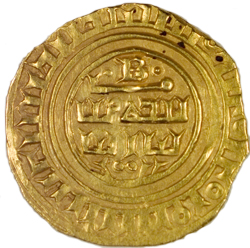
Tripoli, Bohemond VI or VII, gold bezant, 1251-87. Courtesy of Princeton University Numismatic Collection.

Tripoli, Bohemond VI or VII, gold bezant, 1251-87. Courtesy of Princeton University Numismatic Collection.

The Medieval Academy is delighted to announce the five recipients of the

2014 Schallek Awards, presented by the Medieval Academy of America and the Richard III Society, American Branch.

Amy Eberlin (Univ. of St. Andrews), “Trade and Diplomacy between Scotland and Flanders, 1320-1513”

Rebecca Favorito (The Ohio State Univ.), “The Role of Ritual in Creating Political Culture: The Coronation and the Body Politic in Lancastrian England”

Joanna MacGugan (Univ. of Connecticut), “Competing Authorities and Contested Spaces: Dying in Dublin in the Reign of Edward I”

Michelle Seiler (Univ. of Iowa), “The Formation of Legal Identities: Townspeople and the Law in Three Eastern English Royal Buroughs, 1341-ca. 1450”

Carla Maria Thomas (New York Univ.), “The Landscapes of Control in Early Medieval English Literature”

The Schallek awards, made possible by a generous gift to the Richard III Society from William B. and Maryloo Spooner Schallek, support graduate students conducting doctoral research in any relevant discipline dealing with late-medieval Britain (ca. 1350-1500). The $2,000 awards help defray research expenses such as the cost of travel to research collections and the cost of photographs, photocopies, microfilms, and other research materials.

Posted in MAA Newsletter | Leave a comment