Regesta Pontificum Romanorum Online

The database “Regesta Pontificum Romanorum” has been launched at the beginning of this week. In the near future there will be a regest for every papal contact prior to the year 1198. Please visit www.papsturkunden.de.

As of now just 282 regesta of the Bohemia-Moravia have been released, but there will be coming more soon.

Posted in Announcements | Leave a comment

3-year ESR Fellowship in France

The DIXIT ITN is offering 12 fellowships for Early Stage Researchers (not yet doctors, having obtained a Master degree in the past 4 years, and NOT having spent more than 12 months in the host country during the past 3 years).

One of those 3-year fellowships is based at the EHESS Lyon (ESR 5), under my general supervision*. See here for more information:

http://dixit.uni-koeln.de/esr.html#c18481

The research project is designed to be carried out as a PhD thesis and includes the following tasks:

– Preparation of a digital edition of a medieval work (preferably a collection of biblical *distinctiones*).
– Assessment & evaluation of methods and tools for digital scholarly editing.
– Assessment of, and proposition for the ergonomy and usability of digital scholarly editions.

If you are interested, please follow the procedure described in the link above, and do not hesitate to get in touch with me for more information.

Warning: the deadline for application is Dec. 10th 2013!!

Posted in Fellowships | Leave a comment

Call for Papers – Medieval Iberia and the Mediterranean

The Mediterranean Seminar/UCMRP seeks proposals for papers for a panel on Medieval Iberia and the Mediterranean to be proposed for the 45th Annual Meeting of the Association for Spanish and Portuguese Historical Studies, that will take place 26-29 June 2014 at the University of Modena e Reggio Emilia, Modena, Italy.

Papers in any of the conference languages and from any relevant disciplines are welcome; graduate students are particularly encouraged to apply. Proposals should either situate Iberian historical phenomena in a Mediterranean or extra-peninsular frame, address the influence or movement of people, institutions, cultural trends, or engage in a inter-regional comparative analysis.

Please send a title, 250-word abstract and a 2-page CV, to brian.catlos@mediterraneanseminar.org with the subject heading “ASPHS proposal” no later than 23 December 2013. Please indicate if you will require audio-visual support. University of California faculty and graduate students may apply for travel assistance through the Mediterranean Seminar.

Posted in Call for Papers | Leave a comment

MAA News – Holiday Office Closures

The Medieval Academy office will be closed on the following dates:

November 28 – 29
December 23 – 27
New Year’s Day

Posted in MAA Newsletter | Leave a comment

MAA News – Different Ways to be a Medievalist: the First of a Series

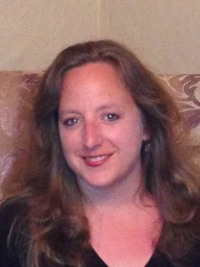
Laura Morreale

Laura Morreale

In the days of too few university positions and an increased appreciation for quality-of-life concerns, this series aims to pass on members’ experiences as non-tenure track medievalists to students currently in graduate school or to those who are just turning their attention to the job market. We hope to demonstrate the many ways that medievalists can contribute to the field, and to open a discussion about how the skills we gain as medievalists can be used outside academia. As law and business professors have long known, the ability to articulate how a common set of skills translate to the job market is beneficial to all medievalists who are negotiating their work environments, whether inside the academy or not. Our first contributor is Laura Morreale, Associate Director of Medieval Studies at Fordham University in New York City.

Medievalist Mom
This is the story of how I got my current position, Associate Director of Medieval Studies at Fordham University, and how my training as a medievalist helped me in my first post-degree job, as mother of four. I received my MA in Medieval Studies and my PhD in History at Fordham, graduating with the MA in 1996 and the PhD in 2004. By the time I had my PhD, I also had three children, all under the age of 8. My husband and I were living in Washington, DC and struggling with balancing the demands of parenting and professional life.

I graduated in May of 2004, and by September, was teaching a two-semester Medieval History course at a local university, thanks to a friend who had recommended me for the position during her research leave. I had initially been a bit lukewarm about my teaching experience in graduate school, but thought that adjuncting was what people with PhDs did so they could continue to research. After a year as an adjunct, however, I was more convinced than ever that teaching was not for me (nor for my poor students), and because it was completely impractical for me to undertake the type of academic job search that might result in a job I could accept, I resigned myself to the fact that my principle job title for the foreseeable future was going to be “Mom.”

I realize this may be a taboo topic among those in professional schools, but the desire for a healthy family life is a real concern for many people and should not be trivialized or ignored. Despite a general feeling in some workplaces and professions that children should not be mentioned and should definitely not have an effect on one’s career trajectory, many of us are called to parenthood, which does not automatically disqualify us from contributing in one way or another to our chosen fields.

On the contrary, I found scholarship and motherhood to be strangely, if at times stressfully, symbiotic. In many ways, parenthood helped me to be a productive scholar, because I was forced to be efficient with the small amount of research and writing time I had on hand. For many years, it was naptime or no time to get through my reading or writing tasks for the day, and if I didn’t get it done then, I wasn’t getting it done at all.

On the other hand, my training as a medievalist helped me enormously as a parent. People would often ask me, “How do you continue with your scholarship when you are also a full-time Mom?” and my answer would be, “I don’t know how people can be parents without having something like this.” I know I would have done a much poorer job as a parent if I could not have slipped away to thirteenth-century Venice once in awhile. Moreover, I was able to create an identity that was distinct from being my children’s mother or my husband’s wife.

While I was unable to go away for extended research trips to far-off archives, I did bring photocopies of primary sources to the playground, and often skimmed through the next article I had to read as I was waiting in the carpool line to pick up my children from school. My children were enormously proud of me when I had my first bit of work published, and were happy to tell their friends that I was a real medieval historian. In this way, I was able to, among other things, publish a book-length translation, participate in a colloquium at the Folger Shakespeare Library that resulted in an article published in Speculum, write several small encyclopedia articles, publish several pieces in a new History web magazine (for which I was paid actual money), and research and create two scholarly websites hosted through Fordham’s Center for Medieval Studies. One of these websites, which boasts over nine thousand hits per year, will be the basis for next year’s annual conference at the Center, bringing together scholars from across the country and from Europe. In the end, I did not have to do research while I was a mom, I got to do research, and that approach was very helpful as I built my post-grad-school CV.

My ability to remain productive was, as I have been told, one of the main reasons that I was able to secure my current position, which I began in August 2012 just after my fourth child turned two. Other skills included my willingness to learn digital programs, my ability to multi-task, stick to deadlines, and follow-through on projects I had undertaken. In my current job, I do not make anyone sit through my lectures, and I am able to participate in the enriching life of the Center, talking to faculty and graduate students about their work, and taking advantage of what the University offers in terms scholarly advancement, particularly in terms of digital humanities and technology. I feel that I am contributing to Medieval Studies both at my University but also world-wide, through the websites and some of the other publishing venues I found when I was a scholar-mom, which I may not have sought out had I remained on a more traditional career path.

If I were to give any advice to those seeking to use their medievalist skills outside of academia, it would be the following:

  1. Develop digital skills. Not having them is almost not an option these days, and they can increase the flexibility of your work life.
  2. Decide what you like about what you have learned, and maintain that. For me it was not teaching, but research and writing that I enjoyed.
  3. Participate in the professional fields that interest you, by volunteering or demonstrating some sort of active interest during graduate school. The time investment can be minimal, but what you will gain in terms of networking and the ability to speak authoritatively about the field will help as you look for a post-grad-school position.

And finally, remember that most careers these days are not linear, meaning that few people end up in the jobs they envision when they undertake a course of study. Your expectations for what constitute a successful and enriching career may change over time, and you may find yourself in a career that uses your skills in ways you could never have predicted.

Posted in MAA Newsletter | Leave a comment

Visiting Scholars List, 2013-2014

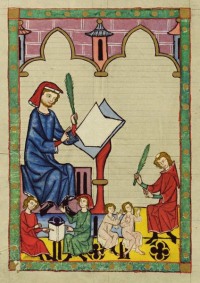
Der Schulmeister von Eßlingen, from Heidelberg, Cod. Pal. germ. 848, Große Heidelberger Liederhandschrift (Codex Manesse), Zürich, c.1300-c.1340, fol. 292v.

Der Schulmeister von Eßlingen, from Heidelberg, Cod. Pal. germ. 848, Große Heidelberger Liederhandschrift (Codex Manesse), Zürich, c.1300-c.1340, fol. 292v.

Each year, the Medieval Academy maintains a list of medievalists who are visiting North America from other countries. The purpose of the list is to provide a resource for those who would like to invite foreign scholars to deliver lectures on their campus but are unable to cover the expenses of international travel.

Fordham University
Center for Medieval Studies
441 E. Fordham Road
Bronx, NY 10458
Tel. (718) 817-4655
Website: http://www.fordham.edu/mvst/
Contact: Maryanne Kowaleski, kowaleski@fordham.edu

Chris Given-Wilson
(University of St. Andrews)
Field: Medieval History, English Kings and Nobility
Period of Residence: September 11, 2013 to May 30, 2014
Website: http://www.st-andrews.ac.uk/history/staff/chrisgivenwilson.html

Matthew Mesley
(Universität Zürich)
Field: Bishops and Clerical Masculinity in Thirteenth-Century Germany and England
Period of Residence: January 15, 2014 to May 2014
Website: http://www.hist.uzh.ch/fachbereiche/mittelalter/assistenzprofessuren-und-foerderprofessuren/hoefert/team/mesley_en.html

Saint Louis University
Center for Medieval and Renaissance Studies
3800 Lindell Blvd.
St. Louis, MO 63108
Tel. (314) 977-7180 | Fax: 314-977-3884
Website: http://www.slu.edu/x19540.xml
Contact: Thomas F. Madden, maddentf@slu.edu

Kriston Rennie
(University of Queensland)
Field: Medieval Canon Law
Period of Residence: January 13, 2014 to March 21, 2014
Website: http://www.uq.edu.au/hprc/dr-kriston-rennie

Robert Hillenbrand
(University of Edinburgh)
Field: Medieval Islamic Art and Architecture
Period of Residence: November 15 to December 20, 2013
Website: http://www.ed.ac.uk/schools-departments/literatures-languages-cultures/islamic-middle-eastern/people/r-hillenbrand

Carole Hillenbrand
(University of Edinburgh)
Field: Medieval Islam
Period of Residence: November 15 to December 20, 2013
Website: http://www.ed.ac.uk/schools-departments/literatures-languages-cultures/islamic-middle-eastern/people/c-hillenbrand

School of Historical Studies
Institute for Advanced Study
Einstein Drive
Princeton, NJ 08540
Tel. (609) 734-8000
Website: http://www.hs.ias.edu/
Contact: Marian Zelazny, mzelazny@ias.edu

Stefan Esders
(Freie Universität Berlin)
Field: Antique and Early Medieval History
Period of Residence: September 19 to December 20, 2013
Website: http://www.geschkult.fu-berlin.de/en/e/fmi/arbeitsbereiche/ab_esders/index.html

Anna Boreczky
(National Szechenyi Library)
Field: Medieval Book Culture
Period of Residence: September 1, 2013 to April 2014

University of Toronto
Centre for Medieval Studies
125 Queen’s Park, 3rd Floor
Toronto M5S 2C7
Canada
Tel. +1 416-978-4884
Website: http://medieval.utoronto.ca
Contact: Martin Pickave, martin.pickave@utoronto.ca

Christopher Martin
(University of Auckland)
Field: Medieval Philosophy
Period of Residence: September to December 2013
Website: http://artsfaculty.auckland.ac.nz/staff/?UPI=cmar057

The Newberry Library
60 West Walton Street
Chicago, IL 60610
Tel. (312)943-9090
Website: http://www.newberry.org/
Contact: Karen Christianson, christinasonk@newberry.org

Camille Poiret
(Edmond Rostand Médiathèque)
Field: Archive Studies, Paleography, Library Conservation
Period of Residence: September 6 to October 3, 2013

Posted in MAA Newsletter | Leave a comment

MAA News – 2013 CARA Meeting

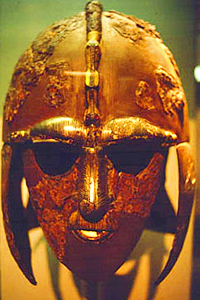
Helmet from the Sutton Hoo ship-burial 1, England. Photo by Mike Markowski.

Helmet from the Sutton Hoo ship-burial 1, England. Photo by Mike Markowski.

The annual meeting of the Medieval Academy’s Committee on Centers and Regional Associations took place on Friday, 4 October at the Newberry Library in Chicago. Twenty delegates representing Medieval Studies programs, centers, departments and regional associations from around North America gathered to discuss common problems (including budgets, programming cutbacks, curricular revolutions, and the job market), share success stories, and brainstorm ways we can support each other in our advocacy for and teaching of medieval studies. The meeting included a trip to the rare book room to see some of the Newberry’s manuscript treasures. Our thanks to CARA Chair James Murray and the Newberry’s Karen Christianson for organizing and implementing the meeting.

We invite all interested members to join us at the 2014 CARA meeting at UCLA on Sunday 13 April, when CARA will meet after the close of the Medieval Academy Annual Meeting. More information coming soon!

Posted in MAA Newsletter | Leave a comment

Medieval Intellectual History Seminar

The Newberry Center for Renaissance Studies presents:

Medieval Intellectual History Seminar
Saturday, December 7, 2013
1 pm

Eric Goddard, former student and scholar at the University of Wisconsin, Madison, and now at Trinity Christian College in Chicago, will present on the topic: “Demographic Representation and the Crisis of the University of Paris (c.1418 – 1444).”

Eric’s paper will be distributed roughly a week prior to the seminar.

Brett Whalen of the University of North Carolina, currently at the Humanities Institute at the University of Wisconsin, will join us to present on: “The Last Papal Monarch: Innocent IV and the ‘Plentitude of Power'”

http://www.newberry.org/12072013-december-2013-medieval-intellectual-history-seminar

This program is free and open to the public; advance registration is NOT required.

Posted in Seminars | Leave a comment

Call for Papers – Mediterranean Studies Association

The Seventeenth Annual International Congress of the Mediterranean Studies Association will be held on May 28-31, 2014, at the University of Málaga, Spain. Proposals are now being solicited for individual paper presentations, panel discussions, and complete sessions on all subjects related to the Mediterranean region and Mediterranean cultures around the world from all historical periods. Sponsors of the congress include the Mediterranean Studies Association, University of Málaga, Ayuntamiento de Marbella, University of Massachusetts Dartmouth, University of Kansas, Utah State University, and the Institute for Mediterranean Studies, Busan University of Foreign Studies, Korea.

Following optional excursions, the Congress will open with a plenary session and reception on the evening of Wednesday, May 28. Over 150 scholarly papers will be delivered before an international audience of scholars, academics, and experts in a wide range of fields. The official languages of the Congress are English and Spanish. Complete sessions in any Mediterranean language are welcome. A number of special events are being planned for Congress participants that will highlight the unique cultural aspects of Andalusía.

Guidelines for Submission of Proposals
1.    You may submit a proposal for an individual paper presentation, a complete session, or a round table panel on any Mediterranean topic and theme. The typical session will include 3 or 4 papers, each lasting twenty minutes, a chair, and (optionally) a commentator. (For examples of paper, roundtable panels, and session topics, and the range of subjects, see the programs from previous congresses.)
2.    Submit a 150-word abstract in English for each paper, and a one-page CV for each participant, including chairs and commentators, as well as each participant’s name, email, regular address, and phone number. Proposals for complete sessions or roundtables need to include the chair’s name. Only ONE paper proposal per person will be accepted.
3.    Proposals for papers and/or sessions must be submitted through the MSA website: https://www.mediterraneanstudies.org/
Membership and Congress Registration
All accepted participants must be 2014 members of the MSA as well as register for the Congress no later than February 1, 2014.

Publication
After the congress, you are encouraged to submit your revised, expanded paper for consideration for publication in the Association’s double-blind, peer-reviewed journal, Mediterranean Studies, published by Penn State Univ. Press.

If you have questions, please contact Ben and Louise Taggie @ medstudiesassn@umassd.edu, and Geraldo Sousa @ Sousa@ku.edu

Posted in Call for Papers | Leave a comment

Jobs for Medievalists

The Department of History at the University of Minnesota, Duluth has a full-time, tenure-track position as Assistant Professor in the history of the ancient world to begin August 25, 2014. Specialization is open, but preference will be given to candidates whose research focuses on the Mediterranean world including Greece and/or Rome, trans-regional connections, Egypt and/or Northeast Africa, and/or Indian Ocean networks. Training and/or experience in museums or public history a plus.  Essential qualifications include: Ph.D. or equivalent in History, Classics or related field from a regionally accredited university (doctorate must be in hand by July 1, 2014), demonstrated ability in relevant languages, demonstrated teaching experience (T.A. experience is acceptable), demonstrated potential for research and publication, excellent written communication skills, and an ability to work with people of diverse backgrounds and experiences.

The University of Minnesota requires online applications for this position.  For a complete position description and information on how to apply online, visit http//employment.umn.edu and search for job requisition 187935.  Complete applications will be reviewed beginning December 16, 2013.  The University of Minnesota is an equal opportunity educator and employer.

Posted in Jobs for Medievalists | Leave a comment