Call for Papers – 17th Annual Mediterranean Studies Association

The Seventeenth Annual International Congress of the Mediterranean Studies Association will be held on May 28-31, 2014, at the University of Málaga, Spain. Proposals are now being solicited for individual paper presentations, panel discussions, and complete sessions on all subjects related to the Mediterranean region and Mediterranean cultures around the world from all historical periods. Sponsors of the congress include the Mediterranean Studies Association, University of Málaga, Ayuntamiento de Marbella, University of Massachusetts Dartmouth, University of Kansas, Utah State University, and the Institute for Mediterranean Studies, Busan University of Foreign Studies, Korea.

Following optional excursions, the Congress will open with a plenary session and reception on the evening of Wednesday, May 28. Over 150 scholarly papers will be delivered before an international audience of scholars, academics, and experts in a wide range of fields. The official languages of the Congress are English and Spanish. Complete sessions in any Mediterranean language are welcome. A number of special events are being planned for Congress participants that will highlight the unique cultural aspects of Andalusía.

Guidelines for Submission of Proposals
1.    You may submit a proposal for an individual paper presentation, a complete session, or a round table panel on any Mediterranean topic and theme. The typical session will include 3 or 4 papers, each lasting twenty minutes, a chair, and (optionally) a commentator. (For examples of paper, roundtable panels, and session topics, and the range of subjects, see the programs from previous congresses.)
2.    Submit a 150-word abstract in English for each paper, and a one-page CV for each participant, including chairs and commentators, as well as each participant’s name, email, regular address, and phone number. Proposals for complete sessions or roundtables need to include the chair’s name. Only ONE paper proposal per person will be accepted.
3.    Proposals for papers and/or sessions must be submitted through the MSA website: https://www.mediterraneanstudies.org/
Membership and Congress Registration
All accepted participants must be 2014 members of the MSA as well as register for the Congress no later than February 1, 2014.

Publication
After the congress, you are encouraged to submit your revised, expanded paper for consideration for publication in the Association’s double-blind, peer-reviewed journal, Mediterranean Studies, published by Penn State Univ. Press.

If you have questions, please contact Ben and Louise Taggie @ medstudiesassn@umassd.edu, and Geraldo Sousa @ Sousa@ku.edu

Posted in Call for Papers | Leave a comment

Call for Contributors: “Mediterranean Voyages”

Article proposals are being accepted for “Mediterranean Voyages”, a special issue of Mediterranean Studies, a publication of the Mediterranean Studies Association.

The Mediterranean, as Fernand Braudel taught us to see it, is a world in itself, a single great body of water connecting mountains, deserts, valleys and plains to one another.  To speak of the Mediterranean, then, is to refer simultaneously to geology, geography, history, art, architecture, languages, literature, technology, sociology and anthropology, all within a space that has been transformed into a concept by the human experience of it.   That experience is synonymous with the voyage, for our knowledge of the Mediterranean has emerged from the movement of people through its lands and across its waters.  As they move, Mediterranean voyagers leave fragments of themselves, of their material cultures, of their ideas, as records of their travels, their points of departure, their various courses, their many purposes, their possible meanings.  These fragments, too, move ceaselessly through and beyond the Mediterranean, making it into a culture of migration and mobility, even as whole populations within it remain sendentary.

How are we to discuss the Mediterranean voyage in its specificity?  Certainly, its characteristics are elusive.  The Odyssey tells the story of Odysseus’s decade-long Mediterranean journey, in which he claims to have visited the Lotus Eaters, the Laestrygonians, and the Cyclopes, and to have reached the entrance of Hades itself.   Can we use a fictional account such as this to recover real information about archaic Greek naval practices, allowing us to characterize the Mediterranean nature of voyages with greater precision?  Or are we more likely to identify the characteristics of the Mediterranean voyage with Odysseus’s journey of self-exploration, an inspiration to writers from Vergil to Dante, from James Joyce to Nikos Kazantzakis, from Derek Walcott to Margaret Atwood?   The use of qanats, underground water distribution tunnels developed in Persia during the time of the Acheamenid Empire, spread to the Mediterranean during Roman and Byzantine times.  Because this system is defined by, and depends for its success on, all-important factors of human interface and local social cohesion, are we to consider it a Mediterranean technology when we find it in Mediterranean cultures?  When did the Visigoths cease being Germanic to become Mediterranean?  Did France, Spain and Portugal become less Mediterranean when they devoted marine resources to transatlantic voyages during the Age of Discovery?   What is the role of the Mediterranean voyager in articulating differences among Mediterranean histories, traditions and practices?  How does the Mediterranean voyage differ from voyages across other waters, through other lands and into other spaces?

Responses to these questions help to define the Mediterranean voyage, but they also raise additional questions.  What are the indispensable constituents of a Mediterranean voyage?  What are the technologies that, in their diffusion throughout the region, have contributed to the making of the Mediterranean as a concept?  What are the political, economic, social and even psychological consequences of the periodic swerves of Mediterranean cultures away from voyages through the body of water they share and toward other spaces?  Who migrates in the Mediterranean world, and beyond it, and what prompts the migration?  Who remains sedentary and why?
The purpose of this special issue of Mediterranean Studies is to generate a discussion of the Mediterranean voyage as a way of eludicating the field of Mediterranean Studies today.

The deadline for articles of 15 to 25 pages in English is January 1, 2014.  Submissions will be peer-reviewed by an interdisciplinary panel of scholars using a double blind process.  Final drafts of accepted articles are due on June 30, 2015.  The anticipated publication date for the special issue is Fall 2016.

Please direct inquiries, proposals and articles to Susan L. Rosenstreich at rosensts@dowling.edu.

Posted in Announcements | Leave a comment

Call for Papers – Medieval Portrayals of Alexander the Great

Ever since Alexander the Great built his empire in the 330s BCE, his
personality and exploits captured the  interest and imagination of the
people of many lands — both lands that he had conquered, in southeastern
Europe, Asia, and Africa, and lands beyond the borders of his empire, in
northern and western Europe. In the Middle Ages,the so-called *Alexander
Romance* of Pseudo-Callisthenes was an especially popular text, or family
of texts, among Christians, Muslims, and Jews, in its various versions in
various languages. However, this was not the only medieval portrayal of
Alexander. This session welcomes papers on any medieval representations of
Alexander, whether in literature (historical, legendary, or other) or
visual artistic sources.

The session will be held at the International Medieval Congress, University of Leeds, 7-10 July 2014

Deadline 31.8.2013

Contact / expressions of interest:
Gabriel Wasserman gavrielwasserman@gmail.com

Posted in Call for Papers | Leave a comment

Call for Papers – New Approaches to Performance Practice: Process, Theory, Technique

New Approaches to Performance Practice:  Process, Theory, Technique,

Medieval and Renaissance Drama Society sponsored session at ICMS, Kalamazoo May 8-11, 2014

Medieval drama scholars are not new to the idea that reconstructive performance experiments yield valuable information about early dramatic texts. However, with the growing acceptance of practice- and performance-as-research in the wider academy, now is the perfect time to explore the theories and processes of this burgeoning field as it applies to early drama. This session seeks invigorating explorations of the academic opportunities that performance holds. Moving beyond reconstruction, what and how do we learn in performance? What are the particular experiences of an event? How can accidental discoveries open new avenues of learning? Papers on either process or performance, as well as discussions of either “drama” or “performative texts” are encouraged.

Please send one-page abstracts to Carolyn Coulson at ccoulson2@su.edu by September 15, 2013.

Posted in Call for Papers | Leave a comment

Speculum, Volume 88

The January 2013 issue of Speculum shipped several weeks ago; please contact us at info@themedievalacademy.org if you haven’t received yours yet. Members will receive the remaining issues for this year (April, July and October) in due course.

Posted in MAA Newsletter | Leave a comment

Call for Nominations for Fellows and Corresponding Fellows

Members are invited to submit nominations to the Fellows and Corresponding Fellows of the Medieval Academy. The 2014 election operates under new and revised by-laws and procedures. Under the established rules, the number of slots available in 2014 for new Active Fellows is two, for which there must be at least four nominations; the same is true for Corresponding Fellows. Nominations for the 2014 elections must be received by 15 October 2013. Instructions for nominations are available at: http://www.medievalacademy.org/?page=Election_Procedure

Posted in MAA Newsletter | Leave a comment

Boswell Dissertation Grant

boswellThanks to the generosity of our members, the $10,000 matching challenge offered by the Freeman Foundation has been successfully met, fully funding the Boswell Dissertation Fund and allowing us to award the grant annually beginning in 2014. The Boswell Dissertation Grant joins a growing list of Medieval Academy grants, fellowships and awards.

Many of the donations to the Boswell fund came with fond memories from friends, students and colleagues, such as this from Melissa Conway, Head of Special Collections at the University of California, Riverside:

“John Boswell did more than anyone to insure that all the students working on medieval topics finished their dissertations–whether or not he served on their committees. Through the monthly lunches he hosted at his apartment, he fostered an environment of support and collaboration.

We encouraged one another to finish–and if one of us hit a particularly rough patch in writing (or in life ), John was there to help us through. He was not only a brilliant scholar and an outstanding teacher, but also one of the kindest and most caring of people.”

Donations made to the Academy in Professor Boswell’s honor will of course continue to be accepted; contributions made in honor of Prof. Boswell after 23 May will go into our general Endowment Fund but will be acknowledged as having been given in his name.

The Boswell Dissertation Fund was established in 2006 by a group of Professor Boswell’s friends and colleagues, spear-headed by Ruth Mazo Karras, Adam Kosto and Ralph Hexter. It is a great pleasure for us to thank them, the Freeman Foundation, and all members of the Academy who contributed to this challenge for their generosity in honoring John Boswell in this way.

Posted in MAA Newsletter | Leave a comment

Funding Opportunities for Medievalists

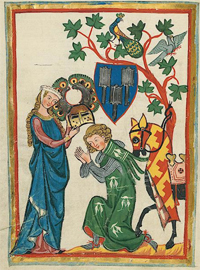
Cod. Pal. germ. 848, Große Heidelberger Liederhandschrift (Codex Manesse), Zürich, c.1300-c.1340, fol. 82v.

Cod. Pal. germ. 848, Große Heidelberger Liederhandschrift (Codex Manesse), Zürich, c.1300-c.1340, fol. 82v.

The Academy encourages its members to apply for grants and residential fellowships in these and other programs:

The American Academy in Rome
The American Philosophical Society
Getty Research Fellowships
Guggenheim Foundation
Institute for Advanced Studies
Mellon Foundation
National Endowment for the Humanities 
National Humanities Center

We will post these and other links to funding opportunities for medievalists on our website. Please contact us at info@TheMedievalAcademy.org with additional programs and awards so that we may make this list as complete as possible.

Posted in MAA Newsletter | Leave a comment

Awards Granted to Medievalists

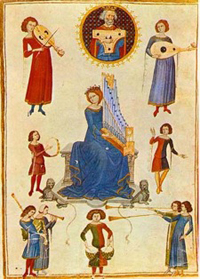
Boethius, De Musica, from Naples, Biblioteca Nazionale Vittorio Emanuele III, MS V. A. 14.

Boethius, De Musica, from Naples, Biblioteca Nazionale Vittorio Emanuele III, MS V. A. 14.

Additional grants and awards for medievalists have recently been announced. These include:

National Endowment for the Humanities Fellowships:
Thomas Burman, University of Tennessee, Knoxville
“The Dominicans, Islam, and Christian Thought, 1220-1320”

Adam Davis, Denison University
“The Rise of the Medieval Hospital and the Formation of a Charitable Society in 12th- and 13th-Century Champagne, France”

Kathy Krause, University of Missouri, Kansas City
“The Role of Noblewomen in Literary Production in Northern France during the Thirteenth-Century”

Deborah Tor, Univ. of Notre Dame
“The Great Seljuq Sultanate and the Formation of Islamic Civilization, 1040-1194”

NEH Digital Humanities Start-up Grants:
Catholic University of America — Washington, DC
“Project Andvari: A Digital Portal to the Visual World of Early Medieval Northern Europe”
Lilla Kopar, Project Director
Nancy Wicker, Project Director

University of Missouri, Kansas City — Kansas City, MO
“A Digital Studio for the Optical and Chemical Analysis Of Manuscripts and Printed Books”
Virginia Blanton, Project Director
Jeffrey Rydberg Cox, Project Director
Nathan Oyler, Project Director

American Philosophical Society, Franklin Research Grants:
James Morganstern, Ohio State University
“The Church of Notre-Dame at Jumièges from the Seventh Century to the Present”

Sarah Noonan, Lindenwood University
“The Book in Parts: Selective Reading Practices in Late Medieval England”

Janelle Werner, Kalamazoo College
“Priests and Concubines in England, 1375-1559”

Institute for Advanced Studies faculty appointments:
Cynthia Hahn
Yitzhak Hen

National Humanities Center Fellowships:
Lee Manion, University of Missouri
“The King is Emperor: Sovereignty, Justice, and Theories of Empire in Late Medieval Literature”

Claire Sponsler, University of Iowa
“Reading the Beauchamp Pageant”

Carol Symes, University of Illinois
“Public Acts: Performance, Popular Literacies, and the Documentary Revolution of Medieval Europe”

Guggenheim Foundation Fellowship:
Jerold C. Frakes, University at Buffalo (SUNY)

Two Academy members were recently elected to the American Academy of Arts and Sciences:
Teofilo Ruiz, University of California, Los Angeles
Stephen G. Nichols, Johns Hopkins University

We congratulate these scholars for their achievements and look forward to seeing the results of their research.

Posted in MAA Newsletter | Leave a comment

Medeival Academy Publications, Electronic and Otherwise

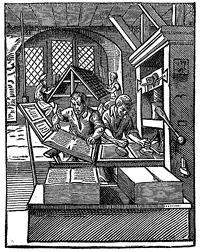
Printer, from Jost Amman and Hans Sachs, Das Ständebuch. Frankfurt am Main 1568.

Printer, from Jost Amman and Hans Sachs, Das Ständebuch. Frankfurt am Main 1568.

We have revamped our publications page to enable members and visitors to easily see which of the more than 150 books published by the Academy are available for purchase and in what format(s):

– Forty volumes are available as print-on-demand books at Amazon.com;
– Three dozen volumes are available as freely accessible PDF and/or HTML files on the Medieval Academy website;
– Twenty-seven volumes will be or are already available as eBooks through the American Council of Learned Society’s Humanities eBook Library (click here to subscribe).

We plan to systematically add to all of these offerings in the future. For those of you who prefer your books in codex format, some of the Academy’s most recent publications can be purchased through our publishing partner, University of Toronto Press, and fifty-one out-of-print volumes are available for sale at the Academy office (at a 20% discount for members).

The entire library of Medieval Academy Books and Speculum Anniversary Monographs is listed here. Next to each title are links that will lead you to each of the various formats in which the book can be accessed or purchased.

Nearly all of the Medieval Academy Reprints for Teaching volumes continue to be available through University of Toronto Press and may be found here.

Posted in MAA Newsletter | Leave a comment