
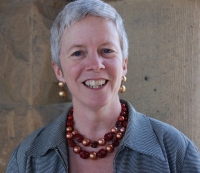
MAA News – From the President

Dear Academy Members,

I’ve had a glimpse of the future, and despite all the disheartening conditions and prospects in academic life, it is intellectually BRIGHT! Graduate student participation in this year’s Annual Meeting is very impressive.

Over forty percent (42.2%) of the conference sessions feature the work of graduate students. Doctoral candidates from public universities competed especially well in the Program Committee’s blind-review process. They will travel to Washington DC from the far west (California, New Mexico, and the state of Washington), from the mid-west (Illinois, Iowa, Michigan, and Wisconsin), and from both the north and south (Pennsylvania, Delaware, North Carolina, Tennessee, and Texas).

Perhaps unsurprisingly, graduate students are taking the Middle Ages global: all four presenters in a special session co-organized with the Smithsonian’s National Museum of Asian Art are doctoral candidates. Zumrad Ilyasova (University of Basel) is contributing a paper on the multiple meanings of silk on the Silk Road. Kris Kryscynski (University of Washington) will use a screen from the Freer collection to elucidate the religious teaching of Japanese Buddhist nuns, while Yingxue Wang (Harvard University) will share her research on ephemeral colors in East Asian shrines and their entanglement with social, cultural, and ecological environments. Sylvia Wu (University of Chicago) will conclude the session with a paper on the constructed identities of “Shiraz” in the medieval Indian Ocean.

Graduate student presenters are also doing innovative new work in richly-tilled European fields. We will learn about “The Beauty of the Field: Imagination and Landscape” from Alice Carolyn Wolff (Cornell University) and ecclesiastical jurisdiction in pastoral visitation records with Frances Eshleman (Fordham University). Martina Franzini (Johns Hopkins University) will present on love across confessional boundaries in Boccaccio’s Decameron, Isabel Howard (UNC Chapel Hill) on queer authorship in Chrétien de Troyes’ Arthurian Romances, and Audrey Saxton (Penn State) on Custance in Chaucer’s “Man of Law’s Tale.” Jana Valesca Meyer (University of New Mexico) will explore the lives and livelihoods of a Merovingian agricultural community through bioarcheological analysis of skeletal remains from Thuringia, and Jason Stubblefield (University of Tennessee, Knoxville) will show us how William of Malmsbury used allegorical exegesis of the Book of Lamentations to critique twelfth-century ecclesiastical abuses.

Graduate students attending the Annual Meeting will have the opportunity to meet one another and get acquainted on the conference’s first evening, Thursday February 23rd, at a “social hour” in the Hyatt’s Cure Bar hosted by the MAA’s Graduate Student Committee (GSC). The GSC is also sponsoring, in collaboration with the Academy’s Inclusivity and Diversity Committee (IDC), a Group Mentoring Lunch on Saturday February 25th. Organized by GSC chair Reed O’Mara (Case Western Reserve) and IDC chair Joseph Salvatore Ackley (Wesleyan University) with IDC member Nahir Otaño-Gracia (University of New Mexico), the complimentary lunch (funded by the Academy!) offers graduate students and early career scholars informal networking opportunities with senior colleagues. Up to 50 guests will be accommodated, so sign up when registration opens to reserve your place at the table!

Finally, in keeping with the meeting’s theme of “internationalisms,” GSC chair O’Mara and GSC member Will Beattie (Notre Dame) have organized a roundtable on “International Research in Libraries, Archives, and Museums” to help student researchers access collections, prepare for trips abroad, and handle unexpected challenges. The session focuses particularly on changes over the last fifteen years and features specialists with experience in non-European collections: Carlos Diego Arenas Pacheco (Notre Dame; central and Latin America, Asia), and Stephennie Mulder (University of Texas, Austin; Middle East, Africa). Other panelists with expertise in European repositories include Adam S. Cohen (University of Toronto) and alt-ac medievalists David T. Gura (curator), Julia H. Harris (independent scholar) and Kersti Francis (UCLA, GSC Member). Brief presentations from this diverse group of scholars will be followed by ample time for questions and discussion.

I find the energy and brilliance of our medievalist graduate students immensely cheering. I thank all graduate students for contributing their insights and ideas to the many disciplines dedicated to scholarship on the Middle Ages. You are our inspiration and hope for the future! I’m also grateful to their mentors, who continue to pass on their knowledge and encourage young scholars within university environments less and less supportive of research in the humanistic disciplines. Your efforts are bearing fruit.

Wishing all of you peaceful and joyous holidays,

Maureen C. Miller, President of the Medieval Academy of America

Posted in MAA Newsletter | Leave a comment

MAA News – 2023 Annual Meeting: Save the Date!

Join us in Washington, DC from Feb. 23-26 for the 98th Annual Meeting of the Medieval Academy of America. The programme and hotel information are now available on the conference website, and the registration portal will open in early January. We hope to see you there!

Posted in MAA Newsletter | Leave a comment

MAA News – Recently-Awarded MAA Grants and Prizes

Congratulations to these recent awardees!

Nahir Otaño Gracia (Univ. of New Mexico) has been awarded the 2022 Inclusivity & Diversity Book Subvention to support the publication of her forthcoming monograph, The Other Faces of Arthur: Whiteness in the Global North Atlantic (Univ. of Pennsylvania Press).

The 2023 CARA Conference Grant has been awarded to the Medieval Association of the Midwest (MAM) and the Mid-American Medieval Association (MAMA) to support their joint 2023 meeting, “The Medieval Out of Time and Place.”

Travel Grants have been awarded to the following scholars to support travel to upcoming conferences to present their work: Juliette Calvarin (MAA Annual Meeting); Kathryn A. Green (International Medieval Congress); Thomas Hewitt (MAA Annual Meeting); Emily McLemore (International Congress of the John Gower Society); Daniel Bennett Page (International Medieval Congress); Randall Todd Pippenger (MAA Annual Meeting); and Tyler Davis Sampson (International Medieval Congress).

MAA Annual Meeting Student Bursaries (supporting travel for students to present their work at the upcoming Annual Meeting) have been awarded to: Hazim Azghari (Oxford Univ); Caolyn Cargile (Fordham Univ.); Frances Eshleman (Fordham Univ.); Adam Mahler (Harvard Univ.); Jane Meyer (Univ. of New Mexico); and Audrey Saxton (Penn State Univ.)

We are thrilled to be able to support the work of these scholars, publications, lectures, and programs!

Posted in MAA Newsletter | Leave a comment

MAA News – Upcoming Deadlines

The Medieval Academy of America invites applications for the following grants. Please note that applicants must be members in good standing as of September 15 in order to be eligible for Medieval Academy awards.

The Inclusivity and Diversity Research Grant
The Inclusivity and Diversity Research Grant of up to $3,000 will be granted annually to a scholar, at any stage in their career, who seeks to pursue innovative research that will broaden the scope of medieval studies. Projects that focus on non-European regions or topics under the Inclusivity and Diversity Committee’s purview such as race, class, disability, gender, religion, or sexuality are particularly welcomed. The grant prioritizes applicants who are students, ECRs, or non-tenured. Click here for more information. (Deadline 31 December 2022)

Belle Da Costa Greene Award
The Belle Da Costa Greene Award of $2,000 will be granted annually to a medievalist of color for research and travel. The award may be used to visit archives, attend conferences, or to facilitate writing and research. The award will be granted on the basis of the quality of the proposed project, the applicant’s budgetary needs (as expressed by a submitted budget and in the project narrative), and the estimation of the ways in which the award will facilitate the applicant’s research and contribute to the field. Special consideration will be given to graduate students, emerging junior scholars, adjunct, and unaffiliated scholars. Click here for more information. Click here to make a donation in support of the Greene Award. (Deadline 15 February 2023)

Olivia Remie Constable Award
Four Olivia Remie Constable Awards of $1,500 each will be granted to emerging junior faculty, adjunct or unaffiliated scholars (broadly understood: post-doctoral, pre-tenure) for research and travel. Click here for more information. (Deadline 15 February 2023)

MAA Dissertation Grants:
The nine annual Medieval Academy Dissertation Grants support advanced graduate students who are writing Ph.D. dissertations on medieval topics. The $2,000 grants help defray research expenses. Click here for more information. (Deadline 15 February 2023)

Schallek Awards
The five annual Schallek awards support graduate students conducting doctoral research in any relevant discipline dealing with late-medieval Britain (ca. 1350-1500). The $2,000 awards help defray research expenses. Click here for more information. (Deadline 15 February 2023)

MAA/GSC Grant for Innovation in Community-Building and Professionalization
The MAA/GSC Grant(s) will be awarded to an individual or graduate student group from one or more universities. The purpose of this grant is to stimulate new and innovative efforts that support pre-professionalization, encourage communication and collaboration across diverse groups of graduate students, and build communities amongst graduate student medievalists. Click here for more information. (Deadline 15 February 2023)

Applicants for these and other MAA programs must be members in good standing of the Medieval Academy. Please contact the Executive Director for more information about these and other MAA programs.

Posted in MAA Newsletter | Leave a comment

MAA News – Support the MAA with an end-of-the-year Donation

As the holiday season approaches, we hope you will reflect on how the Medieval Academy of America (MAA) has responded to the challenges so many of our community members have faced this past year. We’ve increased our scholarship support and public advocacy, while advancing our mission of publishing the most thoughtful and innovative scholarship in medieval studies. This critical work is made possible only when our community comes together to drive these efforts forward through philanthropy.

We hope we can count on your year-end donation so we can provide even greater support next year for more students and early- and mid-career scholars. Programs that fund travel, research and publication are just a few of the ways we help advance the careers of our members. It goes without saying that this support is even more important now, when so many are balancing competing financial needs.

Your donation supports three key priorities, and you can choose where you’d like to see your donation put to work:

1. Funds that support Graduate Students, Early Career, Contingent and Unaffiliated scholars: Donations to named Funds support medievalists in greatest need with travel funds for research and participation in conferences, dissertation fellowships, and special publication prizes.

2. Building Endowment to sustain our core mission: Unrestricted donations to our Endowment support research and the publication of the highest-quality scholarship in all disciplines of Medieval Studies, and the wide diffusion of knowledge about the Middle Ages through topical public programing, K-12 webinars, and digital resources.

3. MAA Critical Priorities: Donations to our Operating Fund allow us to innovate quickly and respond to new needs and changing circumstances.

Please help by making a donation so we can continue to strengthen medieval studies and support its scholars in North America and around the world.

Maureen C. Miller, President

Lisa Fagin Davis, Executive Director

Posted in MAA Newsletter | Leave a comment

MAA News – MAA Office Holiday Closure

The Medieval Academy office will be closed from Dec. 26 – Jan. 2.

Posted in MAA Newsletter | Leave a comment

Master’s Degree Funding – English Social History, Church History, or History of Magic 1350-1600

Master’s Degree Funding (ca. $20,000/pa)
English Social History, Church History, or History of Magic 1350-1600
University of Saskatchewan 

The History Department at the University of Saskatchewan together with Dr. Sharon Wright and Dr. Frank Klaassen invite applications for three funded Master of Arts students interested in working with them on fifteenth- and sixteenth-century social, intellectual, or institutional history.

Klaassen and Wrights’ SSHRC Insight Grant on Female Magic Practitioners will support three students (ca. $20,000 per year) through our two-year thesis-based MA program. Successful applicants will work as researchers on the court and visitation records of the Bishop of Hereford and/or continental records relating to the social history of magic 1350-1600. They will be provided with training in medieval Latin and palaeography but must have at least two years of undergraduate Latin prior to admission. Travel funds for research and conference presentations as well as additional support for foreign student tuition fees may be available.

Klaassen and Wright would be delighted to work with applicants to develop a research proposal (required for application). Students may wish to develop a project focused on Hereford ecclesiastical records which will allow them to collect data for their own thesis as they work as researchers on the SSHRC project. Potential topics include slander, fornication/adultery, irregular marriages, sexual license, bishop’s visitations, disabilities, and the regulation of pastimes such as sports or drinking.

For more information contact Sharon Wright (sharon.wright@usask.ca) or Frank Klaassen (frank.klaassen@usask.ca). For more information about the MA Program at the University of Saskatchewan see https://grad.usask.ca/programs/history.php#Program

Posted in Announcements | Leave a comment

Jobs for Medievalists

Cataloging and Metadata Librarian

Click here for more information and to apply.

The Brown University Library is a dynamic center of scholarship and community at the heart of a world-class research university. Supporting and collaborating with a broad and diverse academic constituency, the Library is essential for Brown’s mission “to serve the community, the nation, and the world by discovering, communicating, and preserving knowledge and understanding in a spirit of free inquiry.” Integrating with Brown’s ambitious strategic plans, the Library is a site of innovation that fuels intellectual creativity. Signature Library initiatives include the establishment of the Center for Library Exploration and Research to increase campus and community impact; the Racial Justice Project to assess and counteract the legacies of historical racism in library practice; the Digital Publications Initiative pioneering new approaches to born-digital scholarship; and a revisioned special collections program that is positioning the John Hay Library as a research destination and leader in reparative and community-based collecting. We are seeking outstanding library professionals at all levels of the organization who are excited about advancing academic excellence at the highest level, and who will bring a wide array of backgrounds, experiences, and abilities to a scholarly community that is actively committed to being more diverse and inclusive

Brown University Library seeks an engaged professional for the position of Cataloging and Metadata Librarian who can contribute to the BUL’s strategic agenda of creating inclusive and anti-racist descriptive metadata for the Libraries collections. Working under the supervision of the Head of Cataloging and Discovery, this position performs original and complex copy cataloging of Brown Library’s resources in all formats and languages, creates authority records, and participates in local catalog maintenance, including reparative cataloging projects. The Cataloging and Metadata Librarian provides important and timely intellectual access to materials in support of the teaching, learning, and research needs of the Brown community. This is an excellent opportunity to work collaboratively with colleagues across the Library, the University, and the Library profession who are dedicated to contributing to new cataloging and metadata practices that include describing more diverse collections, creating more inclusive descriptions, and contributing to reparative practices that address historical omissions and harmful language.

Posted in Jobs for Medievalists | Leave a comment

Call for Applications: Mary Jaharis Center Grants 2023–2024

The Mary Jaharis Center for Byzantine Art and Culture is pleased to announce its 2023–2024 grant competition.

Mary Jaharis Center Co-Funding Grants
promote Byzantine studies in North America. These grants provide co-funding to organize scholarly gatherings (e.g., workshops, seminars, small conferences) in North America that advance scholarship in Byzantine studies broadly conceived. We are particularly interested in supporting convenings that build diverse professional networks that cross the boundaries of traditional academic disciplines, propose creative approaches to fundamental topics in Byzantine studies, or explore new areas of research or methodologies.

Mary Jaharis Center Dissertation Grants are awarded to advanced graduate students working on Ph.D. dissertations in the field of Byzantine studies broadly conceived. These grants are meant to help defray the costs of research-related expenses, e.g., travel, photography/digital images, microfilm.

Mary Jaharis Center Project Grants support discrete and highly focused professional projects aimed at the conservation, preservation, and documentation of Byzantine archaeological sites and monuments dated from 300 CE to 1500 CE primarily in Greece and Turkey. Projects may be small stand-alone projects or discrete components of larger projects. Eligible projects might include archeological investigation, excavation, or survey; documentation, recovery, and analysis of at risk materials (e.g., architecture, mosaics, paintings in situ); and preservation (i.e., preventive measures, e.g., shelters, fences, walkways, water management) or conservation (i.e., physical hands-on treatments) of sites, buildings, or objects.

Mary Jaharis Center Publication Grants support book-length publications or major articles in the field of Byzantine studies broadly conceived. Grants are aimed at early career academics. Preference will be given to postdocs and assistant professors, though applications from non-tenure track faculty and associate and full professors will be considered. We encourage the submission of first-book projects.

The application deadline for all grants is February 1, 2023. For further information, please visit the Mary Jaharis Center website (https://maryjahariscenter.org/grants).

Contact Brandie Ratliff (mjcbac@hchc.edu), Director, Mary Jaharis Center, with any questions.

Posted in Grants | Leave a comment

Statement against Antisemitism

The Medieval Academy of America expresses concern for recent acts of antisemitism both in the United States and abroad. We unequivocally condemn antisemitism of all kinds and stand in solidarity with our colleagues and our community members who suffer from this bigotry.

Much of the hate that antisemites espouse draws from long-standing falsehoods about Jewish identity, and the MAA, in particular, deplores the way that nostalgia for medieval Europe underpins many of their claims. The desire to recreate what is called “crusades” or an “inquisition” warrants a direct condemnation from the Medieval Academy of America.

We urge medievalists and those who teach about the medieval world at all levels to speak out against antisemitism in both the medieval and our contemporary world. We urge medievalists to dispel simplistic understandings of the past that weaponize our period of study in order to offer justifications for violence of any kind – either rhetorical or physical. We urge medievalists to acknowledge the field’s complicity in perpetrating this violence in the past and, further, to take responsibility for advocating unequivocally against antisemitism in the present.

Medieval Academy of America Advocacy Committee

Posted in Advocacy | Leave a comment