MAA News – From the President

Dear Academy Members,

There is a lot of good work going on in our community, and graduate students are doing a lot of it. The Academy’s Graduate Student Committee, moreover, is leading the way in building community.

A good example is how the GSC has developed its newsletter, the GSC News. The current committee’s chair, Reed O’Mara, describes it as providing early career medievalists “with a space to connect with their peers and colleagues.” I was particularly struck by this goal of connectivity. How is it accomplished? She and recent editor Logan Quigley drew my attention to pieces written by members relating their experiences. Shavauna Munster, for example, wrote movingly in the Winter 2019 issue about her experience of Saint Louis University’s Celebrating Belle da Costa Greene conference. As someone who has labored to put on medieval studies events and sometimes wondered “why the hell bother?,” I felt incredibly uplifted in reading her account: what you put into organizing does make a difference to individuals.

Amplifying the voices of others is central to the newsletter’s goal of community building. These voices have related ideas to consider as well as practical tips on the creative process. Sarah Luginbill, for example, shared how she made her dissertation research on portable altars available to the public through a website. Pedagogical successes have also been shared: Jake Coen offered his experience using the case of Saint Maurice to engage students in critical analysis of White Nationalist medievalism and Alexa Sand provided a guide to using STEM models for group work in the humanities classroom. Mimi Zhou’s tips for getting the most out of attending Leeds taught this long-time conference attendee a few things too!

GSC News editors have been particularly agile in addressing the needs of their community via new series and spin-off projects. Their series on Career Alternatives to Academia and the Tenure Track has featured public historian Danielle Griego describing how she got her fulltime job in a state historical society, and Q&As with the owner/executive producer of a podcast company (Hannah Hethmon) and a program manager at the Newberry Library (Rebecca Fall). A new series on Professionalization in a Virtualizing World has yielded a piece by Rebecca Kilgore on lessons learned from planning online conferences and a particularly revelatory contribution by Gregory J. Tolliver on working with his university’s “Graduate Career Coach.” GSC members are also taking this valuable storytelling project into the podcast medium.

I encourage all members of the Academy to check out the online archive of the GSC News (link below). To facilitate your browsing and acknowledge the generous authors, I’ve provided an index below to the articles published. And if you are an independent or early career scholar willing to share your stories, ideas, projects, and experiences, please reach out to the current editors Reed O’Mara (rao44@case.edu ) and Will Beattie (wbeattie@nd.edu).

In closing, I thank the recent GSC chairs—Theodore Chelis, Jillian Bjerke, Christine Bachman, and Jonathan Correa Reyes—who have nurtured the newsletter’s evolution, and all the members of this vibrant MAA committee. Your efforts are really making a difference.

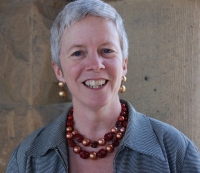
Maureen C. Miller (mcmiller@berkeley.edu), President of the Medieval Academy of America

INDEX TO BACK-ISSUES OF THE GSC NEWS (available here)

11.1 Winter 2019
Caroline Gruenbaum, “GSC Mentoring Program: A Success Story”

Shavauna Munster, “Conference Spotlight: Celebrating Belle da Costa Greene at Saint Louis University”

11.2 Summer 2019
Mimi Zhou, “Conference Spotlight: Tips for the International Medieval Congress at Leeds”

11.3 Fall 2019
Rachael Vause, “But That’s Another Story: Experiences in Teaching and Learning ‘Difference'”

12.1 Spring 2020
Hannah Weaver, “GSC Mentoring Program: A Reflection”

Alexa Sand, “Teaching Mentorship through Group Work: Applying STEM Practices in the Humanities Classroom”

12.2 Summer 2020
Jake Coen, “Medievalist Pedagogy Against White Nationalism: The Case of Saint Maurice”

Chris Humphrey, “As a medievalist, you are good at solving problems”

Aidan Holtan, “Finding a Routine: The Trials and Errors of Developing a Work/Life Balance”

12.3 (Fall 2020)
Dot Porter, “Creative Medievalism as a Digital Humanist”

Emilee Ruhland, “Juggling Glass Balls: Three Tips for Working at Home”

13.1 (Spring 2021)
Joseph Williams, “Applying to Opportunities: The ‘Fit Strategy’ vs. the ‘Crapshoot'”

Danièle Cybulski, “For Indies, This Above All: To Thine Own Self be True”

Konrad Hughes, “Unintentional Blessings”

13.2 (Summer 2021)
Sarah Luginbill, “Spread the Love: Sharing Your Dissertation Research with the General Public via Websites” (Series on Innovations in Dissertation Research)

Q&A with Hannah Hethmon [Owner and Executive Producer of Better Lemon Creative Audio] (Series on Career Alternatives to Academia and the Tenure Track)

13.3 (Fall 2021)
Angelica Verduci, “Writing a Dissertation on the Triumph of Death in a Time of ‘Plague'” (Series on Innovations in Dissertation Research)

Danielle Griego, “Medievalists and Careers Outside of Academia” (Series on Career Alternatives to Academia and the Tenure Track)

Gregory J. Tolliver, “‘You’re Gonna Make It After All’: Finding Confidence and Community through Nonacademic Professionalization” (Series on Professionalization in a Virtualizing World)

14.1 (Spring 2022)
Gennifer Dorgon, “Is the future of Latin medieval”

Q&A with Rebecca Fall [Program Manager, Center for Renaissance Studies at the Newberry Library] (Series on Career Alternatives to Academia and the Tenure Track)

Claire Kilgore, “Planning an Online Conference During a Global Pandemic: Lessons Learned During My Time on the Vagantes Board of Directors”

Posted in MAA Newsletter | Leave a comment

MAA News – MAA Advocacy Committee: Call for Nominations

Dear Colleagues:

The Council of the Medieval Academy of America has voted to establish an Advocacy Committee. This committee will consider and select matters on which the MAA will issue public statements and will craft those statements. The six-member Committee is also charged with reviewing and signing on to the statements issued by other scholarly societies. We seek to assemble a committee that is representative of the membership, including members from different fields within medieval studies, from various career stages and employment profiles, as well as diverse backgrounds, perspectives, and orientations.

Several excellent volunteers have already responded to an earlier call, and we now offer all members of the Academy the opportunity to nominate members to do this important work: who do you think would collaborate effectively to best represent the perspective of medieval studies on current issues? Members need not ascertain the nominee’s willingness to serve before submitting a nomination, and self-nominations are still welcome.

Three Council members and the Academy presidents will craft a balanced slate of nominees and alternates from the members’ nominations and self-nominations, which will be submitted to Council for approval at its July meeting (after which the Executive Director will contact those on the slate to determine their willingness to serve).

You are welcome to make multiple nominations! Submit one nomination per form and look for the “submit another?” prompt at the end. Please submit your nominations by June 15th.

Here’s the Google form to nominate:
https://forms.gle/iRPVBEBHRdV4uarXA

– Maureen Miller, President, Medieval Academy of America

Posted in MAA Newsletter | Leave a comment

MAA News – MAA @ Leeds

If you’re going to be at the Leeds International Medieval Congress this year, please join us on Tuesday, 5 July, 19.00-20.00 for the Annual Medieval Academy of America Lecture: Carol Symes (Dept. of History, University of Illinois, Urbana-Champaign): “Médiévistes sans frontières – Shifting Medieval Boundaries at Multiple Scales”

Afterwards, join Prof. Symes and MAA governance and staff members for the Medieval Academy’s open-bar wine reception.

The Medieval Academy’s Graduate Student Committee roundtable, “Gatekeeping the Middle Ages: Accessing, Congrolling, and Disseminating the Medieval Past in the Modern World,” will take place on Monday, 4 July, from 19.00-20:00.

We hope to see you there!

Posted in MAA Newsletter | Leave a comment

MAA News – CARA Summer Scholarship Winners

Thirteen student members of the Medieval Academy have been awarded CARA Summer Scholarships to support their summer coursework, traveling to centers and programs across North America and overseas. We are thrilled to be able to support this supplemental coursework:

Susan Shoshan Abraham (University of Virginia): “Reading Aljamiado” at The Mediterranean Seminar

Tess Artis (University of South Florida): “Beginning Latin” at University of Toronto Centre for Medieval Studies

Wei-Ting Chen (Department of History, University of Kentucky): “Medieval Latin” at the Marco Institute, University of Tennessee, Knoxville

Alexander Amir D’Alisera (Boston College): “Digital Paleography Summer School” at the University of Göttingen

Tiffany Elder (University of Arkansas – Fayetteville): “Paleography and Codicology: A Seminar on Medieval Manuscript Studies” at University of New Mexico

Alexandra Elizabeth Evans (The Peabody Institute at Johns Hopkins): “Research Techniques and Applied Musicology” at Medieval Music Besalú

Dov Honick (University of Notre Dame): “Summer Hebrew Manuscript Studies Workshop” at the Centre for Hebrew and Jewish Studies, Oxford University

Darcy Ireland (Providence College): “Paleography and Codicology: A Seminar on Medieval Manuscript Studies” at the University of New Mexico

Camila Roxana Marcone (Yale University): “Classical Arabic” at The Qasid Arabic Institute, Amman, Jordan

Mitchell Bryan Simpson (University of Arkansas): “Paleography and Codicology: A Seminar on Medieval Manuscript Studies” at the University of New Mexico

Isabel Grace Thomas Howard (University of North Carolina Chapel Hill): “Latin For Reading” at Fordham University

Lauren Urbont (Stanford University): “Summer Workshop in Hebrew Manuscript Studies” at the Centre for Hebrew and Jewish Studies, Oxford University

Julian Wood (Gonville & Caius College, University of Cambridge): “Classical Arabic” at The Qasid Arabic Institute, Amman, Jordan

Posted in MAA Newsletter | Leave a comment

MAA News – Good News From Our Members

Former MAA President Thomas E. Dale (Univ. of Wisconsin-Madison) has been awarded the Chazen Distinguished Chair of Art History for 2022–2027.

Several MAA members were awarded publication prizes at the 2022 International Congress on Medieval Studies: Dyan Elliott (Northwestern Univ.) was awarded this year’s Otto Gründler Prize for her monograph, The Corrupter of Boys: Sodomy, Scandal, and the Medieval Clergy (University of Pennsylvania Press, 2020); and Katie Menendez (Univ. of Toronto) was awarded the Paul E. Szarmach First Article Prize for “Gregory the Great as Intermediary Figure between East and West: The Eleventh-Century Manuscript Context of the Old English Dialogues,” Viator 51 (2020): 241-271.

Katherine French (Univ. of Michigan) has been awarded a Guggenheim Fellowship to support her research on a fifteenth-century London boarding house for single women.

Alani Hicks-Bartlett (Brown Univ.) has been granted a Short-Term Residency at the Arizona Center for Medieval and Renaissance Studies to support her research on women and violence in Medieval and Early Modern drama.

William Jordan (Princeton Univ.) has been awarded an honorary degree from Oxford University.

Amy Livingstone (Univ. of Lincoln) has been appointed Head of the Lincoln School of History and Heritage, and Professor of History, at the University of Lincoln, UK.

Sarah Luginbil (Univ. of Colorado, Boulder) has been awarded a 2022-2023 Public Humanities Fellowship from Trinity University’s Humanities Collective in San Antonio.

If you have Good News to share, please send it to Executive Director Lisa Fagin Davis.

Posted in MAA Newsletter | Leave a comment

Call for Papers – 2022 Southeastern Medieval Association Conference

The Southeastern Medieval Association’s 2022 Conference will take place in Birmingham, Alabama, November 10-12. The conference theme is “The Body and the Human,” and plenary speakers will be Rick Godden and Carissa Harris.

The CFP is below; the deadline for proposals is July 7. Find additional information at https://www.samford.edu/arts-and-sciences/events/The-Body-and-the-Human

The Body and the Human

In his Timaeus, Plato hypothesizes that human beings participate in the same world-soul that animates the cosmos, a microcosm of the wider macrocosm. This analogy proved stimulating for the inhabitants of the Middle Ages and inspired them to explore the connections between the body and the wider universe, as well as the relationship between bodies. This conference likewise encourages scholars across the fields of medieval studies to examine the body, the human, and the spaces in-between.

The SEMA 2022 conference organizers welcome proposals for individual papers, whole sessions, or round tables from all medieval disciplines and geographical regions, but preference will be given to abstracts that pertain to the conference theme and sub-themes:

Medieval medicine and notions of health
Disability studies
The body politic
Bodies and humans in motion
Visible and invisible bodies
Persecuted and privileged bodies 
Human and non-human
Embodiment and corporeality
Gender and sexuality
Race and racialization
The body in medieval law

Proposals for individual papers must be 200-300 words, and proposals for paper sessions or round tables should provide abstracts for all participants in addition to a brief statement of the panel’s purpose.

Posted in Call for Papers | Leave a comment

ICMA Annual Book Prize

ICMA ANNUAL BOOK PRIZE
Deadline: 31 May 2022

The ICMA invites submissions for the annual prize for best single- or dual-authored book on any topic in medieval art. To be eligible for the 2022 competition, books must have been printed in 2021. No special issues of journals or anthologies or exhibition catalogues can be considered.

The competition is international and open to all ICMA members. To join or renew, click here. A statement of current membership is required with each submission.

Languages of publication: English, French, German, Italian, or Spanish

Prize: US $1,000 to a single author, or $500 each to two co-authors

Submission of books: only printed books with one or two authors are eligible for the prize. A statement of current ICMA membership must accompany each submission.

Presses and self-nominations: books must be sent directly to the jury members. Please fill out this form here. After the form is submitted, an email with addresses will be sent.

Visit www.medievalart.org/book-prize for more information.

Posted in Announcements | Leave a comment

2023 Annual Meeting Call for Papers: Deadline June 1

98th Annual Meeting of the Medieval Academy of America
The Grand Hyatt, Washington, DC
23-26 February, 2023

Proposal Deadline: June 1

The 98th Annual Meeting of the Medieval Academy of America will take place at the Grand Hyatt Washington in downtown Washington, DC. The meeting is jointly hosted by the Medieval Academy of America and a consortium of medievalists from DC, Northern Virginia, and Maryland.

The conference program will feature sessions highlighting innovative scholarship across the many disciplines contributing to medieval studies. The Program Committee invites proposals for papers on all topics and in all disciplines and periods of medieval studies and medievalism, including on the themes and strands proposed below. Any member of the Medieval Academy may submit a paper proposal; others may submit proposals as well but must become members in order to present papers at the meeting. Special consideration will be given to individuals whose field would not normally involve membership in the Medieval Academy. We are particularly interested in receiving submissions from those working outside of traditional academic positions, including independent scholars, emeritus or adjunct faculty, university administrators, those working in cultural heritage institutions (libraries, archives, museums, scholarly societies, or cultural research centers), editors and publishers, and other fellow medievalists. The Program Committee seeks to construct a program that fully reflects and expands the diversity of the Medieval Academy’s membership with respect to research areas and representation.

Plenary addresses will be delivered by Suzanne Conklin Akbari, Professor of Medieval Studies, Institute for Advanced Study, Princeton; Anne Dunlop, Herald Chair of Fine Arts at the University of Melbourne; and Maureen Miller, Professor of History, University of California, Berkeley, and incoming president of the Academy.

See this page for more information and the full Call for Papers:
https://www.medievalacademy.org/page/2023AnnualMeeting

Posted in Annual Meeting, Call for Papers | Leave a comment

Harlaxton Medieval Symposium 2022

Harlaxton Medieval Symposium 2022
Death and Dying
Monday 15 – Thursday 18 August
Harlaxton Manor, Lincolnshire, UK

The Harlaxton Medieval Symposium is an interdisciplinary gathering of academics, students and enthusiasts which meets annually to celebrate medieval history, art, literature and architecture. Speakers at this year’s conference will focus on death in the later Middle Ages in both its practical and devotional aspects. Among themes to be explored are the ways in which death occurs (sickness, accident and murder), preparations for death (wills, testaments and executors’ papers), and devotional practices in lifetime and after death. Rituals and ceremonies associated with the moment of death and its aftermath will include funeral practices, chantries, monuments and monumental sculpture. Papers will relate both to England and to Continental Europe before the Reformation.

Speakers are: Ann Adams, Amy Appleford, Richard Asquith, Julia Boffey, Jane Bridgeman, Clive Burgess, Trevor Dean, Tony Edwards, Nicholas Flory, Lydia Hansell, Andrew Kirkman, Julian Luxford, Michael Michael, Lisa Monnas, Ann Payne, Henry Summerson, Linda Voigts and Nicholas Watson. This year’s Pamela Tudor-Craig Memorial Lecture will be delivered by Julian Gardner.

We are also pleased to continue our commitment to encouraging scholars in the early stages of their careers with two Dobson Scholarships available to PGRs or ECRs (within two years of completing a PhD) to cover conference costs. Awards will be made based on the academic excellence of applicants and the relevance of the symposium theme to their research. The application form can be downloaded on our website and the deadline for applications is 31 May 2022, to allow unsuccessful applicants the opportunity to source funding from elsewhere.

We will also be continuing our annual postgraduate poster competition, to allow PGRs and ECRs to share aspects of their research with delegates at the symposium. This has been a great success in previous years, allowing for the exchange of ideas in a friendly and academically-rigorous environment. Posters can relate to any area of Medieval Studies and do not necessarily have to connect to the theme of the symposium. Awards of the Dobson Scholarship are contingent upon presenting a poster, but we urge all PGRs and ECRs attending the symposium to take this opportunity.

Further details, including a full programme and booking/application forms, are available on our website: www.harlaxton.org.uk

Enquiries should be directed to the Secretaries: harlaxtonsymposium@gmail.com

Posted in Symposiums | Leave a comment

Call for Proposals: Early Global Insularities

Call for Proposals: Early Global Insularities
Viator Special Cluster
Editors: Sara Torres and Nahir I. Otaño Gracia

Early Modern literatures are suffused with references to fantastical, miraculous, and topographical islands, from the isle of Avalon in Arthurian legend, to Dante’s Purgatorio, to the pilgrimage site of St. Patrick’s Purgatory in Lough Derg, Ireland. Some texts imagine islands as archipelagos and networks—linked coastal zones where merchants, missionaries, and migrants mingle in local ports. Islands can be replicable, itinerant, or phantasmagorical (St. Brendan’s Isle), tied to the temporalities of liturgy or climate. They can, like the Fortunate Isles, float tantalizingly at the edges of cartographic knowledge and cultural epistemes, beckoning us beyond the thresholds of human knowledge. Other texts, such as Thomas More’s Utopia, focus on the spatial autonomy of islands, emphasizing their disjunctive status as unique in culture or in social organization, exceptionalist in outlook or in ideology. Such sites, conspicuously separate from surrounding polities and politics, draw attention to cultural difference or utopian possibility, and can facilitate the nostalgic affect that transforms a kingdom such as England into a “sceptered isle”—fantasies that can be used to exclude other communities or reinforce endogenous practices. At the heart of the idea of islands is an exploration of the nature and extent of our relationship as individuals to society at large, and of cultures to one another.

Islands occupy a sometimes ambiguous place in center-periphery models, and it’s our hope that by “centering” insularity as a topography, a literary conceit, and a disciplinary trope, we can explore both the range of “islands” in medieval and medievalist texts as well as the possibilities of working in an archipelagic scholarly community. In a time of climate crisis, the precarity of islands and archipelagoes (so often the sites of colonial violence) brings a sense of urgency to our reappraisal of the historical ideation of insularity and the relationship of the local to the global.

We invite proposals on topics broadly related to our theme of “Insularity and Early Globalities” and especially encourage contributions from early career scholars and scholars whose work spans multiple geographical regions and linguistic traditions.

Possible topics include:

  • Mythical islands in medieval, medievalist, or early modern literature
  • Iberian insolarios, coastal contact zones, and archipelagic regions
  • Mediterranean studies, Blue studies, and ecological commentaries on coasts or islands
  • Reflections on how geographical thought shapes premodern and early modern theories of race
  • Islands, periodization, and disruptive temporalities
  • Decolonizing approaches to early global insularities
  • Disciplinary insularity and its discontents
  • Reflections on teaching premodern or early modern literature from scholars working within “insular” institutional or geographical spaces

Proposals should be no more than 500 words in length and should be submitted by email to sara.torres@converse.edu and nahir@unm.edu with “Viator Proposal” in the subject line by 15 July 2022. The authors of selected proposals will be notified by 31 August 2022. Contributors will have the opportunity to workshop essays-in-progress in November 2022. Completed essays will be expected by 20 January 2023. Tentative publication date 2024.

Posted in Call for Papers | Leave a comment