
The first offering of the Medieval Academy and National Humanities Center course “Medieval Africa and Africans” completed the last of its six weeks at the end of February. Approximately eighty participants contributed to two sections of the course facilitated by Dr. Kisha Tracy (Fitchburg State University) and Dr. Stephanie Caruso (Dumbarton Oaks). While the focus of the course is pedagogical development, participants represented a wide range of backgrounds, including K-16 instructors from public and private institutions, museum curators, and independent scholars.
The design of the course is built around the myths that are all too often associated with Medieval Africa, especially those that contribute to the narrative that Africa has no significant precolonial history and culture. From the first week, the discussion in the course centered on both identifying the reasons for these inaccurate and offensive beliefs as well as the ways in which we can contribute to changing them. The passion among participants in these discussions was more than heartening. There was dedication to increasing awareness and understanding of Medieval Africa in order to share this knowledge with students and other audiences, helping to correct misconceptions, both deliberate and unconscious.
Participants in the course experienced resources curated and, in some cases, created for them. The Medieval Academy was able to support the development of a series of videos by experts in the field. Participants found these to be invaluable resources in thinking about, for instance, transcontinental trade, literacy in Medieval Africa, especially the interactions between African and non-African languages, and the position of the Manden Charter in African (and global) history.
While the resources provided were a starting point and were praised for their helpfulness in designing or redesigning units and courses, one of the essential aspects of the course was the sharing of ideas between participants. Ultimately, the course was successful in increasing the comfort level to teach and share about this topic. Dr. Sharika Crawford, Associate Professor of History at the United States Naval Academy, commented, “While I am not a medievalist (I am a trained modern Latin Americanist who also teaches modern world history), I feel more comfortable thinking of ways to address this topic when asked to teach the premodern portion of our world history sequence.” Dr. Diliana Angelova, Associate Professor of History at UC Berkeley, summed up the experience: “I learned a ton, had fun in the process, dreamed up new classes to offer, and expanded existing ones.”
A second iteration of the course is scheduled for March 8 – April 30. Click here for more information and to enroll.
 Registration for the 96th Annual Meeting of the Medieval Academy of America is now open.
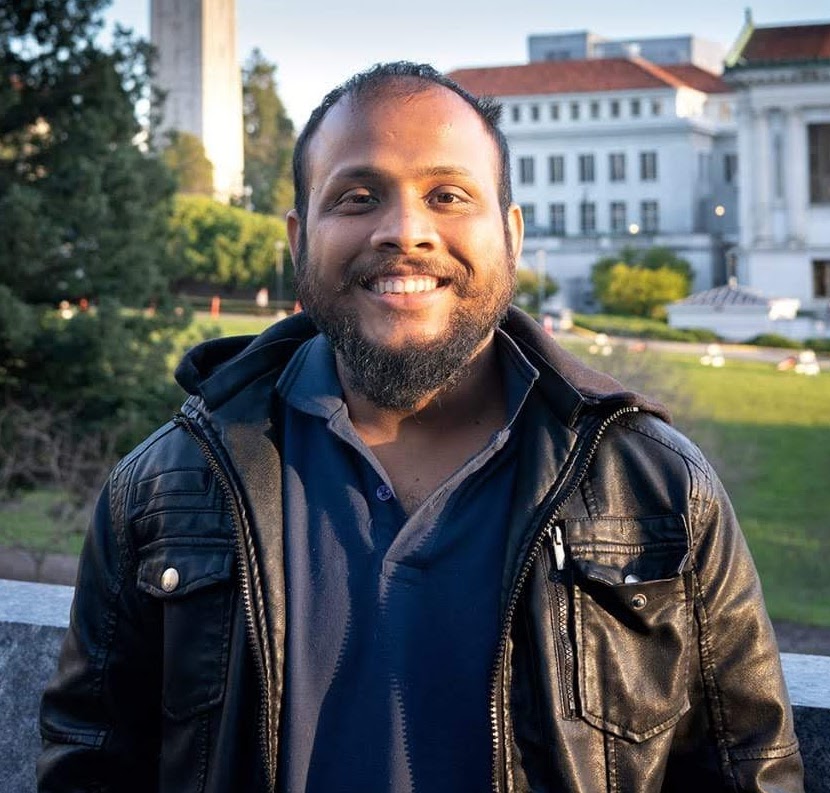 We are very pleased to announce that the inaugural Inclusivity & Diversity Research Grant has been awarded to Sourav Ghosh (University of California at Berkeley) to support his project, “Ideology, Infrastructure, and Taxonomy: Archiving and the Origin of Medieval Indian Historiography in Late Colonial India.” In his words, the project “…shows how late colonial aesthetics, archival practices, and ideologies informed and regulated historical research on medieval India. This is both the study of the medieval historiography and the archive that shapes it. By focusing on a private archive (Shree Natnagar Shodh Samsthan: The Raghubir Singh Library and Research Institute) in modern-day central India, I illustrate how infrastructure, material culture, colonial knowledge, collection practices, and categorization undergird and dictate the scholarship on medieval Indian history. Thus, my research on the development of medieval historiography in the modern era complicates our existing understating of medieval studies as a field of inquiry.” In selecting Ghosh, the Prize Committee noted that “This is a strong project on the colonial archive in India that opens up another, little explored, aspect of the uses of the Middle Ages but in a non-Western context. It is both a project of Indian historiography and the influence of global empire. Ghosh has the impressive research and language skills to do this multifaceted research at a focus locale.” More information about this program is
  The 97th Annual Meeting of the Medieval Academy of America will take place on the campus of the University of Virginia in Charlottesville. The meeting is jointly hosted by the Medieval Academy of America and the Program in Medieval Studies at the University of Virginia, with the generous support and collaboration of colleagues from Virginia Tech, the College of William & Mary, and Washington and Lee University. The conference program will feature a diverse range of sessions highlighting innovative scholarship across the many disciplines contributing to medieval studies.
 Even though we won’t be able to greet you in person this year at the International Congress on Medieval Studies in Kalamazoo, the Medieval Academy of America will have a strong presence at the virtual conference, with lectures, sessions, and roundtables focusing on the Global Middle Ages, DEI, and Anti-Racism (May 10-15).


