Call For Papers
The 55th International Congress on Medieval Studies at Kalamazoo, May 7–10, 2020
Bending the Knee: Proskynesis, Genuflection, and Bowing Rituals
in the Medieval World (Sessions I and II)
Various pre-modern cultural traditions managed interactions between members of different social strata by prescribing performative displays of supplication and humility. Perceptible and formalized movements of the body, often performed publicly in courtly and religious settings, provided a symbolic visual vocabulary for interaction. They consisted of different extensions and contractions of joints and muscles, and often took the form of proskynesis, kowtow, genuflection, and bowing, as well as other gestures. These widely persistent social rituals represented the nature of the polarized relationship between master and slave, ruler and ruled, or superior and inferior in medieval cultures. They also served as forms of social currency; those acknowledging their superior’s authority and power were rewarded with social recognition. Paradoxically, bowing rituals could also result in one’s own exaltation through an elevation to a higher societal or spiritual ranking. Depictions and acts of genuflection or proskynesis were not limited to imperial contexts. Lowering the body as a means of elevating the soul was fundamental to monastic practice in Christian, Islamic, and many other cultures.
These two panels call for papers that discuss, explicate, and contextualize the rituals, histories, imagery, and cultural significance associated with different forms of bowing and bending throughout the medieval world. We particularly invite comparative cross-cultural studies pertaining to rituals of supplication within medieval Islam, Christianity (Latin and Byzantine), and other faiths, cultures, and traditions. Furthermore, papers can also discuss how these performative gestures delineated the relationships between ruler and ruled, master and slave, and upper and lower classes in various pre-modern contexts. Our goal with these panels is to begin an interdisciplinary dialogue spurring new lines of inquiry currently absent from existing studies that focus solely on individual cultural contexts.
Please submit a single-page abstract to Ali Asgar Hussamuddin Alibhai (PhD Harvard University) and Erika Loic (PhD Harvard University) at the following address by September 18, 2019: BendingTheKneeKalamazoo@gmail.com. All accepted paper presenters will be expected to register for and attend the Medieval Congress in Kalamazoo, Michigan (May 2020). If you have any questions, feel free to contact us in the meantime.
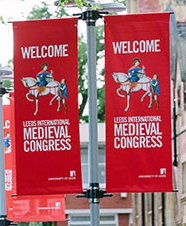 The Medieval Academy of America had a strong presence at the International Medieval Congress at Leeds this year, with a contingent that included President Ruth Mazo Karras, several Councilors, the Executive Director, and, as always, several dozen MAA members. Our plenarist, Aden Kumler (Univ. of Chicago), delivered a brilliant and well-attended lecture on Tuesday night that drew on the Congress theme “Materiality” and left the audience with much to discuss and ponder. The lecture was followed by a convivial reception. Join us next year, when our plenarist will be Carol Symes (The University of Illinois at Urbana-Champaign).
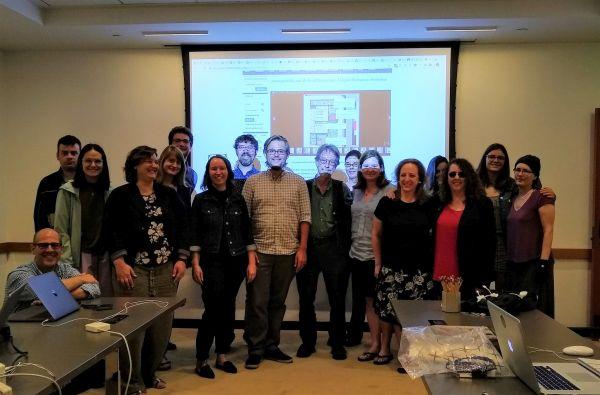 The 2nd Annual Medieval Academy of America Digital Humanities Workshop, co-sponsored by the Beinecke Rare Book and Manuscript Library at Yale University, took place in New Haven from July 9-11. The “
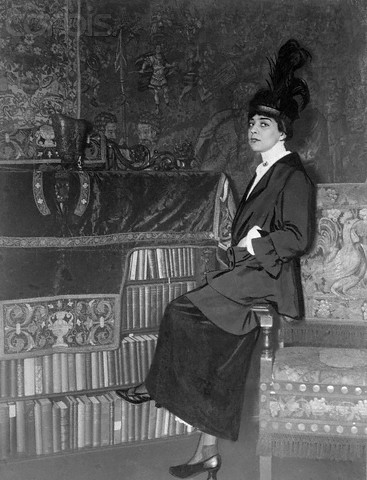 The Belle Da Costa Greene Fund, established in 2018, has raised more than $28,000 since its inception. We need your help to reach our goal of $45,000 in order to permanently endow the annual


