
MAA News – From the Executive Director: Inclusivity and Diversity Initiatives

It has been five years since I took on the role of Executive Director of the Medieval Academy of America (including one year as Acting ED). In those five years, thanks to your generosity, we have increased our support of members to record levels. In 2017, we awarded a total of nearly $100,000 to forty student, contingent, junior, and independent scholars. We facilitated the dissertation research of sixteen advanced graduate students, sent ten students to summer language and paleography programs around the world, supported fourteen independent and contingent scholars with research or conference-travel funding, subvented the publication of several first books, and helped fund student conferences and symposia.

We continue to push the chronological, geographic, and topical boundaries of Medieval Studies. We promote a broad, global definition of the field in the pages of Speculum, in the work we support with research and travel grants, in the publications we honor, and in the papers presented at our Annual Meeting. It has become clear, however, that our mandate must also include advocating for you – a member of the Medieval Academy of America – in more personal ways. The painful events of the past year, in particular, have made it clear that we must support you not only as a scholar but as a human being trying to make a living as a medievalist. This part of our work is guided in principal by our Values Statement and in practice by these four directives:

Pull down the walls that keep us from engaging in the world outside Academia;

Open the Gates and welcome all medievalists;

Build a longer table and invite everyone to have a seat;

Raise a bigger tent to protect those whose lives, bodies, and research carry professional, economic, intellectual, or personal risk.

Inspired by recommendations made by the Fellowship of Medievalists of Color and in an effort spearheaded by Nahir Otaño Gracia (Beloit College), the Council of the Medieval Academy recently approved several initiatives designed to make the Academy a more welcoming place for all medievalists: the establishment of an Inclusivity and Diversity Committee to chart our course, and the approval of two awards to be adjudicated by the newly-established Inclusivity and Diversity Prize Committee. The two new awards will be granted annually beginning in 2019: the Inclusivity and Diversity Travel Grant, to be presented annually to a medievalist presenting a paper at our Annual Meeting; and the Belle Da Costa Greene Award, to be granted annually to a member of the Medieval Academy of America to support research and travel. Please consider donating to the Belle Da Costa Greene Fund in support of the Award to be given in her name.

We are extremely grateful to Dr. Gracia for her efforts in bringing these programs to fruition and also for her role in planning and chairing the Inclusivity and Diversity roundtable at our recent Annual Meeting in Atlanta. She has written eloquently about the session in a recent blogpost. Other sessions and papers at the Annual Meeting addressed some of the issues and ideas raised in the roundtable, and we will continue to engage with these topics at future Annual Meetings.

These initiatives add to programming already underway. We took part in several wide-reaching public advocacy actions in 2017, such as the statement we released after the horrors in Charlottesville or the actions we took when NEH funding was at risk. Such actions are undertaken by the Council in compliance with our Advocacy Policy. Under the leadership of 2nd Vice-President Ruth Mazo Karras, an ad hoc committee has begun to develop policies and procedures having to do with identifying, addressing, and preventing harassment at our Annual Meeting.

I invite you to help us understand where we need to focus our efforts by participating in our survey of gender- and racial-identity demographics. To participate, sign into your account on our website, click “Manage Profile” and “Edit bio,” and check the appropriate boxes. This information is absolutely and inviolably confidential and will not be visible on your public profile. It will be accessed and used only in aggregate. We need as many of our 3,600 members as possible to contribute this data so that we can accurately assess the composition and complexity of our membership corps.

Thank you for supporting these initiatives with your continued membership, volunteer efforts, and generous contributions. I look forward to working with you as we continue our efforts to make the Medieval Academy of America a more welcoming place for all medievalists.

Working and learning together, we can build a better Medieval Studies.

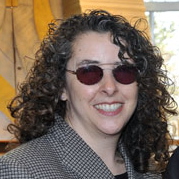
Lisa Fagin Davis
Executive Director, Medieval Academy of America
LFD@TheMedievalAcademy.org

Posted in MAA Newsletter | Leave a comment

Call for Papers – Midwest Medieval History Conference

October 19 & 20
Marquette University, Milwaukee, WI

Call for Papers

Globalizing the Middle Ages

Keynote speaker: Carol Symes, Ph.D.

The Midwest Medieval History Conference seeks papers on all aspects of medieval history, especially those related to this year’s theme: Globalizing the Middle Ages. We welcome papers by graduate students, as well as senior scholars. The programming committee is also happy to receive papers addressing teaching, pedagogy, and digital humanities.

Submission deadline: June 30.

Submit abstracts for paper proposals to Bobbi Sutherland at

bsutherland1@udayton.edu

Posted in Call for Papers | Leave a comment

A Letter from the Société des Bollandistes

Dear Colleague,
For over four centuries the Société des Bollandistes has been at the forefront of scholarship in the vast field of Christian hagiography. Since the days of Jean Bolland and Daniel van Papenbroeck, through those of Hippolyte Delehaye, Paul Peeters and Baudouin de Gaiffier, its publications, including the Acta Sanctorum, the Subsidia Hagiographica, the Analecta Bollandiana, the Bibliotheca Hagiographica Latina, Graeca, and Orientalis have been the essential tools of thousands of scholars around the world.

Its library, containing some 500,000 volumes and 1,000 periodicals, as well as its online
resources, serve critical scholarship in all areas of hagiography and religious and devotional history. Today’s Bollandists continue this great tradition with the same rigour and dedication. Now, however, they are obliged to depart from their usual discretion because their future is endangered. The Société has been since its inception supported by the Belgian Provinces of the Society of Jesus, but the Jesuits, although willing to maintain the work, are no longer able to provide the finances necessary to sustain this great enterprise. Thus we are launching an urgent appeal to scholars and colleagues around the world to help keep this great and historic tradition alive. I am inviting you to help continue the mission of the Société by becoming a member of the American Friends of the Société through an annual donation to support our work:

https://kbfus.networkforgood.com/projects/15364-b-kbfus-funds-bollandist-society-be

And of the Canadian Friends:

http://www.kbfcanada.ca/en/projects/the-canadian-friends-of-the-societe-bollandistes/

We offer membership at USD 100 (CAD 130) a year, but any contribution will help us continue our work. Your gift is fully tax exempt in the US and Canada. Friends will have the possibility of receiving periodic updates on the work of the Société, and will be assured of a warm welcome should they wish to work or simply visit the Bollandist library in Brussels. Further initiatives will be announced in the coming months. However, we emphasize that any level of support you can provide that will help keep this great historical enterprise flourishing in the twenty-first century will be most welcome.

Yours sincerely,

Robert Godding, S. J.
Director

Posted in Uncategorized | Leave a comment

Morton W. Bloomfield Visiting Fellowship, Harvard University, 2018-2019

Morton W. Bloomfield Visiting Fellowship, Harvard University, 2018-2019

The Medieval Colloquium of the Department of English at Harvard University invites applications for the Morton W. Bloomfield Visiting Fellowship, a four-week residential fellowship that can be held at any time during the 2018–19 academic year (September through May). Thanks to the generosity of the Morton W. Bloomfield Fund, established in the memory of one of Harvard’s most distinguished medievalists, we are able to provide up to $4000 towards travel, accommodation, and living costs. We invite scholars at any stage of their postdoctoral career (i.e., post-PhD) to apply. The Bloomfield Fellow has access to Harvard’s libraries and other resources. In the past, some fellows with sabbatical leaves have elected to extend their residency beyond four weeks. Fellows are expected to attend the Medieval Colloquium and to give a paper on the subject of their research. They are also asked to meet with our graduate students, and they are welcome to attend other events at Harvard. We select fellows on the basis of the importance of their research and its interest to our intellectual community.

Applicants should send a brief letter of application, a curriculum vitae, and a two-page project description by email to Daniel Donoghue (ddonogh@fas.harvard.edu) no later than May 31. Please include details on when and for how long you would be able to be in residence. The fellowship is not normally compatible with teaching commitments at a home institution. We hope to be able to congratulate the successful applicant by the end of June.

Posted in Announcements | Leave a comment

California Rare Book School is excited to be offering Medieval and Renaissance Manuscripts Course

California Rare Book School is excited to be offering Medieval and Renaissance Manuscripts again this year. The course will be taught by Melissa Conway and will take place from July 30 to August 3, 2018 at UCLA. Applications and further information about California Rare Book School and our courses can be found at our website: www.calrbs.org

The course description for Medieval and Renaissance Manuscripts follows:

Almost 500 institutions in North America—including many public libraries—have pre-1600 manuscripts in their holdings. The chances are thus high that any one dealing with rare materials will be responsible for at least one manuscript or fragment during his or her career. This class has been organized to provide the basic skills for identifying and making accessible these unique and precious remnants of medieval art. Using the resources in UCLA’s Special Collections, field trips to the Huntington Library and/or Getty Museum, and several online resources, this course will provide an overview of the historical production of manuscripts, and an introduction to the genres of manuscripts—Bibles and biblical commentaries, liturgical books, lay prayerbooks and historical documents. A particular emphasis of the class will be Books of Hours or Horae. Called the “bestseller of the Middle Ages,” they constitute the genre of manuscript that survives in the greatest number. There will be training in identifying the parts of a Book of Hours, working with (digital copies) of detached leaves from different regions and time periods. By the end of the class students will be familiar with the myriad resources used in dating, localizing and identifying the text of detached manuscript leaves. On the last day, each student will also be given a (digital) manuscript leaf to describe, employing the skills acquired in the class. (Students are also welcome—indeed encouraged– to bring digital images of manuscripts from their own institutions to share with the class.)

Posted in Summer Programs | Leave a comment

Call for Papers – Yours, Mine, Ours: Multi-Use Spaces in the Middle Ages

Call for papers: “Yours, Mine, Ours: Multi-Use Spaces in the Middle Ages,” at Society of Architectural Historians 72nd Annual International Conference (deadline for abstracts June 5, 2018).

Medieval buildings and spaces were not always used for a single purpose: very often they were used for multiple activities or by diverse stakeholders. Sometimes this sharing of space was successful and mutually beneficial. Alternatively, the use of a space in multiple ways or by different groups could be frustrating at best and deeply antagonistic at worst. This panel is dedicated to these mixed-use spaces, from the smallest vernacular dwellings to the largest castles and cathedrals.

The benefits and challenges of sharing space were perhaps most acute in smaller structures, such as parish churches or minor monasteries. For example, a monastic church might accommodate local laity if a convenient parish church was not available. Such sharing allowed lay and monastic worshipers to pool architectural and clerical resources in an economical fashion. Monumental buildings and complexes could also be called upon to serve the needs of the larger community, even as they maintained a daily routine for their primary constituents. For example, a castle precinct could serve both a residential population and members of the public—with clearly enforced rules of access. Shared space raises questions of power, privilege, diplomacy, and financial responsibility.

This session invites proposals which analyze the multiple uses of religious, civic, and / or private structures and spaces throughout medieval Europe. Particular consideration will be given to presentations which address the participation of non-elites in otherwise elite spaces; clues to their presence may be discovered in the textual record, landscape, or the building fabric itself. In acknowledging the participation of multiple communities within specific structures, we invite presenters to complicate accepted interpretations of the medieval built environment.

Session Chairs: Meg Bernstein and Catherine E. Hundley.

Deadline for Abstracts: 5th June 2018

Abstracts to be submitted here: http://www.sah.org/conferences-and-programs/2019-conference—providence?utm_source=deadlines&utm_medium=link&utm_campaign=SAH%20Homepage

Society of Architectural Historians: 72nd Annual International Conference

April 24-28, 2019 | Providence, Rhode Island

The Society of Architectural Historians will host its 72nd Annual International Conference in Providence, Rhode Island, April 24-28, 2019. Architectural historians, art historians, architects, museum professionals, and preservationists from around the world will convene to present new research on the history of the built environment and explore the architecture and landscape of Providence and nearby areas. The conference will include 37 paper sessions, roundtable and panel discussions, architecture tours, workshops, networking receptions, special events, and more.

More information here: http://www.sah.org/conferences-and-programs/2019-conference—providence?utm_source=deadlines&utm_medium=link&utm_campaign=SAH%20Homepage

Posted in Call for Papers | Leave a comment

Digital Scriptorium News and Survey

Digital Scriptorium (DS) is a growing consortium of American libraries and museums committed to free online access to their collections of pre-modern manuscripts. Our website unites scattered resources from many institutions into a national digital platform for teaching and scholarly research. It serves to connect an international user community to multiple repositories by means of a digital union catalog with sample images and searchable metadata.

DS has valiantly served manuscript researchers around the world since it was launched in 1997. However, as online technology has changed dramatically since then and digitization has become the norm rather than the exception, DS’s Executive Board is undertaking a strategic planning initiative to address the future of DS and what needs to be done to ensure its critical contribution to manuscript studies on a national and global level.

As part of this process, we would like to get your input on the current DS platform and your suggestions for ways that DS might improve in any aspect. To this end, we invite you to complete a short survey (5-10 mins) to help us determine how DS is used, what works and what doesn’t, and who uses it and why. The survey can be accessed through this link: Digital Scriptorium User Survey or by going to the DS website go to: Digital Scriptorium.

Thanks in advance for your help!

The DS Executive Board:

Debra Taylor Cashion (St. Louis University), Executive Director & President
Janine Pollock (Free Library of Philadelphia), Vice President
Lynn Ransom (University of Pennsylvania Libraries), Secretary
E.C. Schroeder (Beinecke Library, Yale University), Treasurer
Lynne Grigsby (UC-Berkeley), Technology Host
Consuelo Dutschke (Columbia University), Director at Large
Vanessa Wilkie (The Huntington Library), Director at Large
Cherry Williams (UC-Riverside), Director at Large

Posted in Uncategorized | Leave a comment

A response to: Oţa, Silviu. Review of Mária Vargha, “Hoards, Grave Goods, Jewellery: Objects in Hoards and in Burial Contexts during the Mongol Invasion of Central-Eastern Europe.”

A response to: Oţa, Silviu. Review of Mária Vargha, Hoards, Grave Goods, Jewellery: Objects in Hoards and in Burial Contexts during the Mongol Invasion of Central-Eastern Europe. Speculum 92/4 [2017]: 1263–65; doi: 10.1086/693915.

Author’s Response (Mária Vargha, University of Vienna)

My concerns are as follows: The reviewer misinterprets the conclusions and approaches of my work, presents ideas from historiographic overviews as the study’s own, and makes assertions that require corrections, which are discussed in detail below.

The reviewer misrepresented the initial concept of the book, regarding methodology, timeframe, and the geographical area covered, although the justification for all of these is stated clearly in the introduction (pp. 2–5). Furthermore, it seems that the reviewer also failed to appreciate the methodology of the work. In the scholarship that focuses on the period discussed (second half of the twelfth to the end of the thirteenth century), the chronology of small finds is rather vague, and their agency is rarely discussed, as a result of the lack of grave goods relative to the preceding era (from about the eleventh to the beginning of the twelfth centuries). This was made worse by historiographical trends discussed in the first chapter. The reviewer claims that the study focuses on one site, Kána, and extrapolates the conclusions from that site to the entire Hungarian Kingdom. But the main focus of the book is not on one single site, nor does it project results from that site onto any other one, much less to the whole kingdom. Kána, being a completely excavated settlement from the period that includes a church and cemetery made an excellent case study for a comparison made on small finds excavated from different contexts (settlement or grave goods). The study uses the site as a starting point in a period where the chronology of objects is hard to determine. Since I have conducted a complete analysis of that wholly excavated cemetery with around 1,000 graves, I was able to distinguish chronological phases within the cemetery, not derived from finds from graves, but rather from an independent, stratigraphical, and statistical method. This analysis allowed for much more precise dating for burial horizons—and with that the small finds found in such burials—than would have been possible by traditional archaeological methods. This resulted in a list of objects dated to a relatively short period, with a complete context and object biography. All of this was compared with small finds coming from the other well-known and well-dated hoard horizon (providing the second starting point) connected to the 1241–42 Mongol invasion of Hungary, which together provided a solid basis for comparison of similar finds from the narrower region (comprising the collection and comparison of each published object from the Carpathian basin, including Slovakia and part of Romania), and allowed for a more complex socioeconomic interpretation of finds, their agency, and relationship to changing burial customs.

Continue reading

Posted in Letters to the Editor | Leave a comment

CARA News – Institute for Medieval Studies, University of New Mexico

The Institute for Medieval Studies (IMS) hosts its 33rd annual Spring Lecture Series, “Sacred Objects and Places of the Middle Ages,” from April 23-26, 2018. This week-long series of six lectures and a concert of early music attracts several hundred members of the Albuquerque community to hear lectures by eminent scholars from around the country, and sometimes around the globe. This year’s lectures are:

  • Monday, April 23, 7:15 p.m. “The Book of Kells—Seen and Unseen,” Bernard Meehan, Trinity College Dublin
  • Tuesday, April 24, 5:15 p.m. “Places to Go, Things to See: A Medieval Bucket List,” Concert by the UNM Early Music Ensemble directed by Colleen Sheinberg
  • Tuesday, April 24, 7:15 p.m. “Sacred Worlds in the Medieval Hebrew Book,” Adam S. Cohen, University of Toronto
  • Wednesday, April 25, 5:15 p.m. “The Dome of the Rock and Aqsa Mosque in Jerusalem: An Exploration,” Jennifer Pruitt, University of Wisconsin
  • Wednesday, April 25, 7:15 p.m. “Vessel, Quest, Prize, Test, Threat: The Many Faces of the Grail,” Janina P. Traxler, Manchester Univeristy
  • Thursday, April 26, 5:15 p.m. “Irish Manuscripts before 800 A.D.”
  • Thursday, April 26, 7:15 p.m. “Watching the Birth of a Holy Object: The Icon of Kykkotissa on Cyprus,” Annemarie Weyl Carr, Southern Methodist Univeristy

Each spring the IMS welcomes a prominent scholar as the visiting “Viking Scholar” to teach the “Viking Mythology” course. This spring, Kendra Willson joined the UNM medievalist community for the semester. On Friday, April 13, she shared her work-in-progress talk entitled “Runes in the Margins of the Viking World.”

Earlier in the year, the IMS collaborated with UNM’s History Department to offer a series of events focused on Late Antiquity. In October, Noel Lenski (Yale University) offered a lecture entitled, “Roman Refugees: Settling Extra-Territorials inside a World Empire;” on March 3, a colloquium with the theme “Climate, Cartography, and Imperialism in Late Antique Eurasia,” featured contributions by Richard Talbert (University of North Carolina), Richard Payne (University of Chicago), Nicola Di Cosmo (Institute for Advanced Study, Princeton), and Michael Maas (Rice University); and finally, in late March, Joyce Salisbury (University of Wisconsin, Green Bay) offered the lecture “Theology Is Personal in the Fifth Century.”

During the upcoming summer term, Institute Director Timothy Graham will offer his intensive graduate seminar, “Paleography and Codicology,” from June 4-28, with participants drawn from Vrije Universiteit Amsterdam, the University of California, Los Angeles, the University of Oregon, the University of Wisconsin, and the University of New Mexico.

Posted in CARA | Leave a comment

Call for Papers – Government and Governance from Late Antiquity to the Renaissance: Representation and Reality

Government and Governance from Late Antiquity to the Renaissance: Representation and Reality

45th Annual New England Medieval Conference
University of New Hampshire, Durham, NH
Saturday, November 17th, 2018

Keynote Speakers:

Amy Appleford, of Boston University, “Governing Bodies in Late Medieval London”

Jonathan Lyon, of the University of Chicago, “Was there a Difference Between Lordship and Governance in Late Medieval Germany?”

The New England Medieval Consortium seeks abstracts for papers that consider questions and problems inherent in organizing sophisticated societies from late antiquity through the Renaissance. Submissions are welcome from all fields of scholarly study including but not limited to history, literature, philosophy, theology, numismatics, art history, and manuscript studies. Government and governance are understood for the purposes of this conference to include all aspects of human organization from neighborhood associations and guilds to kingdoms and empires, and from parishes and priories to the papacy. Possible areas of inquiry include corruption, patronage, ethics, reform, institutional structures, bureaucracy, propaganda, jurisdiction, rights, and obligations.

Please send an abstract of 250 words and a CV to David Bachrach (David.Bachrach@unh.edu) via email attachment. On your abstract please provide your name, institution, the title of your proposal, and email address. Abstracts are due by July 21, 2018.

Posted in Call for Papers | Leave a comment