Check out the latest CARA newsletter to see what’s happening in Medieval Studies on North American campuses:
http://c.ymcdn.com/sites/www.medievalacademy.org/resource/resmgr/pdfs/June_2016_CARA_news.pdf
Check out the latest CARA newsletter to see what’s happening in Medieval Studies on North American campuses:
http://c.ymcdn.com/sites/www.medievalacademy.org/resource/resmgr/pdfs/June_2016_CARA_news.pdf
This conference, organized at the Jean-François Champollion National University Institute (“Champollion University”) in the historic episcopal city of Albi, France – site of the thirteenth-century Albigensian Crusades – will take place on 25-26 November 2016. Please send proposals of 100-250 words for 20-minute papers (in English or French) to john.ford@univ-jfc.fr along with a brief CV before 31 July 2016 for full consideration.
Cette journée d’étude aura lieu les 25 et 26 novembre 2016 à l’Institut National Universitaire Jean-François Champollion dans la ville épiscopale d’Albi dans le Tarn. Les propositions de communications (250-500 mots, en anglais ou français) sont à envoyer accompagné d’un court CV à john.ford@univ-jfc.fr avant le 31 juillet 2016.
PRESENTATION:
Today’s “pop” culture is rich with allusions to the Middle Ages, not only in literature and visual arts – as it always has been in past centuries (e.g., the pre-Raphaelites or Twain’s Connecticut Yankee in King Arthur’s Court, Tennyson’s Idylls of the King, Tolkien’s Hobbit and Lord of the Rings, etc.) – but also in graphic novels and comics, on the big screen and the little one, not to mention the computer screens of electronic gamers as well as amusement parks, festivals and fairs.
But how much of what is presented in a medieval context – either as actual “remakes” of old accounts or simply loosely employing a medieval setting or theme – accurately reflects the Middle Ages, and to what extent do these medieval constructs change or distort the reality of the age? When changed, to what extent is the epoch romanticised as, for example, an idealized Camelot where “the rain may never fall till after sundown?” To what extent is it vilified, making the expression “to get medieval on [somebody]” suggest a horrific vengeance? How do these constructs inform our understanding of the Middle Ages, and how important is it (if at all) to be entirely accurate? Finally, to what extent do such alterations update the texts or tales, keeping them alive and evolving, and why is it a perennial favourite, replayed year after year, decade after decade, indeed, century after century?
This conference hopes to respond to some of these questions by opening a dialogue between various disciplines: literature, history, historical linguistics, visual arts, cinema, theatre, television, etc., in order to study the enduring popularity of medieval themes and the ways in which medieval tales and texts are transmitted, preserved, distorted, renewed and built upon in the creation of new, decidedly modern popular culture in Europe, North America and the world of the 21st century.
This conference hopes to explore ways in which medieval texts, tales and traditions are used (or abused!) and used to fashion entirely new works that ultimately form part of contemporary pop culture in its own right, not only in the modern age, but in ages past. It might also address ways in which authors from the Renaissance until now (e.g., Spenser, Shakespeare, Yeats, etc.) have contributed to our modern conception of the Middle Ages, both myth and reality.
Some aspects to consider might include the importance of accuracy in portrayals purportedly based on actual texts (such as the Vikings series, or various remakes of Beowulf), and to what extent is liberal treatment acceptable, even to be encouraged? To what extent is received wisdom, often quite dubious, employed in original works with a medieval feeling or theme, though not necessarily a medieval setting like Game of Thrones or Harry Potter?
In addition to the works listed above, the conference is open to any proposition addressing the use of medieval works or themes in any aspect of popular culture in any subsequent age, leading to its entrenched place in the pop culture of today – not only in fiction and art, but in any form of entertainment or representation. Finally, the value of both medieval literature and culture, as well as popular culture, and the interdependence of both, is to be explored.
PRESENTATION:
La culture populaire d’aujourd’hui est riche en allusions au Moyen Age, non seulement dans la littérature et les arts visuels – comme elle l’a toujours été dans les siècles passés (par exemple, les préraphaélites ou Connecticut Yankee dans la cour du roi Arthur de Twain, Idylles du roi de Tennyson, ou le Hobbit et le Seigneur des Anneaux de Tolkien, etc.) – mais aussi dans les romans graphiques et dans les bandes dessinées, sur le petit comme sur le grand écran, ainsi que sur les écrans d’ordinateur des amateurs de jeux vidéos, les parcs d’attractions, les festivals et les foires.
Mais combien de ces références dont le contexte est médiéval – présentées comme de nouvelles versions de vieux récits ou tout simplement utilisant de manière plus libre un cadre ou un thème médiéval – reflètent fidèlement le Moyen Age ? Et de quelle manière et dans quelle mesure ces références médiévales modifient-elle ou déforment-elle la réalité de cette époque ? A quel point cette époque est-elle romancée comme, par exemple, dans un Camelot idéalisé où «la pluie ne peut tomber qu’après le coucher du soleil »? Dans quelle mesure est-elle, comme l’atteste l’expression « Jouer à la flamme bien moyenâgeuse » qui implique la menace d’une vengeance féroce, diabolisée, vilipendée? Dans quelle mesure et à quel point ces constructions, ces références, influencent-elles sur notre compréhension du Moyen Age? Est-il donc important d’être exact ? Enfin, dans quelle mesure ces modifications mettent-elles à jour les textes et les récits en leur permettant de rester en vie et en constante évolution ? Et pourquoi le Moyen Age est-il l’éternel sujet favori, exploité année après année, décennie après décennie, siècle après siècle?
Cette journée d’étude va tenter de répondre à ces questions en ouvrant le dialogue par le biais de différentes disciplines : histoire, littérature, linguistique diachronique, arts visuels, cinéma, théâtre, télévision, mais aussi via les jeux vidéos et les parcs d’attraction, etc. Il s’agira d’étudier la popularité durable des thèmes médiévaux et la manière dont les récits et les textes médiévaux sont transmis, conservés, déformés, renouvelés et utilisés pour construire la nouvelle culture populaire résolument moderne, de l’Europe, de l’Amérique du Nord et du monde du 21ème siècle.
Il est important de considérer l’importance de la précision dans les représentations prétendument basées sur des textes réels, comme par exemple la série Vikings, ou les divers remakes de Beowulf. Et, dans quelle mesure ce libre traitement est-il acceptable, ou même à encourager? Dans quelle mesure les idées reçues, souvent douteuses, sont-elles employées dans des œuvres originales au contexte médiéval, mais pas forcément dans un cadre véritablement médiéval comme Game of Thrones ou Harry Potter?
Outre les ouvrages mentionnés ci-dessus, la conférence est ouverte à toute proposition portant sur l’utilisation des œuvres ou des thèmes médiévaux dans tous les aspects de la culture populaire actuelle ou antérieure, les conduisant à une place ancrée dans la culture populaire moderne – non seulement dans la fiction et l’art, mais dans toute forme de divertissement ou de représentation. Enfin, la valeur de la littérature et de la culture médiévales, de la culture populaire, ainsi que leur interdépendance, sera étudiée.
Postdoctoral Researchers, Music and Late Medieval Court European Cultures (ERC funded)
The Faculty of Music proposes to appoint two postdoctoral researchers for a period of 4 years, starting 1st September 2016, to work on a new ERC funded Advanced grant, Music and Late Medieval European Court Cultures (MALMECC). The posts will be on a grade 7 (£30,738- £33,574 per annum) and will be based in the Oxford Research Centre in the Humanities office (TORCH), Radcliffe Observatory Quarter, Woodstock Road, Oxford.
Reporting to the project’s Principal Investigator (PI), Karl Kügle, the post-doctoral researchers will pursue an individual research project within their specific selected sub-project, in collaboration with the project team. They will be expected to collaborate with all members of the team and participate in the preparation of relevant research publications, as well as representing the project at internal and external meetings, contributing ideas and engaging in dissemination.
The project seeks to develop a new, post-national and trans-disciplinary method of studying pre-modern cultures; specifically, the focus will be on European courts of the ‘long’ fourteenth century, defined as 1250-1450. The project will consist of systematic collaboration of a team of scholars drawn from relevant disciplines (including but not limited to history, art history, architectural history, modern and classical languages, music) under the leadership of the PI.
Candidates may apply for any one of the following subprojects:
(1) the effects of gender and lineage on patronage in northwestern Europe;
(2) the courts of ecclesiastic princes in France and southern Europe;
(3) the artistic patronage of the Luxembourgs in Germany and the Czech lands;
(4) the politics of prince-bishop Pilgrim II of Salzburg and the songs of the ‘Monk of Salzburg’.
Applications must be made online here: https://www.recruit.ox.ac.uk/pls/hrisliverecruit/erq_jobspec_version_4.jobspec?pid=123798
Deadline for application: Wednesday 6th July, 12.00 (noon)
The Mary Jaharis Center for Byzantine Art and Culture seeks proposals for a Mary Jaharis Center sponsored session at the 24th International Medieval Congress, University of Leeds, July 3–6, 2017. We invite session proposals on any topic relevant to Byzantine studies.
The thematic strand for the 2017 IMC is “Otherness.” See the IMC Call for Papers (https://www.leeds.ac.uk/ims/imc/imc2017_call.html) for additional information about the theme and suggested areas of discussion.
Session proposals should be submitted through the Mary Jaharis Center website site (http:// http://maryjahariscenter.org/sponsored-sessions/23rd-international-medieval-congress/). The deadline for submission is August 31, 2016. Proposals should include:
**Title
**100-word session abstract
**Session moderator and academic affiliation
**Information about the three papers to be presented in the session. For each paper: name of presenter and academic affiliation, proposed paper title, and 100-word abstract CV
Successful applicants will be notified by mid-September if their proposal has been selected for submission to the International Medieval Congress. The Mary Jaharis Center will submit the session proposal to the International Medieval Congress and will keep the potential organizer informed about the status of the proposal.
If the proposed session is approved, the Mary Jaharis Center will reimburse session participants (presenters and moderator) up to $600 maximum for EU residents and up to $1200 maximum for those coming from outside Europe. Funding is through reimbursement only; advance funding cannot be provided. Eligible expenses include conference registration, transportation, and food and lodging. Receipts are required for reimbursement.
The session organizer may act as the moderator or present a paper. Participants may only present papers in one session.
Please contact Brandie Ratliff (mjcbac@hchc.edu), Director, Mary Jaharis Center for Byzantine Art and Culture with any questions.
November 17-19, 2016
Save the Date! Registration opens at the end of the summer.
In partnership with the Rare Book Department of the Free Library of Philadelphia, the Schoenberg Institute of Manuscript Studies (SIMS) at the University of Pennsylvania Libraries is pleased to announce the 9th Annual Lawrence J. Schoenberg Symposium on Manuscript Studies in the Digital Age. This year’s theme, “Reactions: Medieval/Modern,” gives us space to explore the many and varied ways that people have reacted to, and acted upon, manuscripts from the Middle Ages up to today. Reactions take many forms. They include the manipulation of physical objects through, for example, the marking up of texts, addition of illustrations, the disbinding of books or rebinding of fragments, as well as the manipulation of digital objects, thanks to new technologies involved in digitization, ink and parchment analysis, virtual reconstruction, among many other processes. This symposium will also tackle how popular culture has reacted to manuscripts over time as witnessed by their use and appearance in books, games, and films. Our keynote speaker will be Michelle P. Brown, Professor emerita of Medieval Manuscript Studies at the School of Advanced Study, University of London, and former Curator of Manuscripts at the British Library.
For more information and a list of speakers, visit the website: http://www.library.upenn.edu/exhibits/lectures/ljs_symposium9.html.
The Material Culture of Religious Change and Continuity, 1400-1600
11-12 April 2017 at the University of Huddersfield, UK
2017 marks the 500th anniversary of Martin Luther nailing his 95 theses on the Wittenberg Church. From that date, religion in Europe had profound changes. One such change was how people viewed, interacted and created visual and material objects related to religious devotion. This conference aims to bring together medievalists and early modernists approaching religion on either side of the Reformation through a visual and/or material examination.
By bringing together scholars from different disciplines, curators and heritage sector representatives it is hoped that a more holistic discussion of visual and material objects will come to light. Topics for papers may include but are certainly not restricted to:
Please send a short abstract (c. 200-300 words) to Audrey Thorstad (a.m.thorstad@hud.ac.uk) no later than 15 July 2016.
 In 1925, the Medieval Academy of America (including both Canada and the United States) and its journal
Speculum were founded in Cambridge, Mass. In 2025 we will mark the centenary of the founding of our professional organization. These festivities will provide us with an opportunity to celebrate one century of work by the MAA and its members to carry out the mission set by our founders “to conduct, encourage, promote and support research, publication and instruction in Mediaeval records, literature, languages, arts, archaeology, history, philosophy, science, life, and all other aspects of Mediaeval civilization, by publications, by research, and by such other means as may be desirable, and to hold property for such purpose.” [Extract from the Articles of Organization, 23 December 1925.]
Our centenary offers an opportunity to consider both the past and the current state of medieval studies in North America. Just as important, however, is to make this an opportunity to re-examine our mission and goals, as they were defined almost one hundred years ago, as we look to the future. A Centenary Planning Committee is being set up, following the decision of the Council meeting in Boston last February, “to consider our role in North American medieval studies and strategize the best ways we can serve our members and promote the study of the Middle Ages as we move into our second century. … After three years of deliberations, which will include online surveys and other ways of broadly canvassing members, [the Centenary Planning Committee] will present its vision statement and long-range plan for adoption at the 2019 annual meeting.”
To help the long-range planning of the Centennial Committee, I would like to single out two particular tasks which I plan to pursue while I serve as President of the MAA. One is to pay close attention to our new management organization, to evaluate it and to help guide it through any adjustments which need to be made as we gain experience in this new model we have now inaugurated. Until recently, the MAA employed one executive officer, who fulfilled the separate roles of Executive Director of the MAA and also Editor of Speculum. Our institution has grown tremendously in recent decades, not only in numbers but in complexity, and it became clear some time ago that the duties of both areas of responsibility could not be carried out by only one individual, working full time. We now have completely separate areas of responsibilities assigned to our Executive Director (Lisa Fagin Davis) and to the Editor of Speculum and Director of Publications (Sarah Spence). Each of them reports directly to the Council, or its representatives (the presidential officers; the Executive Committee of the Council). This is a management model which has been long adopted by scholarly associations similar to the MAA, such as the Renaissance Society of America, the American Historical Association, and the Society for Classical Studies. I see the task of evaluating our management structure as a continuing one, which will naturally be taken up by the next two presidents, the current Vice-President Margot Fassler, and the current Second Vice-President David Wallace, as they are already engaged in this work in their current positions. In fact, my own interest in the structure of the governance of the MAA was aroused when then President Barbara Newman asked me to chair an ad hoc committee to develop a set of guidelines for the hiring of the Executive Director of the MAA and of the Editor of Speculum and Director of Publications. We had no guidelines in place which would have guided the elected officers in the case of a vacancy.
This is also an appropriate time to look at our committees, the means by which so much of the work of the MAA is carried out by its members, who serve as volunteers. These committees have grown in number, as our activities have grown. We now have just added a new standing Committee on K-12 Education, which institutionalizes the MAA’s recent efforts, and particularly the concern of past-President Barbara Newman, to improve the study of the Middle Ages in pre-college educational settings. Many other committees have been in place for decades. We need to make sure that all our committees have clearly defined tasks reflecting the mission of the MAA, that they have clear guidelines which will be followed in their deliberations, and that they represent the diversity of the fields and of the membership of the MAA. We have also expanded our prize and grant offerings, with the addition of the Constable Awards and a Digital Humanities Prize. Additional projects in the realm of digital humanities are in the works.
Most importantly, as we assess the way we manage our institution, I would like to encourage as broad a participation in the governance of our Academy as possible, in which all members will feel fully engaged so as to contribute their energy and their vision to the work of our scholarly institution. I would like the MAA to remove any obstacle, no matter how trivial, which might restrict full membership participation in our governance. Those of you who were at the Boston meeting this past February will know that we changed the context in which the business meeting takes place, separating it from lunch, to make it easier for all to take part. This was a deliberate decision after it became clear that many members were not attending the business meeting because of the cost of the lunch, or because of the time commitment that a long sit down lunch followed by a meeting required.
Despite the founders’ hope, the study of the Middle Ages appears to some practitioners ever more uncertain in American and Canadian universities, where increasingly fewer medievalists are found in humanities’ departments. Yet, the interdisciplinary MAA is flourishing, and the fields and disciplines represented amongst its members continue to grow. Our work in preparation of the centennial celebration will provide crucial information to guide us to undertake any new steps to ensure that our second centenary will be even more successful than our first.
– Carmela Vircillo Franklin
 The 92nd Annual Meeting of the Medieval Academy of America will be held in Toronto, Ontario, on 6-8 April 2017, hosted by the University of Toronto and The Pontifical Institute for Mediaeval Studies.
The Organizing Committee invites proposals for papers on all topics and in all disciplines and periods of medieval studies. Any member of the Medieval Academy may submit a paper proposal, excepting those who presented papers at the annual meetings of the Medieval Academy in 2015 or 2016; others may submit proposals as well but must become members in order to present papers at the meeting. Special consideration will be given to individuals whose field would not normally involve membership in the Medieval Academy. The due date for proposals is 15 June 2016.
Rather than an overarching theme, the 2017 meeting will provide a variety of thematic connections among sessions. The Medieval Academy welcomes innovative sessions that cross traditional disciplinary boundaries or that use various disciplinary approaches to examine an individual topic. To both facilitate and emphasize interdisciplinarity, the Call for Papers is organized in “threads.” Sessions listed under these threads have been proposed to or by the Organizing Committee but the list provided in the Call for Papers is not meant to be exhaustive or exclusive.
The complete Call for Papers, with proposed threads and sessions as well as instructions for submitting proposals, can be found here:
http://medievalacademy.site-ym.com/?page=2017Meeting.
Please contact the organizing committee if you have further questions about the meeting, at MAA2017@TheMedievalAcademy.org.
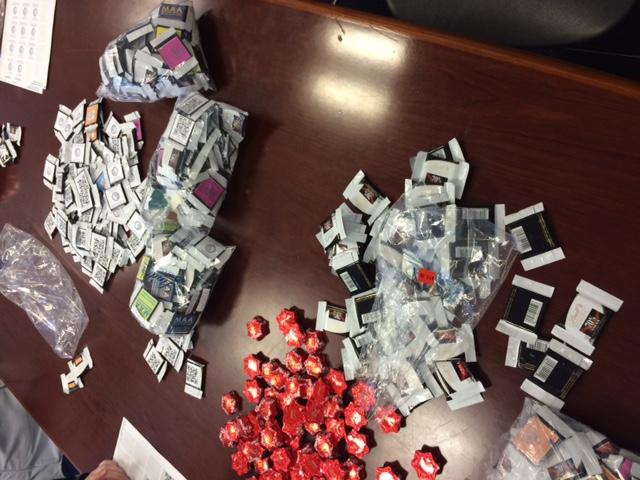
Preparing chocolate for the MAA’s KZOO Table
As always, the Medieval Academy of America will have a strong presence at the 2016 International Congress on Medieval Studies (May 12-15).
1) The Friday morning plenary, sponsored by the Academy, will be delivered by Jane Chance (Rice Univ.). Her topic will be “How We Read J. R. R. Tolkien Reading Grendel’s Mother” (Friday, 8:30 AM, Bernhard, East Ballroom). Two related sessions on the topic of “How We Read” will take place on Friday at 10 AM (Session 215) and 1:30 PM (Session 267). Both sessions will be in Bernhard 158.
2) On Thursday at 3:30 PM, the Graduate Student Committee is sponsoring a roundtable titled “The Modern Grail: Insider Tips from Search Committees to Land That Academic Job” (Session 100, Valley 1, Hadley 101). The GSC reception will take place immediately afterwards, in Fetzer 1055.
3) The Committee on Centers and Regional Associations (CARA) is sponsoring two panels this year. The first, “Addressing Career Diversity for Medievalists,” will take place on Thursday at 10 AM (Session 5, Valley 1, Hadley 102). The second, “Reflections on the Medieval Mediterranean NEH Summer Institutes,” will take place on Thursday at 3:30 (Session 125, Schneider 1280).
4) The annual CARA Luncheon will take place on Friday at noon (Bernhard, President’s Dining Room). If you would like to attend as a representative of your program or institution, please register online. There is no fee to attend, but pre-registration is required. All are welcome!
5) Finally, we invite you to stop by our staffed table in the exhibit hall to introduce yourself, transact any Medieval Academy business you may have, or pick up some chocolate to keep you going during those long afternoon sessions.
See you at the ‘Zoo!
We offer our congratulations to these Medieval Academy members:
– David Nirenberg (Univ. of Chicago) and Ralph Hexter (Univ. of California, Davis), who have been elected to the American Academy of Arts and Sciences;
– Hussein Fancy (Univ. of Michigan) and John Lansdowne (Princeton Univ.), who have each been awarded a Rome Prize in Medieval Studies from the American Academy in Rome;
– Margaret Gaida (University of Oklahoma) and Jacob Hobson (Univ. of California, Berkeley), who have each been awarded a Mellon/ACLS Dissertation Completion Fellowship.
The International John Gower Society has awarded the 2016 John Hurt Fisher Prize for a “significant contribution to the field of John Gower Studies” to Sebastian Sobecki for his Speculum essay on Gower’s autograph hand and the Trentham manuscript (Speculum 90/4, pp. 925-959).
Please send any such announcements to the Executive Director for inclusion in upcoming issues of Medieval Academy News.


