Jobs for Medievalists

The University of South Alabama History Department invites applications for a tenure-track assistant professor position, with a specialization in Medieval European history, to begin August 15,2013. All subspecialties will be considered. The successful candidate will be responsible for introductory and advanced courses in Medieval European history, including courses at the M.A. level, as well as for Western Civilization surveys that may include large-enrollment sections. Candidates should demonstrate excellence in teaching and research. The Ph.D. is expected by the time of appointment. To receive full consideration, all required application materials must be received by November 1, 2012. Send a letter of application, a curriculum vitae, a chapter or article-length writing sample, three letters of recommendation sent directly from the referee or appropriate placement office, and copies of graduate and undergraduate transcripts, to Professor Michael L. Monheit, Chair, Medieval European History Search Committee, Department of History, 5991 USA Drive North, Humanities Building 344, University of South Alabama, Mobile, AL 36688.

Web address: http://www.southalabama.edu/history. The University of South Alabama is an Equal Opportunity/Equal Access Employer.

Posted in Jobs for Medievalists | Leave a comment

Call for Applications: Andrew W. Mellon Postdoctoral Fellowships in the Humanities, 2013-2015

The Jackman Humanities Institute (JHI) at the University of Toronto is pleased to announce Andrew W. Mellon Postdoctoral Fellowships designed to provide financial and intellectual support for outstanding scholars at the beginning of their professional careers. Up to three Fellows in the Humanities will be selected each year for a two-year fellowship in the JHI. Fellows will be selected on the basis of accomplishment appropriate to their stage in their career, the promise of excellence and the relevance of their research to the annual theme.

The JHI interprets “Humanities” as a broad category, including political theory, interpretative social science, music, and the arts.

The theme for 2013–2014 is Translation and the Multiplicity of Languages

The Fellows will pursue their individual research in the context of the JHI. They will have offices at the JHI and will participate in weekly seminars and other activities in the circle of fellows. In addition, each postdoctoral fellow will be affiliated with a Department and will teach one course in each Fall and Winter term of their two-year Fellowship. We are especially interested in candidates who have an interest in and capacity for interdisciplinary work of a high quality. The Fellowship provides an annual $50,000 Canadian stipend.

Eligibility:  1 July 2010 — 1 May 2013

Applicants must have completed their degree within three years of the beginning of the fellowship (1 July 2013).  Applicants who will defend their thesis before 1 May 2013 are eligible, but a letter from their supervisor or Chair may be requested. Any award will be conditional on a successful defense.

Applicants who received their Ph.D. prior to 1 July 2010 are ineligible.

Degree candidates and recipients of the Ph.D. from the University of Toronto are ineligible.

Fellowships are open to citizens of all states. The University of Toronto is strongly committed to diversity within its community and especially welcomes applications from visible minority group members, women, Aboriginal persons, persons with disabilities, members of sexual minority groups, and others who may further expand the range of ideas and perspectives.

Procedure

You must have a registered userID on the JHI website to apply.  Click on Funding to see the description of the fellowship and application procedures.  Scroll to the bottom of the description, and then click Apply Now to apply (this will not be visible until 1 October 2012).
You will be asked to upload the following documents in your application:
1.    Letter of Application
2.    Curriculum vitae
3.    Statement of Teaching and Research Interests
4.    Writing Sample (normally a completed thesis chapter of about 30 pages)
All documents must be in .doc or .pdf format.  The size limit for a complete application including all four documents is 7 mb.  If your application is too large, you will see an error message; please adjust the size of your files and try again.

You will also be asked to provide the names and email addresses of three referees, and/or the name and email address of your dossier service.  You may include both a dossier service and referee names if necessary.  Please alert your referees to your intention to apply before you submit your application in order to allow them sufficient time to respond.

When you complete the application, click Submit.  Please be aware that it is not possible to save a partial application and return to it at a later point.  When you click on Submit, your application will be filed, and the referees that you have named will be contacted automatically to request letters of reference. Do not click Submit until all materials have been uploaded and you are ready for reference requests to go out.

You may check on the status of your application by going into your userID profile on the JHI website and clicking on Applications (left column).  If your application says “complete”, your dossier/references have been received.  If your application says “pending”, we are waiting for a dossier or reference letters.  Your dossier and/or letters of reference should be received by 15 December 2012. 

Deadline

All applications must be made online at www.humanities.utoronto.ca by 1 December 2012 at 11:59 p.m. (EDT).  Faxed, emailed, and paper applications will not be considered.

Questions?

Contact: Robert Gibbs, Director of the Jackman Humanities Institute (416)-978-7415.


Posted in Fellowships | Leave a comment

Call for Papers – Trade, Travel and Transmission in the Medieval Mediterranean

Trade, Travel and Transmission in the Medieval Mediterranean
Third Biennial Conference of the Society for the Medieval Mediterranean
Churchill College, University of Cambridge (UK), 8-10 July 2013

Confirmed keynote speakers: Prof. David Abulafia (University of Cambridge) and Prof. Carole Hillenbrand (University of Edinburgh)

Abstract deadline: 1st December 2012

The Society for the Medieval Mediterranean is proud to announce our forthcoming third biennial conference, with the theme of ‘Trade, Travel and Transmission’. This three-day inter-disciplinary conference will bring scholars together to explore the interaction of the various peoples, societies, faiths and cultures of the medieval Mediterranean, a region which had been commonly represented as divided by significant religious and cultural differences. The objective of the conference is to highlight the extent to which the medieval Mediterranean was not just an area of conflict but also a highly permeable frontier across which people, goods and ideas crossed and influenced neighbouring cultures and societies. We invite proposals for 20-minute papers in the fields of archaeology, art and architecture, codicology, ethnography, history (including the histories of science, medicine and cartography), languages, literature, music, philosophy and religion. Submission on the following topics would be particularly welcome:

Activities of missionary orders
Artistic contacts and exchanges
Byzantine and Muslim navies
Captives and slaves
Cargoes, galleys and warships
Costume and vestments
Diplomacy
Judaism and Jewish Mediterranean History
Literary contacts and exchanges
Material Culture
Minority Populations in the Christian and Islamic Worlds.
Mirrors for Princes
Music, sacred and secular
Port towns/city states
Relations between Jews, Christians and Muslims.
Religious practices: saints, cults and heretics
Scientific exchange, including astronomy, medicine and mathematics
Seafaring, seamanship and shipbuilding
Sufis & Sufi Orders in North Africa and the Levant
Sultans, kings and other rulers
Trade and Pilgrimage
Travel writing
Warfare: mercenaries and crusaders

Please send abstracts of no longer than 250 words, together with a short CV (max. 2 sides of A4) to Dr Rebecca Bridgman (University of Cambridge, Vice-President of the Society for the Medieval Mediterranean) at the following e-mail: smmconference2013@gmail.com
Submission must be received by 1st December.

Posted in Call for Papers | Leave a comment

Exposition “Scripting the Sacred : Medieval Latin Manuscripts”

Stanford (CA), Stanford University, 17.IX.2012 – 6.I.2013 : Scripting the Sacred : Medieval Latin Manuscripts. –http://events.stanford.edu/events/337/33713/

Posted in Announcements | Leave a comment

Jobs for Medievalists

The Department of Literature and Language seeks to fill a tenure-track position in literature.  Candidates should have Ph.D. in English or Comparative Literature in hand by Aug. 2013.  Candidates should demonstrate the capacity to develop a generalist breadth to suit the needs of a small, interdisciplinary department with a curriculum spanning British and American as well as world literature in translation.  Needs in the department include candidates prepared to teach non-Western and pre-1800 literatures.  Projected course offerings include composition, introduction to literature, historical surveys, and ethnic and minority literatures.  Consideration will also be given to candidates with demonstrated experience or potential for leadership in serving our institution’s efforts in promoting diversity and inclusion. Candidates will also be expected to contribute to programs outside the department such as our Integrative Liberal Studies program—UNC Asheville’s interdisciplinary liberal arts curriculum, required of all our undergraduates—as well as the Humanities Program, Africana Studies, and Women, Gender and Sexuality Studies. UNC Asheville is the designated public liberal arts university in the North Carolina system, with a dynamic and interdisciplinary Literature and Language Department, located in one of the most livable regions in the country.  UNC Asheville is committed to diversity, and women and minorities are strongly encouraged to apply.  As an Equal Opportunity Employer, UNC Asheville does not discriminate in its hiring or employment practices on the basis of race and ethnicity, age, religion, disability, socio-economic status, gender expression, gender and sexual identity, national origin, culture and ideological beliefs.

Application procedure: send application letter of about 500 words, highlighting your fit with our needs, your electronic dossier including 3 letters of recommendation, and a statement of your teaching philosophy to Dawn McCann, Department Assistant, at dmccann@unca.edu Only electronic submissions will be considered.  Interviews at MLA convention.

Closing Date for applications: October 22

Posted in Jobs for Medievalists | Leave a comment

Exposition “Swiss treasures : from biblical papyrus and parchment to Erasmus, Zwingli, Calvin, and Barth”

Chicago, The University of Chicago, Joseph Regenstein Library, 21.IX – 14.XII.2012 : Swiss treasures : from biblical papyrus and parchment to Erasmus, Zwingli, Calvin, and Barth. – http://event.uchicago.edu/maincampus/detail.php?guid=CAL-402882f9-39bc072c-0139-c6840310-00000001eventscalendar@uchicago.edu

Posted in Announcements | Leave a comment

Call for Papers – 10th Annual Symposium of the International Medieval Society – Paris

10th Annual Symposium of the International Medieval Society – Paris
CALL FOR PAPERS
Dates: Thursday 27 – Saturday 29 June 2013
Location: Paris, France
Deadline for submissions: 1 December 2012
Keynote speakers: TBA

The International Medieval Society in Paris (IMS-Paris) is soliciting abstracts for individual papers and proposals for complete sessions for its 2013 symposium organized around the theme of “Color” in medieval France.

From the beginning of the Middle Ages, color was as connected to the visual and performing arts as it was to letters, theology, science, the livelihoods of medieval people, and their way of relating to the world.

Long before Vasari’s famous distinction between colore and disegno, medieval artists and musicians had recognized the great aesthetic, semiotic, and rhetorical potential of color. From a musical and rhetorical standpoint, the concept of color and the quality of ornatus both signified embellishment. In many ways such embellishments resulted in devices in musical notation that were intended as visualizations of the aural experience. These visualizations were derived from the definition of categories distinguished by aural cues, such as the symbolism and classification of church modes, whose qualities of were meant to be readily recognized by listeners.

As cultural references, colors–and the terms that described them–were subject to variations in meaning. In their material form of colorings and pigments, they were a commodity and a social signifier. The exoticism of these valuable substances could denote luxury and prestige down through the Middle Ages, from the purple pages of precious manuscripts to the dyes of clothing regulated by sumptuary laws. Yet color could also stigmatize or exclude, for medieval people classified, categorized, and imparted meaning by associating certain colors with specific minority groups and social hierarchies. This ‘semiotizing’ activity was crystallized in heraldry. Nevertheless, categories were not consistently mapped to colors. The variability of ‘color coding’ in medieval romance, the visual arts, or from one region to the next tests the limits of schematic, rigid views of color symbolism.

Meditations on color in literature, as in philosophy and theology, point to the agency of color, so that color is not solely a thing seen, but a potential to make things happen. The theology of light, through its attendant emphasis on color, intersected with the later reintroduction of the study of optics into the West via Latin translations of Arabic works that built upon ancient authors, giving rise to the development of theories of perspective, light, and color.

This symposium welcomes papers about color from all disciplines. In addition to approaches to color and light in medieval science and art (including the techniques for making colorings; the use of silver, gold, lapis lazuli and gemstones; grisaille and the absence of color), we invite analyses of the economics of color, the lexis of color, the symbolics and meaning(s) of color(s) in social history and literature, and approaches to color in philosophy, theology, and music (notation, embellishment, use of mode).

Proposals of 300 words or less (in English or French) for a 20-minute paper should be e-mailed to contact@ims-paris.org no later than 1 December 2012. Each should be accompanied by full contact information, a CV, and a list of audiovisual equipment you require.

Priority will be given to papers that address the French or francophone Middle Ages. Please be aware that the IMS-Paris submissions review process is highly competitive and is carried out on a strictly blind basis. The selection committee will notify applicants of its decision by e-mail by 20 December 2012.

Titles of accepted papers will be made available on the IMS-Paris web site. Authors of accepted papers will be responsible for their own travel costs and conference registration fee (35 euros, reduced for students, free for IMS-Paris members).

The IMS-Paris is an interdisciplinary, bilingual (French/English) organization that fosters exchanges between French and foreign scholars.  For the past ten years, the IMS has served as a centre for medievalists who travel to France to conduct research, work, or study. For more information about the IMS-Paris and the programme of last year’s symposium, please visit our website: http://www.ims-paris.org.

IMS-Paris Graduate Student Prize

The IMS-Paris is pleased to offer one prize for the best graduate student paper proposal.
Applications should consist of:
1) Symposium paper abstract/proposal
2) current research project (Ph.D. dissertation research)
3) names and contact information of two academic references

The prizewinner will be selected by the board and a committee of honorary members, and will be notified upon acceptance to the Symposium. An award of 350 euros to support international travel/accommodations (within France, 150 euros) will be paid at the Symposium.

Posted in Call for Papers | Leave a comment

MAA News – The MAA’s New Web Portal, Coming Soon!

The MAA’s new AMS (Association Management System) and its associated website has completed in-house testing. It is now being tested by members of the MAA Council before being released in early September for the entire membership.

The new website not only has been completely revamped for content — bringing it up to date with the latest bylaws, officers, committees and staff, publications lists and style sheets — but it also functions on top of a robust database, making maintenance and updates easier and offering MAA members the ability to manage their own profiles, renewals, payments, and personal information.

In addition, the AMS allows the MAA to create online spaces for committees, forums, and direct member-to-member communications. It provides for an MAA store for books and other publications. Most important, it now enables us to create a “subscription wall” to offer Speculum articles, reviews, and other MAA publications either free and open-access or to members only.

The new system involved the entire MAA staff here in Cambridge. Our thanks to Chris Cole for his many months of expert work heading up the project, to Sheryl Mullane-Corvi for her participation in member-related data issues, and to Katie Taronas and Paul Lindholm for their many hours of testing and reporting.

Look for an email in September with your username and password and then explore the new website!

Posted in MAA Newsletter | Leave a comment

MAA News – The Jacqueline Brown Fund

We are very pleased to announce that the fund established in honor of Jacqueline Brown’s many years of distinguished service to the Medieval Academy, through the generous contributions of President Emerita Caroline Bynum and many other members and friends, has raised almost $20,000 to support Speculum authors by offsetting the costs of obtaining images and image rights for articles that have been accepted for publication. (See May-June issue for details.)

A full list of contributors will appear in the July 2013 issue of Speculum. In the meantime, the MAA thanks you for your very generous contributions to this fund in Jackie’s honor.

Posted in MAA Newsletter | Leave a comment

MAA News – MAA at Leeds International Medieval Congress, 2012

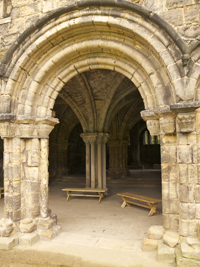
Leeds, Kirkstall Abbey, Chapter House. Photo: Italica Press

Dr. Alan Stahl (Curator of Numismatics, Princeton University) presented the annual Medieval Academy of America Lecture at Leeds, speaking on “The Mediterranean Melting Pot: Crosscurrents in Medieval Coinage.” An animated question-and-answer period reflected the lively interest of the audience. A well-attended reception, hosted by the MAA, followed.

The Graduate Student Committee of the MAA sponsored a roundtable discussion at Leeds on “The Wayfaring Scholar: Charting New Routes for Academic Pursuit in the Age of Globalization.” The session was organized by two GSC members: Sebastian Langdell (University of Oxford) and Elizaveta Strakhov (University of Pennsylvania), chair of the GSC. Michelle Urberg (University of Chicago), former chair of the GSC, moderated a lively discussion. A reception immediately followed the panel and was well attended.

The GSC also organized another successful mentorship program at Leeds with eighteen graduate student mentees and eight mentors participating.

Posted in MAA Newsletter | Leave a comment