
MAA News – From the President

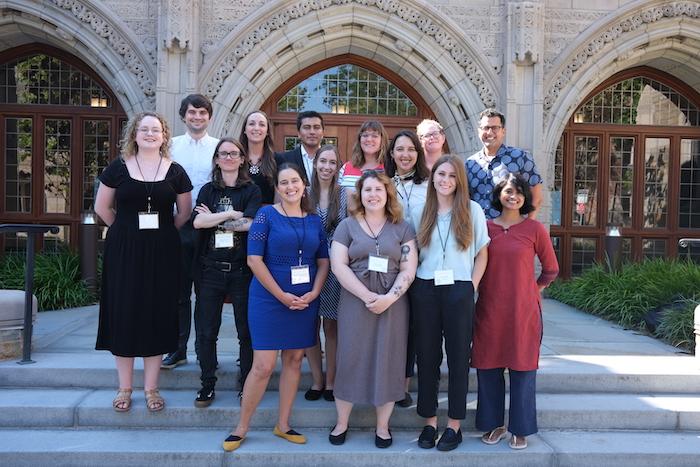
Back row, left to right: Dr. Daniel Davies, Ashley Barros, Adan Ramirez-Figueroa, Brianna Skye Oliver, Emma Maggie Solberg, Dr. Hussein Fancy
Middle row, left to right: Lauren Cole, Antony Henk, Kristen M. Raffa, Gabriella Chitwood
Front row, left to right: Dr. Nahir I. Otaño Gracia, Erin Kurian, Amy Juarez, Aparajita Das

Congratulations to the organizers of the Academy’s inaugural Summer Research Program and to all its participants!

This initiative was the work of many minds, hearts, and hands. As a member of Council in 2020, Hussein Fancy (Yale University) first raised the idea of a summer research experience for student medievalists from diverse backgrounds after he participated in a highly successful diversity mentoring program at the University of Michigan.  Andrea Achi (Metropolitan Museum of Art), Nahir Otaño Gracia (University of New Mexico), and Jonathan Correa-Reyes (Pennsylvania State University) collaborated with Hussein and me to propose the establishment of an MAA Mentoring Programs Committee. Approved by Council in 2021 and formed the next year under leadership of chair Afrodesia McCannon (New York University), this dynamic new committee began work on several projects, the most ambitious being the Summer Research Program.

The program aims broadly to mentor for the future of medieval studies by fostering a diverse new generation of medievalists. This summer’s pilot was devoted to early graduate students and designed to provide a springboard for the kind of sustained mentorship that would assist its participants not only in completing their doctoral work but also in using their expertise in medieval studies to pursue a wide array of careers. Out of a robust pool of applicants, the committee selected fifteen students from communities and backgrounds that have been traditionally underrepresented or marginalized within medieval studies. They came from all over North America —from Texas, Arkansas, and Oklahoma to Oregon, Iowa, Illinois, and North Carolina—as well as from Delhi, India and Tbilisi, Georgia. Their interests ranged across the many disciplines of medieval studies—English, Art History, Romance Languages, History of Science, Religious Studies, Philology, History—and beyond Europe to Georgian sculpture, selfhood in Mughal India, and Persian inscriptions.

With the support of Teo Ruiz (UCLA), who came on as the new chair of the Committee in March, and important contributions from Committee members Sierra Lomuto (Rowan University) and Jenny Tan (University of Pennsylvania Press), Committee, members Liz Hardman (Bronx Community College, CUNY) and Ana C. Núñez (Stanford University) oversaw the six-week summer program of workshops, panels, and presentations that commenced on July 1.  While most of the sessions were on Zoom, an in-person gathering at Yale University on August 17-19 brought participants together for a culminating series of presentations and sessions. The students were divided into three cohorts, based on their stage of graduate work, and each cohort focused on a research product: a conference paper, a grant proposal, or a dissertation prospectus. In several sessions over the six weeks, the two mentors guiding each workshop worked intensively with their cohort members. Courtney C. Barajas, a specialist in Old English and a DEI advocate, teamed up with Maggie Solberg, who teaches British medieval literature, to mentor the dissertation prospectus cohort; medieval historian and research development strategist Jennifer Speed and historian of late antique Italy Nicole Lopez-Jantzen mentored the grant writing cohort; and Daniel Davies, who works on late medieval literary and historical texts, joined activist professor of the global north Atlantic Nahir Otaño Gracia to mentor the conference paper cohort.

Additionally, to broaden the participants’ career horizons, the program included three panels featuring medievalists working in varied settings: editing and publishing (Erik Beranek, Translator and Assistant Editor, Sociology and Paperbacks, Princeton University Press; Jonathan Farr, freelance academic editor), digital humanities (James B. Harr III, Assistant Professor of Literature and Languages, Christian Brothers University ), libraries and museums (Christopher Fletcher, assistant director, Center for Renaissance Studies, Newberry Library; Amey A. Hutchins, Manuscripts Cataloging Librarian, Schoenberg Institute for Manuscript Studies, University of Pennsylvania Libraries; Tory Schendel-Vyvoda, Curator, Evansville African American Museum; Art Collections Researcher, University of Southern Indiana; Visiting Faculty, Harlaxton College curator of art at the Evansville Museum of Arts, History, and Science); development (Sarah Celentano, Major and Planned Gifts Officer, Brooklyn College Foundation, and as of October 3, Senior Director of Individual Giving, Municipal Art Society of New York), instructional design (Christopher Beck, Senior Instructional Design Manager, Course Production, Purdue University) and education (Elizabeth Keohane-Burbridge, Assistant Professor, Department of Early Childhood through Secondary Education, University of West Georgia).

The culminating days at Yale allowed all the participants to give presentations on their work and to complete two additional intensive workshops on cover letters and CVs (led by Holly Flora, Associate Dean for Faculty Affairs at Tulane University, and MIT Associate Dean Kim Benard).
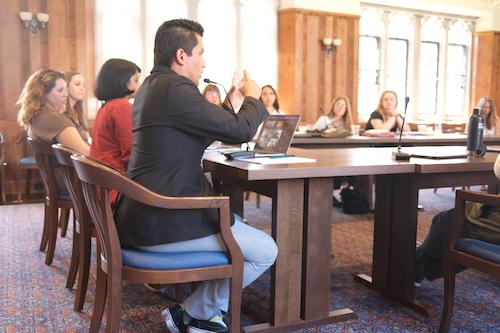
Adan Ramirez-Figueroa

Informal comments thus far indicate that the program’s emphasis on mentoring over an extended period of time—rather than in ephemeral, single events—and small cohorts yielded significant gains. These design features also afforded opportunities for participants to build lateral relations of mentoring and a network of support in addition to valuable vertical ties with professionals. Participants as well as panelists also valued the honoraria the MAA provided. This unique investment in setting a course for change allowed mentees to devote concerted time to the program and conveyed the Academy’s respect for the upcoming generation of scholars.

Not only the students, however, gained from the program! The organizers, mentors, and panelists remarked that the experience was not only “very worthwhile” but also meaningful and fulfilling. If you would like to get involved, look for the next MAA calls for mentors or reach out to any member of the Mentoring Program Committee and/or to coordinators Mary M. Alcaro and Maggie Heeschan of the Graduate Student Committee mentoring program.

With gratitude especially to organizers Afrodesia McCannon, Liz Hardman, and Ana C. Núñez, I close with congratulations and thanks to the fifteen wonderful scholars who participated:

Muntazir Ali (Department of Persion, University of Delhi)
Ashley Barros (Department of English, Texas A&M University)
Gabriela Chitwood (Department of the History of Art and Architecture, University of Oregon)
Lauren Cole (Department of History, Northwestern University)
Aparajita Das (Department of History, University of California, Berkeley)
Maroun El Houkayem (Graduate Program in Religion, Duke University)
Antony Henk (Master of Arts, English Philology, University of Göttingen)
Amy D. Juarez (English Department, University of California, Riverside)
Erin Danielle Kurian (Department of History, University of Waterloo)
Jane Noble Maschue (Department of History, Catholic University of America)
Brianna Skye Oliver (Department of English, University of Arkansas)
Kristin Raffa (Program in the History of Science, University of Oklahoma)
Adan Ramirez-Figueroa (Romance Languages and Literatures, Harvard University)
Kristine Sabashvili (Department of Art History, Tbilisi State Academy of Art)
Thelma Trujillo (Department of English, University of Iowa)

Maureen C. Miller (mcmiller@berkeley.edu), President of the Medieval Academy of America

Posted in MAA Newsletter | Leave a comment

MAA News – Call for Fellows Nominations

To all Members of the Medieval Academy of America:

All members of the Medieval Academy of America are hereby invited to submit nominations for the election of Fellows and Corresponding Fellows of the Academy for 2023. You need not be a Fellow to nominate a Fellow or Corresponding Fellow, and all members are warmly encouraged do so, for this is one important way in which the Academy recognizes and honors its most outstanding scholars. Nominations from Corresponding Fellows who reside in countries outside of North America, who need not be members of the Academy, are equally welcome.

Currently, there are 122 Active Fellows and 67 Corresponding Fellows. According to the Strategic Plan recently approved by the Fellows, the number of total Fellows and Corresponding Fellows is to be increased each year as follows:

“The number of voting Fellows [will] be increased from 125 to 150 and the number of Corresponding Fellows [will] be increased from 75 to 100 over a period of 9 years, with 3 additional Fellows and 3 additional Corresponding Fellows to be elected per year over the first 8 years and an additional Fellow and Corresponding Fellow in the ninth year.”

In accordance with this new policy, there will be a maximum of 131 Fellows and 81 Corresponding Fellows in 2023. The number of openings in the current cycle, then, is 9 Fellows and 14 Corresponding Fellows.

New procedures for nomination dossiers have been instituted as a result of the reforms adopted by the Fellows in 2021. The instructions are detailed at
https://medievalacademy.site-ym.com/?page=Election_Procedure

In brief, here are the rules for the dossier:

1) up to three signed letters of nomination, each of which may be up to two pages in length (although a nomination can still go forward without prejudice with a single letter);
2) a curriculum vitae of NO MORE than four pages;
3) a URL directing voters to an expanded online CV, if possible (this URL should be included in the body of the first nominating letter)

These components must be combined into a single PDF and submitted by email to the Executive Director (LFD@TheMedievalAcademy.org). Incomplete or improperly constituted dossiers will not be accepted.

All Fellows (except for Corresponding Fellows) must be members of the Medieval Academy who reside in North America at the time of election. They should be medievalists who have contributed to our knowledge of the Middle Ages with a substantial body of scholarship, distinguished in both quality and quantity. In most fields the contribution will entail several well-received books, though in some areas the standard may be important digital work or a sheaf of influential articles. Major prizes, editorships, and professional leadership in societies including (but not limited to) the MAA may also be taken into account. Election to the Fellows recognizes a lifetime of academic achievement. Candidates, therefore, will ordinarily be full professors, though senior curators and distinguished independent and non-tenure-track scholars may also merit election. Nominations of associate professors are normally considered premature.

In nominating candidates, please consider diversity in discipline, ethnicity, gender, regions of the country, and types of institution. Please also bear in mind that Medieval Studies is not limited to Western Europe or to the second half of our period.

In order to present a balanced slate, additional nominations may be made by the Fellows Nominating Committee, the members of which are listed on the Officers page.

To sum up: Please follow instructions for nominations as found on the MAA website; nominations that are incorrectly prepared will not be considered.

Instructions for nominations are available here:
https://medievalacademy.site-ym.com/?page=Election_Procedure

Please refer to the lists of current Fellows before proposing a nomination:

Current Fellows:
https://medievalacademy.site-ym.com/?page=Fellows_List
Current Corresponding Fellows:
https://medievalacademy.site-ym.com/page/CorrFellows

Nominations for the 2023 elections must be received by 1 October 2022. Unsuccessful nominations from previous years may be resubmitted. Please contact the Executive Director for further information about this process.

Finally, please keep nominations confidential. Although nominators are to sign their names to the letters, all involved should try not to let nominees learn about their nomination.

We look forward to a diverse and exciting set of nominations.

– Richard Emmerson, President of the Fellows

Posted in MAA Newsletter | Leave a comment

MAA News – GSC Digital Humanities Showcase

Medieval Academy of America Graduate Student Committee 
Digital Humanities Showcase
Call for Submissions
Due Monday, October 3, 2022

Come celebrate with us! The GSC is seeking presenters for its first-ever Digital Humanities Showcase, scheduled to take place over Zoom on December 1, 2022. We invite scholars in any field or discipline of global medieval studies who use innovative technologies in their study or teaching of the Middle Ages to share their work with a broad audience of medievalists. This virtual gathering will serve as a forum for scholars, both emerging and established, to gather and learn about, as well as celebrate, their achievements and work in the digital humanities, broadly conceived. Above all, the GSC’s Digital Humanities Showcase is meant to be fun and exciting, giving participants and presenters alike the chance to share ideas and connect. Presentations should be no more than ten minutes in length and explain the impact of the applied technologies on medieval studies. The content of the presentations should be accessible to scholars from all disciplines while also maintaining a high quality of research. If possible, we encourage presenters to include a demonstration of their technology, methodology, or approach.

Applications should include a 2-page CV as well as a brief abstract of no more than 200 words. Submissions should be sent to Reed O’Mara at rao44@case.edu and gsc@themedievalacademy.org by October 3, 2022. Selected speakers will be notified by mid-October.

Possible topics could include, but are not limited to:

  • Digital modeling of religious and secular spaces
  • Virtual reconstructions of manuscripts
  • New innovations in mapping
  • Immersive technologies such as mixed- or virtual-reality headsets
  • Sensory recreations—spaces, sounds, textures, tastes, etc.
  • Classroom or research applications for technology
  • X-ray, imaging, and other scientific analyses to research palimpsests, artworks, and manuscripts
  • Examinations of medieval technologies through modern reconstructions and analyses
Posted in MAA Newsletter | Leave a comment

MAA News – Upcoming Deadlines

The Medieval Academy of America invites applications for the following grants. Please note that applicants must be members in good standing as of September 15 in order to be eligible for Medieval Academy awards.

Schallek Fellowship
The Schallek Fellowship provides a one-year grant of $30,000 to support Ph.D. dissertation research in any relevant discipline dealing with late-medieval Britain (ca. 1350-1500). (Deadline 15 October 2022)

Travel Grants
The Medieval Academy provides travel grants to help Academy members who hold doctorates but are not in full-time faculty positions, or are contingent faculty without access to institutional funding, attend conferences to present their work. (Deadline 1 November 2022 for meetings to be held between 16 February and 31 August 2023)

MAA/CARA Conference Grant
The MAA/CARA Conference Grant for Regional Associations and Programs awards $1,000 to help support a regional or consortial conference taking place in 2023. (Deadline 15 October 2022)

Posted in MAA Newsletter | Leave a comment

MAA News – Call for Prize Submissions

The Medieval Academy of America invites submissions for the following prizes to be awarded at the 2023 MAA Annual Meeting. Submission instructions vary, but all dossiers must complete by 15 October 2022. The Medieval Academy warmly encourages the nomination of publications written by scholars working beyond the tenure track as well as those written by faculty.

PLEASE NOTE: because of the ongoing MAA office closure, PDF review copies of nominated books may be submitted instead of hardcopies (PDFs should be emailed to the Executive Director). In addition, the residency restrictions limiting eligibility for some book prizes to residents of North America have been lifted.

NEW: Monica H. Green Prize
Awarded to an exceptional project that demonstrates the value of medieval studies in our present day.

NEW: Jerome Singerman Prize
Awarded to a meritorious second monograph in the field of medieval studies.

Haskins Medal
Awarded to a distinguished monograph in the field of medieval studies.

Digital Humanities Prize
Awarded to an outstanding digital research project or resource in the field of medieval studies.

Karen Gould Prize
Awarded to a monograph of outstanding quality in medieval art history.

John Nicholas Brown Prize
Awarded to a first monograph of outstanding quality in the field of medieval studies.

Article Prize in Critical Race Studies
Awarded annually to an article in the field of medieval studies that explores questions of race and the medieval world, and which is judged by the selection committee to be of outstanding quality.

Posted in MAA Newsletter | Leave a comment

MAA News – Good News From Our Members

The following MAA members have been awarded fellowships from the National Endowment for the Humanities:

Lynn Ramey (Vanderbilt University): “Brendan’s Voyage: An Immersive Environment for Medieval Language and Culture” (creating a virtual immersive environment to provide training to students in medieval languages and cultures)

Atria Larson (Saint Louis University): “Gallery of Glosses” (prototyping and testing of a web platform for sharing digitized medieval manuscripts that allows users to identify and transcribe the annotations and marginalia)

Congratulations! If you have good news to share, please contact Executive Director Lisa Fagin Davis.

Posted in MAA Newsletter | Leave a comment

Call for Papers – Kalamazoo 2023: CARA

CARA (the MAA Committee on Centers and Regional Associations) invites proposals for its two sponsored sessions at next year’s meeting of the International Congress on Medieval Studies at Kalamazoo, which will take place from 11-13 May 2023:

I. Cold Comforts: Fantasies and Fictions of the Medieval North

Scholars long have focused upon “the East” as a focus of the medieval European imaginary, and as the locus for various practices of Othering and exoticization. Such practices, however, were just as likely to be dis-oriented in the wider medieval world. We invite scholars of medieval Africa, Iberia, the Islamicate, as well as Byzantine and Latin Christendom to explore how the North served as what Le Goff has described as an “oneiric horizon” in the Middle Ages—a site of fantasy, fiction, and imagination—in historical, ethnographic, literary, and artistic discourses.

II. Making Medieval: The Potential and Pitfalls of Experiential Pedagogy in Medieval Studies (co-sponsored with TEAMS)

Moving beyond the traditional media of lectio and lectura, medievalists in a wide range of disciplines have integrated making, doing, and performance into their classroom practice and curricula. This roundtable invites colleagues working in K—12 as well as university settings to share their innovations, experiences, and insights about the role of “hands-on” activities and lesson plans in promoting and advancing their students’ engagement with and understanding of the Middle Ages, including (but not limited to) musical and dramatic performance, artistic and craft production, and experimental archeology.

We are pleased that both CARA-sponsored sessions will take place in a blended format, making it possible to participate either in person or virtually. Paper proposals, which are due by 15 September, may be submitted through the Congress’s website at https://wmich.edu/medievalcongress/submissions. If you have any questions, please contact CARA’s Chair, Sean Gilsdorf (gilsdorf@fas.harvard.edu).

Posted in Call for Papers, CARA | Leave a comment

Call for Applications for the Medieval Textile Workshops

Call for Applications for the
Medieval Textile Workshops 

Workshop 1: Tuesday, February 21, 2023
Led by Jennifer Ball and Valerie Garver

Workshop 2: Wednesday, February 22, 2023
Led by Sharon Farmer and Sharon Kinoshita

The Avenir Center
George Washington University Virginia Science and Technology Campus
44930 Knoll Square
Ashburn, VA 20147

 I. Description: Supported by the Medieval Academy, the MAA 2023 Local Arrangements Committee and UC Berkeley Department of History, the George Washington University Museum and The Textile Museum are offering two identical, full-day workshops that make use of the institution’s rich textile collections housed in the Avenir Center on GW’s Virginia Science and Technology Campus in Ashburn, Virginia. The Avenir Foundation Conservation and Collections Resource Center houses the majority of The Textile Museum’s world-class collections. These include Oriental carpets and late antique, early Islamic (including tiraz), Indian (including Mughal), Southeast Asian, Central Asian, Persian, Turkish, and Greek textiles. The collections also include textiles from China, Japan, and Africa, although these are fewer in number. The museum also has extraordinary holdings of pre-Columbian Peruvian textiles: styles that are particularly well represented include Ocucaje, Nasca, Huari, Chimu, Chancay, and Inca. In addition, the collections include extensive holdings of textiles in the modern traditions that descend from pre-Columbian origins, including those of Guatemala and Mexico, as well as the Andean countries of Ecuador, Peru, and Bolivia.

Each workshop day, 2 faculty leaders will work with eight participants alongside the museum staff to examine examples from the collections.

II. Participants: The workshop is designed for those familiar with but not-yet-expert in textile research and scholarship. Due to space restrictions, each day of the workshop is restricted to two faculty members and eight graduate students, junior scholars or independent scholars.

III. Timing: A proposed schedule for the event is as follows:

9:00 Depart from Grand Hyatt
10:00-10:30 Arrive in Ashburn; welcome and orientation
10:30-12 Access to textile samples
12:00-1 Lunch
1-3:00 Access to textile samples
3:00 Return to Grand Hyatt

IV. Application Process
To apply, please fill out the MAA 2023 Textile Workshop application form, which will require the following:

1. Contact information 

  • first name
  • last name
  • current affiliation (if applicable, if currently unaffiliated, please include hometown)
  • mailing address
  • preferred email
  • preferred phone number

2. A 2-paragraph statement of interest, indicating which day you would prefer to attend and how this workshop will support or expand your research and/or teaching agenda.

 3. A short CV (1 page maximum).

Applications are due by November 15, 2022, 11:59 EST. No late applications will be accepted. All applicants will be informed of the status of their applications by December 1, 2022. Those accepted to the workshop should register by January 1, 2023 to ensure their space at the workshop;  any places not claimed by accepted participants by this date will then be made available to applicants on the waiting list.

V. Cost: The cost of lunch and roundtrip transportation to the Avenir Center from Washington, D.C. for all applicants will be covered through the generous support of the University of California at Berkeley.

However, PLEASE NOTE the cost of lodging is not covered, and individuals arriving to the D.C. area early for the textile workshop should be prepared to make arrangements for accommodations accordingly. A block of rooms has been set aside at the conference hotel at the conference rate for workshop participants.

Posted in Call for Papers | Leave a comment

Geoffrey Chaucer and Cecily Chaumpaigne: rethinking the record

Save the date! On 11 October, Euan Roger (The National Archives, UK) and Sebastian Sobecki (University of Toronto) will reveal two new life records that explain and clarify the 1380 events involving Geoffrey Chaucer and Cecily Chaumpaigne, with a radically different understanding of the documentary evidence. A special issue of the Chaucer Review on this discovery will be published simultaneously.

Roger and Sobecki will be joined by Sarah Baechle, Christopher Cannon, Susanna Fein, Carissa Harris, Andrew Prescott, David Raybin, and Samantha Katz Seal.

Register for the launch event, hosted by The National Archives (TNA), here: https://www.eventbrite.co.uk/e/geoffrey-chaucer-and-cecily-chaumpaigne-rethinking-the-record-tickets-411849642367?fbclid=IwAR3ASrv4PwrG3ktjxQmG9OiwJU9QLiOi8_47k7NRp9qjDwv7Jx8UvJXhUFE

Posted in Announcements | Leave a comment

Apply for the Rome Prize

AAR invites applications for the 2023 Rome Prize Competition! The deadline is Tuesday, November 1, 2022.

For over a century, the American Academy in Rome has awarded the Rome Prize to support innovative and cross-disciplinary work in the arts and humanities. Each year, the prize is given to approximately thirty artists and scholars who represent the highest standard of excellence in their fields. Rome Prize winners, who receive a stipend, room and board, and individual work space at AAR’s eleven-acre campus, are the core of the Academy’s residential community, which includes Italian Fellows, Residents, and Affiliated Fellows.

The application deadline is Tuesday, November 1, 2022. To read the guidelines and begin your application, please visit aarome.org/apply/rome-prize.

Rome Prizes are awarded in the following disciplines:

  • Ancient Studies
  • Architecture
  • Design (includes graphic, industrial, interior, exhibition, set, costume, and fashion design, urban design, city planning, engineering, and other design fields)
  • Historic Preservation and Conservation
  • Landscape Architecture (includes environmental design and planning, landscape/ecological urbanism, landscape history, sustainability and ecological studies, and geography)
  • Literature
  • Medieval Studies
  • Modern Italian Studies
  • Musical Composition
  • Renaissance and Early Modern Studies
  • Visual Arts (includes painting, sculpture, drawing, photography, film, video, installation, new media, digital art, and other genres)

This year, AAR will offer the Tsao Family Rome Prize, to be awarded to a humanities scholar whose project explores the relationship between Chinese and Mediterranean philosophical traditions. Please see the humanities guidelines for more information.

Each discipline may have unique application guidelines requiring different materials. Please visit the Guidelines & Applications page to download PDFs with specific instructions for the arts and humanities categories. You may also read the Rome Prize FAQ to get a better idea of the application process and fellowship experience.

Posted in Announcements | Leave a comment