
A response to: Oţa, Silviu. Review of Mária Vargha, Hoards, Grave Goods, Jewellery: Objects in Hoards and in Burial Contexts during the Mongol Invasion of Central-Eastern Europe. Speculum 92/4 [2017]: 1263–65; doi: 10.1086/693915.
Author’s Response (Mária Vargha, University of Vienna)
My concerns are as follows: The reviewer misinterprets the conclusions and approaches of my work, presents ideas from historiographic overviews as the study’s own, and makes assertions that require corrections, which are discussed in detail below.
The reviewer misrepresented the initial concept of the book, regarding methodology, timeframe, and the geographical area covered, although the justification for all of these is stated clearly in the introduction (pp. 2–5). Furthermore, it seems that the reviewer also failed to appreciate the methodology of the work. In the scholarship that focuses on the period discussed (second half of the twelfth to the end of the thirteenth century), the chronology of small finds is rather vague, and their agency is rarely discussed, as a result of the lack of grave goods relative to the preceding era (from about the eleventh to the beginning of the twelfth centuries). This was made worse by historiographical trends discussed in the first chapter. The reviewer claims that the study focuses on one site, Kána, and extrapolates the conclusions from that site to the entire Hungarian Kingdom. But the main focus of the book is not on one single site, nor does it project results from that site onto any other one, much less to the whole kingdom. Kána, being a completely excavated settlement from the period that includes a church and cemetery made an excellent case study for a comparison made on small finds excavated from different contexts (settlement or grave goods). The study uses the site as a starting point in a period where the chronology of objects is hard to determine. Since I have conducted a complete analysis of that wholly excavated cemetery with around 1,000 graves, I was able to distinguish chronological phases within the cemetery, not derived from finds from graves, but rather from an independent, stratigraphical, and statistical method. This analysis allowed for much more precise dating for burial horizons—and with that the small finds found in such burials—than would have been possible by traditional archaeological methods. This resulted in a list of objects dated to a relatively short period, with a complete context and object biography. All of this was compared with small finds coming from the other well-known and well-dated hoard horizon (providing the second starting point) connected to the 1241–42 Mongol invasion of Hungary, which together provided a solid basis for comparison of similar finds from the narrower region (comprising the collection and comparison of each published object from the Carpathian basin, including Slovakia and part of Romania), and allowed for a more complex socioeconomic interpretation of finds, their agency, and relationship to changing burial customs.
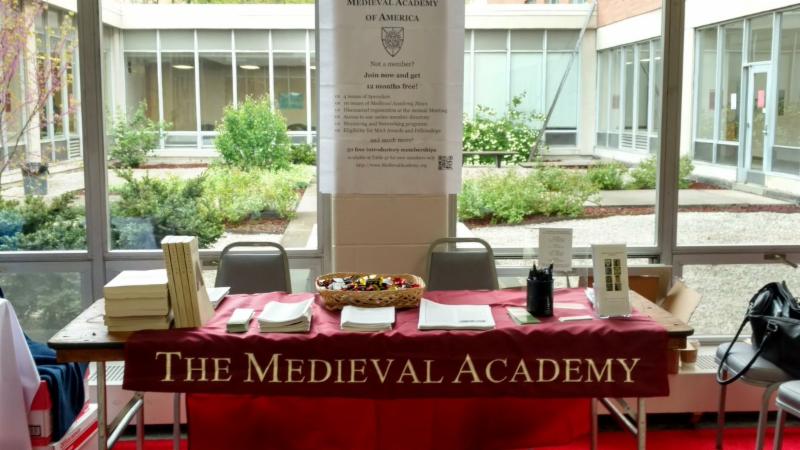 As always, the Medieval Academy of America will have a strong presence at the 2018 International Congress on Medieval Studies (May 10-13).
 The latest issue of Speculum is now available on the University of Chicago Press Journals website.
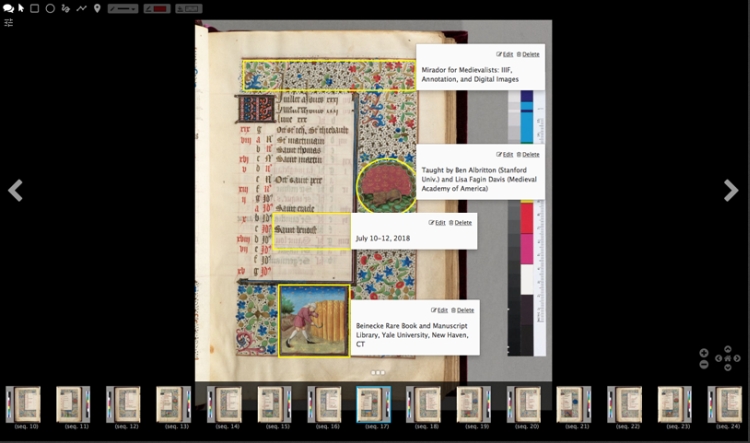 We are now accepting applications for this digital humanities workshop co-sponsored by The Medieval Academy of America and the Beinecke Rare Book and Manuscript Library. Co-taught by Benjamin Albritton (Computing Info Systems Analyst, Stanford University Libraries) and Lisa Fagin Davis (Executive Director, Medieval Academy of America), the workshop will take place at the Beinecke Rare Book and Manuscript Library at Yale University from 10-12 July 2018.


