Jobs for Medievalists

LES ENLUMINURES PARIS, sales and administration, art history background required (medieval manuscripts preferred), bilingual (French and English), must be able to work in France, salary dependent on experience. Liaison with New York and Chicago (and London) locations.

Exceptional and rare opportunity to join the team of an international art gallery exhibiting in the most prestigious art and book fairs worldwide and with locations and/ or staff in Paris, Chicago, New York, London, and Boston.

Office in the center of Paris. Must be available to travel for sustained periods for art fairs abroad (EU).
This is not a research position.

Main Responsibilities
– EU client development and follow up
– Liaise and be a point of contact for clients in Europe, particularly in Paris
– Organization of European fairs (Tefaf, Frieze Master, Masterpiece)
– Follow all EU auctions
– Press representative for the gallery (write press releases, contact and follow up)
– Miscellaneous administration

Requirements:
– Strong commercial presence
– Some experience in the art world, including in sales
– Background in Medieval and Renaissance art history preferred
– Languages required: English and French bilingual, others preferable
– Skills required: PC platforms, MS Office Suite, Photoshop
– Self-starter, multi-tasker, well-organized

Salary commensurate with experience. Full-time position

Contract: French CDD to evolve into a CDI

Send letter of application and CV to office@lesenluminures.com

Starting date:  asap

www.lesenluminures.com

Posted in Jobs for Medievalists | Leave a comment

2017 Annual Meeting, University of Toronto

Carmela Vircillo Franklin delivers her Presidential Address

The 2017 meeting was a great success, with 468 attendees, three plenaries, fifty-one concurrent sessions, receptions in art-filled venues, and, after several days of rain and snow, two final days in the sun. The opening plenary, “The Cairo Geniza and the Middle East’s Archive Problem,” was delivered by Marina Rustow (Princeton University), who demonstrated how methodologies used to study western European manuscripts can be applied to fragmentary manuscripts of the Middle East and Asia, with stunning and innovative results. MAA President Carmela Vircillo Franklin (Columbia Univ.) delivered her plenary lecture on the editorial history of the Liber Pontificalis, focusing on Francesco Bianchini’s 1718 edition, an innovative volume that included drawings and diagrams in support of his editorial arguments.

Five Fellows were inducted at the Fellows’ Session on Saturday afternoon: (l-r) Susan Einbinder (Univ. of Connecticut), David d’Avray (Corresponding Fellow, Univ. College London), Charles Burnett (Corresponding Fellow, Warburg Institute, School of Advanced Study Univ. of London), Nicole Bériou (Corresponding Fellow, Institut de recherche et d’histoire des textes), and Douglas Kelly (Univ. of Wisconsin)

The Fellows’ Plenary was to have been delivered by Monica Green (Arizona State University). In Prof. Green’s unfortunate absence, Jonathan Hsy (George Washington Univ.) bravely stepped in to deliver her paper in her stead, while Prof. Green followed along online and answered questions that were live-Tweeted to her using #MAA2017. The CARA plenary session addressed the topic of “Mediterranean Sexualities.” Roundtables were held on the timely and important topics of open-access publishing, diversity in curricula and on campus, Medieval Studies in K-12 curricula, and careers off the tenure track. The full program is available here.

Reception at the Art Gallery of Ontario

Receptions were held at Victoria College, the Art Gallery of Ontario, and the Aga Khan Museum.

During the Business Meeting, the following awards were presented: the Kindrick-CARA Award for Service to Medieval Studies was awarded to John Van Engen (Univ. of Notre Dame); CARA Awards for Excellence in Teaching were awarded to Roberta Frank (Yale Univ.) and Amy Livingstone (Wittenberg Univ.); the award for Best Graduate Student Paper was awarded to Brett W. Smith (The Catholic Univ. of America) for his paper, “Robert Grosseteste’s Aspectus/Affectus Distinction in his Pauline Commentaries.” MAA Annual Meeting Bursaries were awarded to the following students: Samuel B. Johnson (Univ. of Notre Dame), “Harmonies of Salvation: Numerical Exegesis as Music in Augustine’s De Trinitate“; Matt King (Univ. of Minnesota), “The Intersecting Mediterranean: The Case of Norman Sicily and Zirid Ifrīqiya”; Leann Wheless Martin (Univ. of Washington), “Defeating Antichrist, Defending the Church: Music in the Ludus de Antichristo“; Rachel McNellis (Case Western Reserve Univ.), “Performance of the Visual and Participation in the Divine: Sacred Representation in Cordier’s Tout par compas“; Erin E. Sweany (Indiana Univ.), “Women’s Voices in the Old English Medical Corpus: Reassessing wifgemadlan“; Hannah Weaver (Harvard Univ), “Language and Authority in Lawman’s Brut“; Neil Weijer (Johns Hopkins Univ.), “Hybrid or Hodgepodge? The Latin Brut and the Middle English Chronicle Tradition.”

Four publication honors were awarded during the Presidential Plenary session. The Van Courtlandt Elliott Prize was awarded to Rosemary O’Neill (Kenyon College) for her article, “Counting Sheep in the C Text of Piers Plowman,” The Yearbook of Langland Studies 29 (2015), 89-116; John Nicholas Brown prizes were awarded to Jacqueline E. Jung, The Gothic Screen: Space, Sculpture, and Community in the Cathedrals of France and Germany, ca. 1200-1400 (New York: Cambridge Univ. Press, 2013) and to Jonathan R. Lyon, Princely Brothers and Sisters: The Sibling Bond in German Politics, 1100-1250 (Ithaca: Cornell Univ. Press, 2013); the first annual Digital Humanities Prize was awarded to DigiPal: Digital Resources and Database of Palaeography, Manuscript Studies and Diplomatic; and the Haskins Medal was awarded to Joel Kaye, A History of Balance, 1250 – 1375.  The Emergence of a New Model of Equilibrium and Its Impact on Thought (New York: Cambridge University Press, 2014).

CARA Meeting on Sunday morning

The annual meeting of the Committee on Centers and Regional Associations (CARA) took place on Sunday morning and was attended by thirty CARA delegates, each of whom was there representing their program or department. The morning began with a roundtable on collaborations between scientists and medievalists (in this session, Monica Green’s paper was delivered by Patrick Geary (School of Historical Studies, Institute for Advanced Study)). Profs. Green and Geary presented on their respective paleogenetics projects. In collaboration with geneticists, Prof. Green is exploring the identification and spread of medieval pathogens and Prof. Geary is studying human migration in the early Middle Ages. Alexandra Gillespie (Univ. of Toronto) presented projects being developed in the University’s Old Books New Science Laboratory. The roundtable was followed by a discussion and brief updates from each delegate.

Participants in the Graduate Student workshop, “Digital Editing of Manuscript Fragments”

A graduate student workshop on the identification, cataloguing, and TEI-transcription of manuscript fragments took place at the Pontifical Institute of Mediaeval Studies during the Annual Meeting, a workshop that grew out of the “Digital Editing the Medieval Manuscript Roll/Fragment” workshops previously held at Yale University and University College London. These workshops were partially funded by a Medieval Academy/GSC Grant in Innovation. See digitalrollsandfragments.com for more information about this project.

We are extremely grateful to Suzanne Akbari, the Program Committee, the graduate student volunteers, the University of Toronto, and the Pontifical Institute of Mediaeval Studies for their work in organizing and implementing such a splendid meeting.  We look forward to returning to Toronto in 2027!

Posted in MAA Newsletter | Leave a comment

MAA News – 2018 Call for Papers

The 93rd Annual Meeting of the Medieval Academy of America will be held at Emory University (Atlanta, Georgia), 1 – 3 March 2018. The Program Committee invites proposals for papers on all topics and in all disciplines and periods of medieval studies. Any member of the Medieval Academy may submit a paper proposal; others may submit proposals as well but must become members in order to present papers at the meeting. Special consideration will be given to individuals whose field would not normally involve membership in the Medieval Academy.
Please note: the prohibition against presenting a paper more than once every three years is no longer in effect.

Click here  for the full call for papers. Proposals must be submitted by 15 May.

Posted in MAA Newsletter | Leave a comment

MAA News – Upcoming Deadlines

MAA/CARA Summer Scholarships

The MAA/CARA Summer Scholarships support graduate students and especially promising undergraduate students participating in summer courses in medieval languages or manuscript studies. Applicants must be members of the Medieval Academy in good standing with at least one year of graduate school remaining and must demonstrate both the importance of the summer course to their program of study and their home institution’s inability to offer analogous coursework. Click here for more information. The due date for applications is 15 April.

For independent, adjunct, or contingent scholars: Travel Grants

The Medieval Academy provides a limited number of travel grants to help Academy members who hold doctorates but are not in full-time faculty positions, or are adjuncts without access to institutional funding, attend conferences to present their work. The deadline for meetings taking place between 1 September 2017 and 28 February 2018 is May 1.

Click here for more information.

Posted in MAA Newsletter | Leave a comment

MAA News – MAA@Kalamazoo

As always, the Medieval Academy of America will have a strong presence at the 2017 International Congress on Medieval Studies  (May 11-14).

1) The Friday morning plenary, sponsored by the Academy, will be delivered by Leor Halevi (Vanderbilt Univ.). His topic will be “Artifacts of the Infidel: Medieval and Modern Interpretations of the Sacred Law of Islam” (Friday, 8:30 AM, Bernhard, East Ballroom). Two related sessions  organized by Prof. Halevi will take place on Friday at 1:30 PM (Session 276) and 3:30 PM (Session 335). Both sessions will take place in the Bernhard Brown & Gold Room.

2) On Thursday at 3:30 PM, the Graduate Student Committee is sponsoring a roundtable titled “To ‘Gladly Teche’: Becoming Great Teachers in Graduate School” (Session 113, Schneider 1280). The GSC reception will take place immediately afterwards, in Fetzer 1055.

3) The Committee on Centers and Regional Associations (CARA) is sponsoring two panels this year. The first, “Teaching a Diverse and Inclusive Middle Ages,” will take place on Friday at 10 AM (Session 182, Schneider 1120). The second, “Career Diversity for Medievalists: Insights from Outside the Academy,” will take place on Saturday at 1:30 PM (Session 404, Fetzer 1045).

4) The annual CARA Luncheon will take place on Friday at noon (Bernhard, President’s Dining Room). If you would like to attend as a representative of your program or institution, please register online. There is no fee to attend, but pre-registration is required. All are welcome!

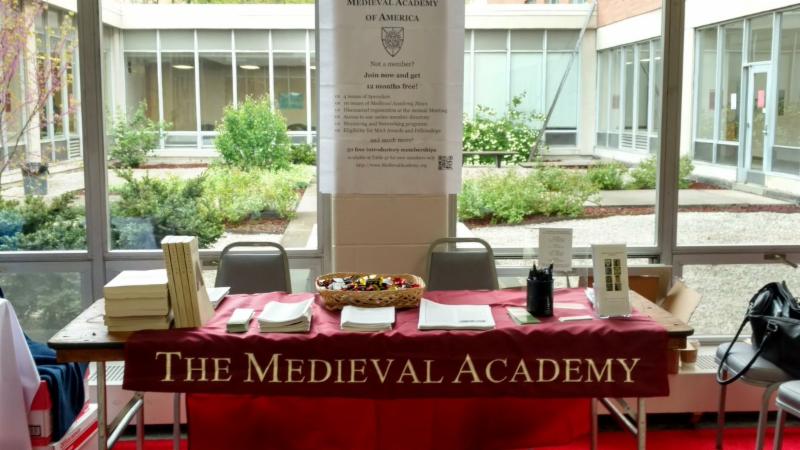
5) Finally, we invite you to stop by our staffed table in the exhibit hall to introduce yourself, transact any Medieval Academy business you may have, or pick up some chocolate to keep you going during those long afternoon sessions.

See you at the ‘Zoo!

Posted in MAA Newsletter | Leave a comment

MAA News – MAA Mentorship Program

The Graduate Student Committee offers its 2017 Mentorship Program at the three major medieval conferences. Graduate students are paired with more established scholars at the MAA Annual Meeting, ICMS Kalamazoo, and IMC Leeds.

The 2017 Mentorship Program is currently seeking participation from faculty, graduate and undergraduate students. These professional exchanges are intended to help students establish professional contacts from whom they can receive advice regarding their academic development and career. The primary intent of the exchange is to foster an active relationship during an academic conference; however, mentors and mentees may choose to continue a line of communication after the conference has ended.

Dates and Deadlines for 2017 are as follows:

ICMS Kalamazoo (May 11-14), sign-up deadline: 14 April 2017

IMC Leeds (July 3-6), sign-up deadline: 2 June 2017

Due to the organizational demands of the program, it may be necessary to restrict the number of participants, so please sign up early! Mentor shortages in this popular program have been a reality in past years, so if you know faculty attending these conferences, please encourage them to volunteer.

Sign up online here.

Posted in MAA Newsletter | Leave a comment

MAA News – Good News From Our Members

Wendy Pfeffer (University of Louisville) has been awarded a Fulbright Research Fellowship which will allow her to spend January-June 2018 in Tours, France continuing her research on culinary history.

Three members have been named 2017 Guggenheim Fellows: Rita Copeland (University of Pennsylvania), “Emotion and the History of Rhetoric in the Middle Ages”; Bissera V. Pentcheva (Stanford University), “Animation in Medieval Art”; and Paolo Squatriti (University of Michigan), “Pleasing Plants and Worrisome Weeds: Botanical Change in Early Medieval Europe.”

MAA Councillor Sara Poor (Princeton University) has been named a Fellow of the National Humanities Center, receiving the Josephus Daniels Fellowship of the Research Triangle Foundation to support her project, “Telling Tales of Clever Women: Authorship and the Devotional Book in Late Medieval Germany.”

The St. Louis Mercantile Library Prize Committee awarded first place in American Bibliography to The Mythical Indies and Columbus’s Apocalyptic Letter: Imaging the Americas in the Late Middle Ages by Elizabeth Moore Willingham (Baylor Univ.).

In September 2016, the Faculty of Letters and Arts of the Univ. Nacional Autónoma de Mexico awarded Joseph T. Snow (Emeritus, Michigan State University) with its highest honor, the Reconocimiento Escuela Nacional de Altos Estudios for  “distinction in teaching, scholarship and promotion of the humanities.”

Congratulations to all! If you have good news to share, please send it to Executive Director Lisa Fagin Davis (LFD@TheMedievalAcademy.org)

Posted in MAA Newsletter | Leave a comment

Byzantine Studies Postdoctoral Fellowship

Application Deadline: April 30, 2017

Following substantial investment in the area of Byzantine Studies at the University of Notre Dame, including the acquisition of the Milton V. Anastos Library of Byzantine Civilization and generous support from the Stavros Niarchos Foundation, the Mellon Foundation, and the National Endowment for the Humanities, the Medieval Institute at the University of Notre Dame is delighted to invite applicants for a nine-month Postdoctoral Fellowship in Byzantine Studies. This fellowship is designed for junior scholars with a completed doctorate whose research deals with some aspect of the Byzantine world. The fellow is expected to pursue promising research towards scholarly publication and/or the development of new subject areas. This Fellowship is open to qualified applicants in all fields and sub-disciplines of Byzantine Studies, such as history (including its auxiliary disciplines), archaeology, art history, literature, theology, and liturgical studies, as well as the study of Byzantium’s interactions with neighboring cultures. The fellowship holder will pursue research in residence at the University of Notre Dame’s famed Medieval Institute during the 2017-18 academic year.

The intent of this Fellowship is to enable its holder to do innovative research drawing on the rich resources held in the Milton V. Anastos Collection, the Medieval Institute, and the Hesburgh Library more broadly. This may include the completion of book manuscripts and articles, work on text editions, or the development of new trajectories of research in one of the aforementioned fields. The Fellowship carries no teaching responsibilities, but the fellow will have the opportunity to participate in the multidisciplinary activities of Notre Dame faculty related to Byzantium, Eastern Christianity, and the history of the Levant. The Fellow will be provided with a private workspace in the Medieval Institute, enjoy full library and computer privileges, and have access to all the Institute’s research tools.

In addition, towards the conclusion of the fellowship period the fellow’s work will be at the center of a workshop organized within the framework of the Byzantine Studies Seminar. Senior scholars, chosen in cooperation with the Medieval Institute, will be invited for this event treating the fellow’s subject matter. The senior scholars will discuss draft versions of the fellow’s book manuscript or articles or discuss the further development of ongoing research projects.

Eligibility: Byzantine Studies fellows must hold a Ph.D. from an internationally recognized institution. The Ph.D. must be in hand by the beginning of the fellowship term.

Salary: $36,000 plus benefits

Start date: August 16, 2017

Application procedure: Please see the fellowship listing on our web site at http://tinyurl.com/ByzantineMI for all details of the application procedure.

Posted in Fellowships | Leave a comment

The Medieval Academy of America stands with our colleagues at Central European University in Budapest

In solidarity with our colleagues at Central European University, threatened by action by the Hungarian government, the governance of the Medieval Academy sent the letter below to the Hungarian Minister of Human Capacities this morning. We urge our members to sign the petition or write a letter. You will find more information about this urgent situation here: https://www.ceu.edu/node/17842
2 April 2017

Mr. Zoltán Balog
Minister of Human Capacities
1054 Budapest, Akadémia utca 3.
Hungary

Dear Minister Balog,

As the governing body of the Medieval Academy of America, the largest organization in the world  devoted to supporting the study of the European Middle Ages, we are writing to express solidarity with Central European University and express concern at proposed legislative changes to CEU’s status in Hungary. These changes would endanger the academic freedom vital for CEU’s continued operation in Budapest and would strike a blow against the academic freedom that enables all universities, including those in Hungary, to flourish.

In twenty-five years, Central European University has established itself as a private international university with a global reputation for teaching and research in the social sciences and humanities. It attracts students from 117 countries and faculty from forty. The University as a whole is accredited by the US Middle States Commission on Higher Education (MSCHE), and its masters and doctoral programs are registered by the New York State Education Department (NYSED). Its programs are also certified by appropriate Hungarian authorities and it has complied in full with all Hungarian laws.

In international rankings, some of CEU’s departments are rated among the top 50 in the world. CEU also makes Hungary a regional leader in winning highly competitive European Research Council grants. Several of its faculty, in fields as various as medieval studies, network and cognitive science, have won the most prestigious awards in their disciplines.

CEU is a valued member of the international academic community and its presence in Hungary has added to the reputation of Hungarian academic life on the international stage. The government’s proposed legislation to alter its statute of operation in Hungary would compromise its academic freedom and set a dangerous precedent for academic life in other countries.

We support and value our CEU colleagues and respectfully urge the government to withdraw the proposed legislation and enter into negotiations with CEU, bearing in mind the damage such legislation might do to Hungary’s well-founded international academic reputation, to its relationships with its European partners, and to its collaborations with institutions of higher learning in the United States.

Yours sincerely,

Carmela Franklin (Columbia University), President
Margot Fassler (University of Notre Dame), 1st Vice-President
David Wallace (University of Pennsylvania), 2nd Vice-President
Lisa Fagin Davis, Executive Director

Posted in MAA | Leave a comment

Rare Book School Summer Program

Rare Book School (RBS) is now accepting applications on a rolling basis for our five-day, intensive courses focused on the history of manuscript, print, and digital materials.

Among our more than thirty courses on the history of books and printing, we are pleased to offer courses of interest to those in the fields of medieval literature and history. The following courses focused on medieval studies are still accepting applications:

– M-20 “Seminar in Western Codicology,” taught by M. Michèle Mulchahey (Pontifical Institute of Medieval Studies) in Charlottesville, 23–28 July

– M-90 “Advanced Seminar in Medieval Manuscript Studies,” taught by Barbara A. Shailor (Yale) at Yale University, 11–16 June

Apply soon as courses are filling quickly!

Contact us at rbsprograms@virginia.edu if you have questions about course availability or about RBS in general. Visit rarebookschool.org for our full schedule, course details, and instructions for applying.

Posted in Summer Programs | Leave a comment