Call for Papers – Revisiting the Legacy of Boethius in the Middle Ages

Paper proposals are now being accepted for “Revisiting the Legacy of Boethius in the Middle Ages,” an interdisciplinary conference sponsored by the Department of English and the Committee on Medieval Studies with support from the Morton Bloomfield Fund and the International Boethius Society. The legacy of Boethius in the Middle Ages has been enjoying a resurgence of interest in recent years, with new editions, translations, and studies that place his profound influence in a new light. The Alfredian Boethius project of Oxford University, to pick just one example, has produced a critical edition of the Old English Boethius (2009), and the spinoff database of the commentary tradition will almost certainly change our understanding of the broader reception of The Consolation of Philosophy across medieval Europe. Other recent work has revisited the legacy of Boethius in the fields of music, philosophy, poetry, and theology, and the Companion to Boethius in the Middle Ages (2012) wi  ll stimulate future scholarship and teaching.

The conference will feature plenary addresses by Ann Astell (University of Notre Dame), Susan Irvine (University College London), and Eleanor Johnson (Columbia University). The organizers invite abstracts of c. 250 words for twenty-minute presentations on the early reception of Boethius and his influence on readers and writers in medieval England and continental Europe. Possible topics include vernacular translations and transformations; Neoplatonism and the philosophical tradition; adaptations of Boethian prosimetrum; Boethian afterlives in poetry, music, and the visual arts; and new findings from the Latin commentary tradition. Please send abstracts to HarvardBoethius@gmail.com; the submission deadline is 1 October 2013. For more information, please visit the conference website (http://harvardboethius.wordpress.com).
Posted in Call for Papers | Leave a comment

Call for Papers – Schoenberg Database of Manuscripts

Call for Papers
Schoenberg Database of Manuscripts Sponsored Session
at the 49
th International Congress on Medieval Studies
Western Michigan University, Kalamazoo, May 8-11, 2014

The Schoenberg Database of Manuscripts Project at the University of Pennsylvania seeks proposals for the following sponsored session:

Tracking Medieval Manuscript Books and Documents through Time: Networks of Transmission and Practices of Collecting

This session will focus on the mapping of those networks of sale and purchase through which medieval manuscripts have been pursued and on the collectors and collecting that have catalyzed this transmission across the centuries. This session – like The Schoenberg Database of Manuscripts itself – is rooted in the belief that studying manuscripts’ provenance can have dynamic and profound effects not only on our understanding of these medieval materials as objects to be bought and sold but also on their texts through mapping their circulation and reception. We particularly welcome proposals that explore diverse topics from the role of digital technologies such as the SDBM in conducting provenance research, the relationship between institutional and private ownership of manuscripts, specific case studies of collecting practices, the transatlantic travels of medieval materials, collectors’ roles in the dispersal of libraries and the fragmentation of manuscripts, collectors and manuscript preservation, and how a manuscript’s provenance history can effect its value and collectability on the rare books market, to how collectors and the act of collecting can shape and influence interpretations of manuscript evidence.

Please send proposals with a one-page abstract and Participant Information Form (www.wmich.edu/medieval/congress/submissions/index.html) to the organizers, Lynn Ransom (lransom@upenn.edu ) & Alexander Devine (aldevine@sas.upenn.edu ) by September 1, 2014.

Posted in Call for Papers | Leave a comment

Launch of the Digital Index of Middle English Verse

Linne Mooney, Dan Mosser, Elizabeth Solopova, and David Radcliffe are pleased to take this opportunity at the Thirteenth Biennial Early Book Society Conference in St Andrews to announce the launch of The Digital Index of Middle English Verse. The project, begun in 1995 under the auspices of funding from the National Endowment for the Humanities (NEH), has been available as a prototype since 2008, and in its current structure since 2011. Additional support from the University of Maine, the Leverhulme Trust, University of York Department of English and Related Literature, the Association for Manuscripts and Archives in Research Collections (AMARC), the Modern Humanities Research Association (MHRA), College of Liberal Arts and Human Sciences (Virginia Tech), and the NEH, have allowed us to realize almost all of what was envisioned in 1995: transcriptions of the first two and last two lines of every witness to every scrap of Middle English verse; a searchable database, with “SEARCH RECORDS” options  enabling searches by specific DIMEV, IMEV, and NIMEV numbers, browsing by alphabetic or number ranges, searches by AUTHOR, TITLE, SCRIBE, SUBJECT, VERSE FORM, and VERSE PATTERN (or combinations of these); the “SEARCH WITNESSES” option allows one to search MANUSCRIPTS by LOCATION and/or REPOSITORY; lists of early PRINTED BOOKS and INSCRIPTIONS are also available. Where witnesses (MS shelfmarks, etc.) are highlighted, clicking on the witness name will compile a list of that manuscript’s Middle English verse contents in their order of appearance in that witness.

Where difficult or obsolete words are retained in the standardized headings, these are highlighted and linked to glosses, which may also be accessed by selecting GLOSSARY from the menu on the SEARCH RECORDS page. There, too, are menu selections DELETED RECORDS, or NEW RECORDS. Linguistic information is prepended to many manuscripts when their records are viewed by clicking on their shelfmarks. An extensive BIBLIOGRAPHY of editions and facsimiles of Middle English Verse is also available through a menu selection.

Should users detect any errors or be able to supply any missing transcriptions or other data, or wish to make suggestions for improvement, please feel free to contact us:

Dan Mosser (dmosser@vt.edu)

Linne Mooney (linne.mooney@york.ac.uk)

Posted in Announcements | Leave a comment

Call for Papers – Nineteenth Biennial New College Conference on Medieval and Renaissance Studies

Nineteenth biennial New College Conference on Medieval
and Renaissance Studies

*****CALL FOR PAPERS******

The nineteenth biennial New College Conference on Medieval and Renaissance Studies will take place 6–9 March 2014 in Sarasota, Florida. The program committee invites 250-word abstracts of proposed twenty-minute papers on topics in European and Mediterranean history, literature, art, music and religion from the fourth to the seventeenth centuries. Interdisciplinary work is particularly appropriate to the conference’s broad historical and disciplinary scope. Planned sessions are welcome; please see the new guidelines at http://www.newcollegeconference.org/cfp.

In memory of the conference’s founder Lee Daniel Snyder (1933–2012), we are pleased to announce the establishment of the Snyder Prize, which will be awarded for the first time in 2014. The prize carries an honorarium of $400 and will be given to the best paper presented at the conference by a junior scholar. Further details are available at the conference website.

The conference will be held on the campus of New College of Florida, the honors college of the Florida state system. The college, located on Sarasota Bay, is adjacent to the John and Mable Ringling Museum of Art, which will offer tours arranged for conference participants. Sarasota is noted for its beautiful public beaches, theater, food, art and music. Average temperatures in March are a pleasant high of 77F (25C) and a low of 57F (14C).

More information will be posted on the conference website as it becomes available, including submission guidelines, prize details, plenary speakers, conference events, and area attractions:

http://www.newcollegeconference.org

The deadline for abstracts is 15 September 2013. Send inquiries to info@newcollegeconference.org and abstracts to:

abstracts@newcollegeconference.org

Posted in Call for Papers | Leave a comment

MAA News – MAA Graduate Student Committee News

Click here to see what the Medieval Academy’s Graduate Student Committee has been up to, and feel free to forward the link to any grad students in your department or program who might not know about all the Academy and the GSC have to offer.

Posted in MAA Newsletter | Leave a comment

MAA News – Deadlines: Medieval Academy Grants and Awards

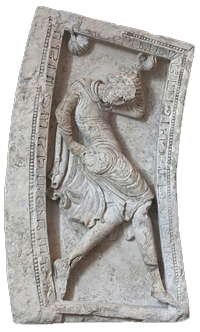
Juggler, limestone sculpture, third quarter of the 12th century. Museum of Fine Arts of Lyon

Juggler, limestone sculpture, third quarter of the 12th century. Museum of Fine Arts of Lyon

The Medieval Academy of America has long provided a variety of benefits of membership, including numerous fellowships, prizes and grants for travel, research and publications. Please see the list below with their deadlines, then follow the links for complete descriptions and application information. We encourage all eligible members to apply for these grants.

Graduate Student Fellowships and Awards
Birgit Baldwin Fellowship
(Deadline 15 November 2013)
Schallek Fellowship  (Deadline 15 October 2013)
Schallek Awards  (Deadline 15 February 2014)
Medieval Academy Dissertation Grants  (Deadline 15 February 2014)
Leyerle-CARA Prize  (Deadline 31 January 2014)

Service Awards
Kindrick-CARA Award for Outstanding Service (Deadline 15 November 2013)

Teaching Awards
CARA Award for Excellence in Teaching  (Deadline 15 November 2013)

Independent Scholars/Unaffiliated Faculty
Travel Grants  (Deadline 1 November 2013 for meetings to be held between 1 March and 31 August 2014)

Book Awards
Haskins Medal  (Deadline 15 October 2013)
John Nicholas Brown Prize  (Deadline 15 October 2013)
Van Courtlandt Elliott Prize  (Deadline 15 October 2013)
MAA Book Subventions  (Deadline 1 May 2014)

Posted in MAA Newsletter | Leave a comment

MAA News – MAA Award Winners

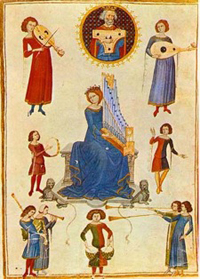
Boethius, De Musica, from Naples, Biblioteca Nazionale Vittorio Emanuele III, MS V. A. 14.

Boethius, De Musica, from Naples, Biblioteca Nazionale Vittorio Emanuele III, MS V. A. 14.

The MAA is delighted to announce an impressive collection of awards garnered by MAA members during the past fellowship season.

The American Council of Learned Societies announced eleven MAA winners.

Three in the Collaborative Research Fellowship competition:
Heather Blurton (University of California, Santa Barbara)
Hannah Johnson (University of Pittsburgh)
Michael Edward Kulikowski (Pennsylvania State University)

Two in the Frederick Burkhardt Residential Fellowship competition:
Jessica Brantley (Yale University)
Carol Symes (University of Illinois, Urbana-Champaign)

Three in the Mellon/ACLS Dissertation Completion Fellowship competition:
Paul A. Broyles (University of Virginia)
Timothy S. Miller (University of Notre Dame)
Benjamin A. Saltzman (Univ. of California, Berkeley)

One in the general Fellowship competition:
Hussein Fancy (University of Michigan)

One in the Digital Innovation Fellowship competition:
William A. Kretzschmar (University of Georgia)

One in the New Faculty Fellows Program competition:
Theresa O’Byrne (Rutgers University)

Karen Sullivan of Bard College was awarded a Fellowship by the John Simon Guggenheim Memorial Foundation.

The MAA’s own Dissertation Grant and Schallek Award winners were announced in early May.

Schallek – Richard III Society Awards:
Esther Liberman Cuenca (Fordham University)
“The Making of Borough Customary Law in Medieval Britain”

Karrie Fuller (University of Notre Dame)
“Reading Beyond the Borders: Visions of Christendom and the Shared Reception of Piers Plowman and The Book of Sir John Mandeville”

Cynthia Anne Rogers (Indiana University)
“‘Make thereof a game’: The Lyrics of the Findern Manuscript and their Late Medieval Textual Community”

Kristin Uscinski (Fordham University)
“Recipes for Women’s Healthcare in Medieval England”

Hannah Zdansky (University of Notre Dame)
“Romance Reconsidered: The Religious Significance of a Secular Genre in Late Medieval Britain”

MAA Dissertation Grants:
Hope Emily Allen Dissertation Grant
Katie Ann-Marie Bugyis (University of Notre Dame)
“Ministers of Christ: Women Religious in Early and Central Medieval England”

John Boswell Dissertation Grant
Alexander Harper (University of Toronto)
“Patronage in the re-Christianized Landscape of Angevin Apulia: The Rebuilding of Luceria Sarracenorum into Civitas Sanctae Mariae'”

Helen Maud Cam Dissertation Grant
Lisandra Costiner (Oxford University)
“Vernacular Narratives of the Life of Christ and the Characteristics of Popular Devotion in Late-Medieval Venice'”

Grace Frank Dissertation Grant
A. Sheree Brown (University of Michigan)
“‘That peace shall always dwell among them and true love be upheld’: Charity, Neighborliness, and Lay Fellowship in Late Medieval and Early Reformation England”

Etienne Gilson Dissertation Grant
David Morris (University of Notre Dame)
“Apocalypse Now or Later: The Super Prophetas of Pseudo-Joachim of Fiore”

Frederic C. Lane Dissertation Grant
Talia Zajac (University of Toronto)
“Women between West and East: the Orthodox-Catholic Marriages of the Kyivan Rus Dynasty, ca. 1000-1250”

E.K. Rand Dissertation Grant
Rebecca Scharbach Wollenberg (University of Chicago Divinity School)
“‘And They Became the People of the Book’: Tracing the Turn to Text in Medieval Jewish Genres”

Charles T. Wood Dissertation Grant
Jennifer Lyons (Emory University)
“The Theophilus Legend and the Virgin Mary: Image, Miracle, and Cult in Medieval France”

Posted in MAA Newsletter | Leave a comment

MAA News – MAA@Kalamazoo

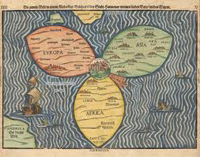
Bünting clover-leaf map. A woodcut made in 1581 in Magdeburg.

Bünting clover-leaf map. A woodcut made in 1581 in Magdeburg.

In May 2013, as always, the Medieval Academy had a strong presence at the Congress on Medieval Studies at Kalamazoo. Several hundred people attended the Friday morning MAA plenary lecture by Peregrine Horden (Royal Holloway College and the University of Oxford) titled “Poseidon’s Oar: Horizons of the Medieval Mediterranean.” The related Academy-sponsored sessions later in the day, continuing the Mediterranean theme, were packed. These sessions were organized by the MAA’s Kalamazoo Program Committee, comprised of Diane Reilly (Indiana University, Chair), Samantha Kelly (Rutgers Univ.), Sharon Kinoshita (Univ. of California, Santa Cruz), and Stephen Lahey (Univ. of Nebraska).

The Medieval Academy’s Committee on Centers and Regional Associations (CARA) sponsored a successful roundtable on “Programming, Pedagogy, and Outreach” and a poster session on “The Multi-lingual Classroom, Text Editing, and New Media,” both organized by Thomas A. Goodmann (University of Miami).

The Medieval Academy’s Graduate Student Committee (GSC) sponsored a roundtable discussion titled “What Now? What Next? A Roundtable Discussion on Graduate Studies and Employment” with Jerome E. Singerman (U. Penn Press), Steven F. Kruger (Queens College and Graduate Center, CUNY), Dot Porter (Univ. of Pennsylvania) and Joshua Boggs. Ethan Zadoff (Graduate Center, CUNY) organized and presided at the roundtable, which, like the GSC reception that followed, was very well attended.

Posted in MAA Newsletter | Leave a comment

MAA News – 88th Annual Meeting

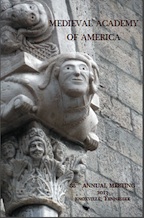
126More than 350 Academy members attended the 88th Annual Meeting of the Medieval Academy in Knoxville, Tennessee from 4-6 April 2013. The wide-ranging program consisted of three plenary speakers (Christopher de Hamel, Maryanne Kowaleski, and Jan Ziolkowski), 176 papers in 58 sessions, a CARA panel, and two roundtable discussions. The excursions to the CDF Haley Farm and to the Museum of Appalachia were well-attended, the receptions jovial and energetic. Our thanks to the MARCO Institute at the University of Tennessee, its director Heather Hirschfeld, and the members of the Program Committee (chaired by Jay Rubenstein) for their hard work, and to the University of Tennessee for its hospitality and generous support.  A complete report will be published in the July issue of Speculum.

Posted in MAA Newsletter | Leave a comment

MAA News – New Staff, New Office

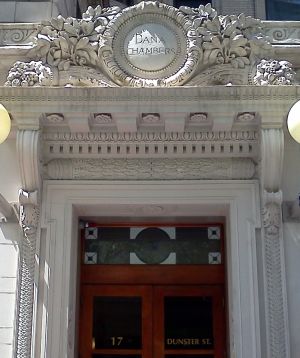
135Big changes are afoot at the Medieval Academy office in Cambridge. As of 1 May, the business of the Academy is being tended to by Acting Executive Director Lisa Fagin Davis, while Jacqueline Brown has returned to the office to serve as Acting Editor of Speculum and Director of Medieval Academy Publications. As of 1 June, you will find them, along with the rest of the staff, at the Academy’s new office at 17 Dunster St., just a few blocks from our former Mt. Auburn St. home.

Please make note of our new address:

Medieval Academy of America
17 Dunster St., Suite 202
Cambridge, Massachusetts 02138

Our phone and fax numbers are unchanged.

136We were intrigued to learn that the building, also known as Dana Chambers, was built in the late nineteenth century as a private dorm for Harvard students who didn’t want to live in the Yard. A little more internet research revealed the even more intriguing news that “Dana Chambers” is the pseudonym under which Albert Leffingwell (Harvard Class of 1917) published several pulp novels with titles such as The Blonde Died First and Someday I’ll Kill You.

Stop by the new office anytime and keep an eye out for those Dana Chambers novels! We’d love to have a few for our library.

Posted in MAA Newsletter | Leave a comment