MAA News – RSA Gordan Award

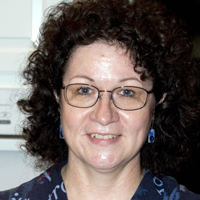
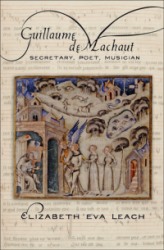
The 2012 Phyllis Goodhart Gordan Book Prize of the Renaissance Society of America was awarded to MAA member Elizabeth Eva Leach for Guillaume de Machaut: Secretary, Poet, Musician (Ithaca: Cornell University Press, 2011).

Posted in MAA Newsletter | Leave a comment

MAA News – MART Survey

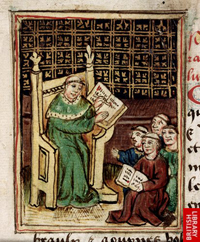
Master and scholars. British Library, MS Royal 19 A IX f. 4

During the summer the MAA conducted a survey of members for suggestions of out-of-print books that might be added to the Medieval Academy Reprints For Teaching series.

MART now includes more than forty books essential for teaching the medieval period. Since its inception more than thirty years ago, MART has reprinted these titles, many of which are still available from the University of Toronto Press, with a portion of the revenue going back directly to the Medieval Academy.

Responses to the survey, which closed on 1 September, provided thirty possible titles. After research by the MAA staff, ten of these proved to be already available in print, although perhaps not from the original publisher. The MART Editorial Board is now considering the twenty remaining titles for possible reprint

Posted in MAA Newsletter | Leave a comment

MAA News – New MAA Website

Dear MAA Member:

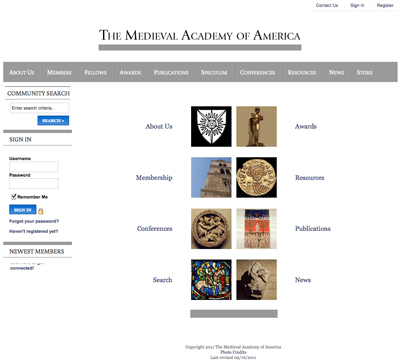
We’re very happy to inform you that the Medieval Academy has launched its new website: http://www.medievalacademy.org.

As you can see, the URL remains the same but the website has some major changes and improvements.

The first of these is that the old MAA website — the product of many years of incremental growth, change and revision — has now been completely rationalized and standardized. These are changes that have been recommended by several MAA committees over the past several years. Its interface is now smooth and comprehensible. As important, the new MAA interface now rests on a robust association management system (AMS): a database infrastructure that allows all parts of the website to be integrated into a powerful tool for learned societies like the MAA. Over the past year we’ve been developing this tool to insure that the deep structure and functionality of the site is optimal. Over the past month we’ve asked the MAA Council to review the functions of the site and to recommend structural modifications.

Much of the content remains to be updated and expanded: we’re now in the process of doing that. So, if you see any outdated information, or would like to see further details on the site, please don’t hesitate to contact us.

Among the best new features — and the one we’d like to draw your attention to first — is the personal profile page. This is the first thing that you should complete before continuing on to explore the new website. On the updated MAA home page, look to the section on the left, under “SIGN IN.” Please use the username and password provided in our e-mail of September 6.

Once you login, in the section to the left under “MY PROFILE

Click the “Manage Profile” link.

Under “Information & Settings,” click on “Edit Bio.

Under “Account Information” you will see your current username and password, and next to each an option to “(change).” Please update both your username and password.

Just below “Account Information” you’ll find “Personal Information“; please update this section, as you prefer.

Scroll down further to the “Professional Information” section. Please enter your discipline, field, and specialty. The Discipline check boxes are set, but you can enter your closest approximation of your field and specialty, e.g., History > Italy > Religious; Literature > Old English > Beowulf; Art History > Architecture > Romanesque, France. We’ll see what the variations are and begin to form a taxonomy from the members’ entries.

At the bottom of the “Professional Information” section you will find the Available to review for Speculum field. Please use this to select the Speculum review check boxes: checking one, both or no boxes will indicate to the editor and editorial boards whether you are available to be invited for reviews of articles or books for Speculum. This is the first time we’ve been able to open up this possibility for the entire MAA membership in so transparent and broad a manner.

By going to the “Profile Home” page and completing these few simple steps you will now be able to fully control your personal information: to post your institutional affiliations, your CV and an image of yourself–tools that everyone is now familiar with from Facebook, LinkedIn, Academia.edu and the websites of other scholarly societies of which you are members.

If you like, you can also click the “Remember Me” box when logging in again, to automatically bring you to your “Profile Home.”

The most important aspect of this feature is that you can now renew and pay for your MAA membership yourself, saving both you and the staff at the MAA office the need to enter your personal information, track changes of address, or process credit card or check payments. All information is secure. For the first time the MAA will have up-to-date and reliable information on membership figures and dues payments so that we can confidently plan and expand our services and other benefits to MAA members.

Please begin exploring the new site. You’ll see that in your profile section you’ll be able to search for other members and communicate with them directly. MAA and communities — from the Graduate Student Committee, to the book publication and awards committees, to CARA and the Fellows– will now be able to conduct their business in a safe and secure environment online, to host their own discussion groups and stay closely in touch.

The new MAA website has been a top priority for all of us here at the MAA offices in Cambridge over the past year. Our thanks to Chris Cole for his many months of expert work heading up the project, to Sheryl Mullane-Corvi for her participation in member-related data issues, and to Katie Taronas and Paul Lindholm for their many hours of testing and reporting. We look forward to your comments and to your enjoyment and use of the new MAA website.

Posted in MAA Newsletter | Leave a comment

MAA News – President’s Column

Maryanne Kowaleski

Medieval Studies and Digital Humanities

Dear MAA members,

During my presidential year, which began in April at the annual meeting, the Academy has set a variety of priorities and new initiatives. I would like to take this opportunity to focus on the considerable attention and resources that the Academy is now devoting to the issue of the digital in medieval studies and the humanities at large.

“Digital Humanities” (DH) is being hailed as the next big thing on campuses and at museums, libraries, and archives, but what are its accomplishments, challenges, and future in medieval studies? A neologism coined a little more than a decade ago, the term describes the use of digital tools to ask and answer questions in the humanities, although in the spirit of the lively and constructive discussion that surrounds any DH issue, even this definition is subject to debate. This field has grown remarkably, with an Office of Digital Humanities at the NEH; the proliferation of DH centers and working groups on many campuses; with conferences, books, and online journals; and even with new tenure-track lines defined as DH.

Medievalists were front and center when the humanities and computing movement that generated the digital humanities phenomenon originated. In the late 1940s, Rev. Roberto Busa, S.J., convinced IBM to let him use a mainframe computer to search for specific terms in the works by Thomas Aquinas. Busa’s Index Thomisticus is now available online, as are a whole host of related digital resources in the Corpus Thomasticum.

Early on medievalists also recognized the value of computing technologies to large concordances and dictionaries. We transformed our paper slips to key-punch cards and print-outs, producing results first in print, then on CD-ROM, and eventually online, in such projects as the Middle English Compendium, Dictionary of Old English, Dictionnaire du Moyen Français and Anglo-Norman Dictionary. Since our sources largely pre-date the printed page, medievalists quickly grasped the advantages of thinking beyond print and began to produce electronic scholarly editions and digitized images of manuscripts, making easily available our relatively scarce and hard-to-access sources. Many masterpieces of medieval literature are now available online as a scholarly edition or electronic archive, including Beowulf, Chaucerian texts, Piers Plowman, works by Dante, and the Roman de la Rose. Also accessible online are images of manuscripts for medieval music, law, English court records, and Old Norse to name only a few. The numbers available have increased to the extent that a searchable Catalogue of Digitized Manuscripts is being developed. Many more valuable examples could be named.

DH tools have also helped bring to light information and interpretations that are not possible without the aid of computers. Database technology, for instance, helps medievalists quickly find and categorize manuscripts and images. Early innovators here are the Digital Scriptorium, the Index of Christian Art, and Cantus. Prosopographical databases allow us to more easily discover Anglo-Saxon or Byzantine people, Scottish or Icelandic saints, and late medieval soldiers. More recently, medieval projects have drawn on new innovations in Geographic Information Systems (GIS) to provide interactive maps for the Frankish empire, Mediterrranean cities, the Gough Map, and other aspects of medieval civilization. Entirely new tools, such as DM (Digital Mappaemundi) to link and annotate texts and images and DigiPal for digitally-assisted paleography, are also being applied to a wide variety of projects. Most of these medieval projects, moreover, include a strong pedagogical component, a trend especially notable in sites that provide translations for students, such as the Internet Medieval Sourcebook, or those that combine a variety of pedagogical resources, such as Monastic Matrix and the Medieval Architecture Online Teaching Project.

In the midst of all this activity and accomplishment, digital humanities have encountered challenges that are still to be resolved. How, for example should merit, tenure, and promotion committees judge DH work? The MLA adopted guidelines for evaluating digital scholarship, and the AHA has recently convened a task force on digital scholarship, but most departments have not yet figured out how to “count” the tremendous amount of collaborative labor that digital work often requires. This is particularly an issue when it comes to labor on coding or developing new digital tools since many humanities departments consider this type of work outside their brief, even though others working in digital humanities strongly believe that ability to code is a key attribute of DH scholarship.

Tensions also crop up in critiques (the “where’s the beef? question) that DH spends too much time and money focusing on digital tools and not enough on substantive research questions. The growth in DH has also helped fuel a trend, especially in Europe, towards large research teams funded by multi-year grants, which require considerable investment in management and finances but also promises to reach a wider audience, part of the “democratization” that DH scholars often cite as a benefit. It is also worth noting how successful medievalists have been in securing this type of funding in such international competitions as the Digging into Data Challenge.

DH has yet to resolve pressing issues of cost and sustainability. Digital humanities projects can be expensive; most rely on external grants, which themselves require significant contributions from home institutions. Almost all of the websites cited here are free to end users and some are run by one devoted person, but a few of the larger projects have survived by becoming fee-based. Commercialization creates walls, but it also better ensures sustainability. We all know the frustration of URLs that become unreliable when the web author loses interest in the site, or when the grants run out.

Open-access publishing presents another challenge. Should all dissertations be immediately available online, as some universities now mandate? The Medieval Academy recently distributed a survey on this issue. The issue is especially important because many publishers–including Speculum–will not publish books or articles drawn from material already available online.

The Medieval Academy has already begun to deal vigorously with such questions and is currently moving into new digital roles. We are setting out criteria to determine if the MAA should affiliate with particular digital projects, and we have already begun collaborations with the newly proposed Digital Latin Library project and ACLS’s Humanities E-Book. Under our previous executive director we had begun digitizing the MAA monographs as an open-access, online collection, and we are continuing and expanding this work by offering many of these and other publications, offering our digital titles in print-on-demand format as well as on the Kindle and other mobile devices. The MAA has long been arranging discounts to access specific digital resources, such as the IMB, and it has just rolled out its new website and its underlying association management system to offer further such benefits to our members. We have also begun revamping the Academy’s digital committees under the auspices of a proposed comprehensive Publications board.

We can now see our way into a near future when the MAA can offer its members both a print and digital edition of Speculum, online reviews, and a comprehensive publication strategy that offers a seamless continuum from print to born-digital, all with the Academy’s traditional attention to detail and scholarly rigor. Indeed, we hope to build on this reputation for scholarly rigor by establishing a peer-review process for medieval online projects. Central to this is the creation of a what we are calling a “taxonomy of digital medieval resources” to help categorize and navigate the widest variety of digital resources in all disciplines and methodologies, from digital archives of texts and images, to archaeological reports, mapping projects, architectural virtual reality, to manuscript collections and online facsimiles, collections of narrative sources, interpretative and reference works, the websites of individual scholars, projects, departments, centers and other digital sites of value and interest to medievalists and the broader humanities community. This new “digital taxonomy” is now in the planning stages, but as it evolves it will help to make the MAA a focal point of peer review for new digital scholarship and a model for other learned societies. Much done; much to do!

Posted in MAA Newsletter | Leave a comment

Jobs For Medievalists

The Department of History at Stephen F. Austin State University invites applications for a tenure-track assistant professorship in ancient/medieval history to begin in August 2013. In addition to teaching upper-level and graduate courses in the areas of specialization, the successful candidate will teach freshman-level Western Civilization surveys. Preference will be given to candidates who can also teach an upper-level course in Renaissance and Reformation history. Ph.D. in history is preferred by the time of appointment, but advanced ABD applicants will also be considered. The standard teaching load in the department is 12 hours per semester.

Review of applications will begin on November 26, 2012 and continue until the position is filled. To apply, please send an application letter detailing commitment to teaching excellence and research interests, curriculum vitae, graduate transcripts, and three letters of reference to: Dr. Troy Davis, Chair, Ancient/Medieval Search Committee, P.O. Box 13013 SFA Station, Nacogdoches, TX 75962. In addition to sending these materials to the search committee, applicants must also complete an online application at http://careers.sfasu.edu.

Stephen F. Austin State University is an Affirmative Action/Equal Opportunity Employer. This is a security sensitive position; criminal background check required for successful candidate.

Posted in Jobs for Medievalists | Leave a comment

Exposition “The Art of the Page. Manuscript Leaves from Medieval Europe and Elsewhere”

Murfreesboro (TN), Middle Tennessee State University, X-XII.2012 : The Art of the Page. Manuscript Leaves from Medieval Europe and Elsewhere. – http://library.mtsu.edu/specialcollections/exhibits.php

Posted in Announcements | Leave a comment

Colloque “14th international seminar on the care and conservation of manuscripts”

17-19.X.2012 : 14th international seminar on the care and conservation of manuscripts (Copenhagen, University of Copenhagen). http://nfi.ku.dk/cc/programmecc14/CC14_Programme_web_pdf.pdf/


Posted in Announcements | Leave a comment

Quadrivium VIII – Registration is now open

Registration is now open for Quadrivium VIII, which will be held at the HRI University of Sheffield, 1-2 November 2012 under the auspices of Manuscripts Online (http://manuscriptsonline.wordpress.com/about/).

For those of you who are new to the PhD, The Quadrivium programme offers lectures, seminars, and networking opportunities over a two-day period to postgraduate students who works on medieval textual cultures, and will be of value to research students at various stages of their doctoral careers.  The programme is a collaborative training event run by medievalists at Birmingham, Queen’s Belfast, Oxford, York, Leicester, Glasgow, Sheffield and St Andrews.

This year Quadrivium will focus on digital humanities and their value for postgraduate research, including an hands on workshop on the new project ‘Manuscripts online’. There will also be sessions on academic and non-academic careers, workshops on grants’ applications and other ‘generic skills’ sessions. A full programme will be posted on the symposium website soon.

Quadrivium V is generously subsidised by  JISC. Registration for Quadrivium is free, and lunches and the conference dinner will also be offered free of charge. We are also pleased to offer financial support to cover accommodation and travel expenses which will distributed on a first come, first serve basis (on production of receipts). Students  will be informed promptly whether funds are still available to you.

The deadline for the receipt of registration forms is 25 October 2012. 

For further information, including accommodations, please visit our website: http://www2.le.ac.uk/departments/english/news/conferences/quadrivium2012

Posted in Announcements | Leave a comment

Jobs for Medievalists

English, Anderson Hall, 10th Fl 1114 W Berks St, Philadelphia, PA 19122
http://www.temple.edu/english
Assistant Professor  [17705]
The Department of English at Temple University is searching for a tenure-track Assistant Professor in Medieval literature, with an ability to teach Chaucer, History of the English Language, and Old English. A secondary interest in gender studies, cultural studies, and/or postcolonial studies is preferred. A successful candidate will show promise of significant scholarly productivity and will teach in both our undergraduate major and in our Ph.D. program. Current teaching load is 2/2 for faculty with a significant research agenda. Salary is commensurate with qualifications and teaching experience. Ph.D. is required by time of appointment.

To receive full consideration, applications (letter/cv/dossier) should be postmarked by October 19th to Professor Joyce Joyce, Chair, Department of English, Temple University, 1114 W. Berks Street, Philadelphia, PA 19122.

We plan to interview at MLA, but the position will remain open until filled.

Temple University is an affirmative action/equal opportunity employer, committed to equal access and achieving a diverse community. Qualified women and minority candidates are encouraged to apply. [R]

Posted in Jobs for Medievalists | Leave a comment

Call For Papers – Sam Houston State University’s First International Conference on Medieval and Renaissance Thought

April 4-6, 2013
Featuring Plenary Speaker
Dr. Richard North,
Professor of Old English Literature, University of London

The conference is slated to be held on our beautiful campus in Huntsville, Texas.

Deadline to propose a Special Session: December 1, 2012
Deadline for abstracts: December 1, 2012
Notification of acceptance: December 15, 2012

You are invited to send your 250-300-word abstract to Dr. Darci Hill, Conference Coordinator, on any topic dealing with Medieval and/or Renaissance thought.  If you would like to propose a special session, you are welcome to do that as well.  We welcome papers, posters, and performances on any aspect of this time period.  Papers dealing with language and linguistics, literature, music, philosophy, history, art, and theater are all equally welcome.

Please send all inquiries and abstracts electronically to:

Dr. Darci Hill, dr.darci.hill@gmail.com
Conference Coordinator Department of English
Sam Houston State University
Huntsville, Texas 77341
P
hone: 936-294-1473

Posted in Call for Papers | Leave a comment