
MAA News – From the President

Dear Academy Members,

I’ll admit, I’ve said those words. As a graduate student’s lack-of-jobs lament was concluding, they slipped out of my mouth: “Well, there’s never been a lot of jobs in medieval studies.” Unhelpful, I know. Luckily, some of our younger members have spun the unsatisfying dross of such responses into gold.

They have started collecting data! Disciplinary professional associations have been collecting jobs data and reporting on it for some time, but member Merle Eisenberg recognized that our interdisciplinary field needs its own. And, instead of simply lamenting the lack, he started pulling together statistics for his own field (history) and then invited some medievalist contacts in other disciplines to help collect in their areas of expertise: Laura Ingallinella (Italian Studies), Skyler Anderson (Islamic Studies), Jonathan Henry (Religious Studies), and Renée Trilling (English).

The result was an initial analysis presented to the Academy’s Council in collaboration with the coalition “MedievALLists in the Workforce.” Spearheaded by Laura Ingallinella and Councillor Laura Morreale, this vital group is “committed to taking action in response to the large-scale collapse of the Medieval Studies job market in traditional academic positions in all fields across North America, and to the many challenges facing medievalists who work in sectors outside of permanent teaching jobs in institutions of higher education” (MedievALLists Proposal, September 2021). It emerged both from discussions within the Academy’s Committee on Professional Development, on which Morreale had served, and those among the collaborators, especially Sara McDougall, who created the Middle Ages for Educators (MAFE) site (https://middleagesforeducators.princeton.edu/). The latter was a response to the rapid and chaotic shift to online teaching in 2020 and brought Merle and Laura into deeper discussions about the collapse of the job market in medieval studies. As Merle put it, his years of personal experience on that “market”—really, at this point, a lottery—and his activist collaboration on MAFE to address the urgent needs of colleagues yielded a determination to document what was happening in order to formulate solutions.

Indeed, the data from just a handful of our many disciplines has already revealed some trends to acknowledge and address—especially by anyone who can influence a doctoral program’s offerings. From AY2015-16 to AY2020-21, positions advertised have broadened both temporally (e.g., “medieval/early modern”) and geographically (e.g., Europe + someplace else). Thematic specializations (e.g., gender, race) have also been added to the hiring desiderata. Variation in opportunities among our constituent areas of study, particularly the relative strength of English in comparison to other fields, suggests other ways forward. If institutions perceive positions in English as less expendable, are there ways those of us in other departments can make medievalists more (obviously) essential?

The Academy’s Council has just prioritized some funding to help Merle and his colleagues keep this going, but the project merits more support and expansion. Most urgently, we need post-COVID data. If you can volunteer some of your own time and expertise, reach out to Merle (merle.eisenberg@okstate.edu). Coverage of fields beyond those mentioned above, especially art history, would be really valuable.

I close with the good news that Merle is starting a new job at Oklahoma State University. I am grateful for his efforts, and those of all these generous and inspiring colleagues: thank you!

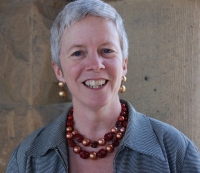
Maureen C. Miller (mcmiller@berkeley.edu)
President of the Medieval Academy of America

Posted in MAA Newsletter | Leave a comment

MAA News – A Speculum Webinar: “Emerging Issues in Medieval Iberian Studies”

“Emerging Issues in Medieval Iberian Studies”
A Speculum Webinar
25 August 2022
12:00 PM -1:30 PM EDT
Via Zoom


The Medieval Academy of America will host a Speculum webinar to launch the July themed issue of the journal: “Emerging Issues in Medieval Iberian Studies” on 25 August, 12:00 PM -1:30 PM EDT. The contributing authors, representing various disciplinary approaches, will give 10-minute TED-style talks to present their research articles. Their presentations will be followed by a Q&A session with the audience. The presenters are:

Yosi Yisraeli and Yanay Israeli on “Defining ‘Conversos’ in Fifteenth-Century Castile: The Making of a Controversial Category”

Pamela A. Patton on “What Did Medieval Slavery Look Like? Color, Race, and Unfreedom in Later Medieval Iberia”

María Jesús Torrens-Álvarez and Donald N. Tuten on “From ‘Latin’ to the Vernacular: Latin-Romance Hybridity, Scribal Competence, and Social Transformation in Medieval Castile”

Linda G. Jones on “Representations of Hegemonic Masculinities in Medieval Leonese-Castilian and Almohad Chronicles”

The webinar is free and open to the public. Registration is required. Click here to register.

The webinar will be recorded and posted on the Medieval Academy of America’s YouTube channel.

Posted in MAA Newsletter | Leave a comment

MAA News – CFP: CARA sessions at 2023 Kalamazoo ICMS

CARA (the MAA Committee on Centers and Regional Associations) invites proposals for its two sponsored sessions at next year’s meeting of the International Congress on Medieval Studies at Kalamazoo, which will take place from 11-13 May 2023.

I. Cold Comforts: Fantasies and Fictions of the Medieval North

Scholars long have focused upon “the East” as a focus of the medieval European imaginary, and as the locus for various practices of Othering and exoticization. Such practices, however, were just as likely to be dis-oriented in the wider medieval world. We invite scholars of medieval Africa, Iberia, the Islamicate, as well as Byzantine and Latin Christendom to explore how the North served as what Le Goff has described as an “oneiric horizon” in the Middle Ages—a site of fantasy, fiction, and imagination—in historical, ethnographic, literary, and artistic discourses.

II. Making Medieval: The Potential and Pitfalls of Experiential Pedagogy in Medieval Studies (co-sponsored with TEAMS)

Moving beyond the traditional media of lectio and lectura, medievalists in a wide range of disciplines have integrated making, doing, and performance into their classroom practice and curricula. This roundtable invites colleagues working in K—12 as well as university settings to share their innovations, experiences, and insights about the role of “hands-on” activities and lesson plans in promoting and advancing their students’ engagement with and understanding of the Middle Ages, including (but not limited to) musical and dramatic performance, artistic and craft production, and experimental archeology.

We are pleased that both CARA-sponsored sessions will take place in a blended format, making it possible to participate either in person or virtually. Paper proposals, which are due by 15 September, may be submitted through the Congress’s website at https://wmich.edu/medievalcongress/submissions. If you have any questions, please contact CARA’s Chair, Sean Gilsdorf (gilsdorf@fas.harvard.edu).

Posted in MAA Newsletter | Leave a comment

MAA News – Advocacy Committee

We are very pleased to announce the members of the MAA’s inaugural Advocacy Committee:

Jonathan Correa-Reyes (Pennsylvania State Univ.)
Leah DeVun (Rutgers Univ.)
Matthew Gabriele (Virginia Tech)
Matthew Z. Heintzelman (Hill Museum and Monastic Library)
Miriamne Krummel (Univ. of Dayton), Chair
Christina Maranci (Harvard Univ.)

The Advocacy Committee is charged with composing Advocacy Statements on behalf of the MAA and making determinations about supporting statements issued by other organizations, in keeping with the Medieval Academy of America’s recently-revised Advocacy Policy.

We are very grateful to the inaugural committee members for taking on this important work.

Posted in MAA Newsletter | Leave a comment

MAA News – Call for Fellows Nominations

To all Members of the Medieval Academy of America:

All members of the Medieval Academy of America are hereby invited to submit nominations for the election of Fellows and Corresponding Fellows of the Academy for 2023. You need not be a Fellow to nominate a Fellow or Corresponding Fellow, and all members are warmly encouraged do so, for this is one important way in which the Academy recognizes and honors its most outstanding scholars. Nominations from Corresponding Fellows who reside in countries outside of North America, who need not be members of the Academy, are equally welcome.

Currently, there are 122 Active Fellows and 67 Corresponding Fellows. According to the Strategic Plan recently approved by the Fellows, the number of total Fellows and Corresponding Fellows is to be increased each year as follows:

“The number of voting Fellows [will] be increased from 125 to 150 and the number of Corresponding Fellows [will] be increased from 75 to 100 over a period of 9 years, with 3 additional Fellows and 3 additional Corresponding Fellows to be elected per year over the first 8 years and an additional Fellow and Corresponding Fellow in the ninth year.”

In accordance with this new policy, there will be a maximum of 131 Fellows and 81 Corresponding Fellows in 2023. The number of openings in the current cycle, then, is 9 Fellows and 14 Corresponding Fellows.

New procedures for nomination dossiers have been instituted as a result of the reforms adopted by the Fellows in 2021. The instructions are detailed at
https://medievalacademy.site-ym.com/?page=Election_Procedure

In brief, here are the rules for the dossier:

1) up to three signed letters of nomination, each of which may be up to two pages in length (although a nomination can still go forward without prejudice with a single letter);
2) a curriculum vitae of NO MORE than four pages;
3) a URL directing voters to an expanded online CV, if possible (this URL should be included in the body of the first nominating letter)

These components must be combined into a single PDF and submitted by email to the Executive Director (LFD@TheMedievalAcademy.org). Incomplete or improperly constituted dossiers will not be accepted.

All Fellows (except for Corresponding Fellows) must be members of the Medieval Academy who reside in North America at the time of election. They should be medievalists who have contributed to our knowledge of the Middle Ages with a substantial body of scholarship, distinguished in both quality and quantity. In most fields the contribution will entail several well-received books, though in some areas the standard may be important digital work or a sheaf of influential articles. Major prizes, editorships, and professional leadership in societies including (but not limited to) the MAA may also be taken into account. Election to the Fellows recognizes a lifetime of academic achievement. Candidates, therefore, will ordinarily be full professors, though senior curators and distinguished independent and non-tenure-track scholars may also merit election. Nominations of associate professors are normally considered premature.

In nominating candidates, please consider diversity in discipline, ethnicity, gender, regions of the country, and types of institution. Please also bear in mind that Medieval Studies is not limited to Western Europe or to the second half of our period.

In order to present a balanced slate, additional nominations may be made by the Fellows Nominating Committee, the members of which are listed on the Officers page.

To sum up: Please follow instructions for nominations as found on the MAA website; nominations that are incorrectly prepared will not be considered.

Instructions for nominations are available here:
https://medievalacademy.site-ym.com/?page=Election_Procedure

Please refer to the lists of current Fellows before proposing a nomination:

Current Fellows:
https://medievalacademy.site-ym.com/?page=Fellows_List
Current Corresponding Fellows:
https://medievalacademy.site-ym.com/page/CorrFellows

Nominations for the 2023 elections must be received by 1 October 2022. Unsuccessful nominations from previous years may be resubmitted. Please contact the Executive Director for further information about this process.

Finally, please keep nominations confidential. Although nominators are to sign their names to the letters, all involved should try not to let nominees learn about their nomination.

We look forward to a diverse and exciting set of nominations.

– Richard Emmerson, President of the Fellows

Posted in MAA Newsletter | Leave a comment

MAA News – Upcoming Deadlines

The Medieval Academy of America invites applications for the following grants. Please note that applicants must be members in good standing as of September 15 in order to be eligible for Medieval Academy awards.

Schallek Fellowship
The Schallek Fellowship provides a one-year grant of $30,000 to support Ph.D. dissertation research in any relevant discipline dealing with late-medieval Britain (ca. 1350-1500). (Deadline 15 October 2022)

Travel Grants
The Medieval Academy provides travel grants to help Academy members who hold doctorates but are not in full-time faculty positions, or are contingent faculty without access to institutional funding, attend conferences to present their work. (Deadline 1 November 2022 for meetings to be held between 16 February and 31 August 2023)

MAA/CARA Conference Grant
The MAA/CARA Conference Grant for Regional Associations and Programs awards $1,000 to help support a regional or consortial conference taking place in 2023. (Deadline 15 October 2022)

Posted in MAA Newsletter | Leave a comment

MAA News – Call for Prize Submissions

The Medieval Academy of America invites submissions for the following prizes to be awarded at the 2023 MAA Annual Meeting. Submission instructions vary, but all dossiers must complete by 15 October 2022. The Medieval Academy warmly encourages the nomination of publications written by scholars working beyond the tenure track as well as those written by faculty.

PLEASE NOTE: because of the ongoing MAA office closure, PDF review copies of nominated books may be submitted instead of hardcopies (PDFs should be emailed to the Executive Director). In addition, the residency restrictions limiting eligibility for some book prizes to residents of North America have been lifted.

NEW: Monica H. Green Prize
Awarded to an exceptional project that demonstrates the value of medieval studies in our present day.

NEW: Jerome Singerman Prize
Awarded to a meritorious second monograph in the field of medieval studies.

Haskins Medal
Awarded to a distinguished monograph in the field of medieval studies.

Digital Humanities Prize
Awarded to an outstanding digital research project or resource in the field of medieval studies.

Karen Gould Prize
Awarded to a monograph of outstanding quality in medieval art history.

John Nicholas Brown Prize
Awarded to a first monograph of outstanding quality in the field of medieval studies.

Article Prize in Critical Race Studies
Awarded annually to an article in the field of medieval studies that explores questions of race and the medieval world, and which is judged by the selection committee to be of outstanding quality.

Posted in MAA Newsletter | Leave a comment

MAA News – GSC Summer Mentorship Program

THE GSC SUMMER MENTORSHIP PROGRAM
DEADLINE TO REGISTER AS A MENTOR OR MENTEE:
Wednesday, August 10th

We are excited to launch the GSC Summer Mentorship Program. This special session of our program is designed as an opportunity for those who wish to participate in the Mentorship Program but who might be too busy with other obligations during medieval conferences or during the academic year.

The GSC Mentorship Program facilitates networking between graduate students or early career scholars and more established scholars by pairing students and scholars according to common interest or academic discipline.

Mentorship exchanges are intended to help students establish professional contacts with scholars who can offer them career advice. The primary objective of this exchange is for the relationship to be active during the the particular mentorship session in question, though mentors and mentees are encouraged to continue communicating at their discretion after the initial mentorship session has ended.

We have recorded an increased interest in the GSC Mentorship Program since it has been held virtually due to COVID-19 restrictions. We will do our best to match all those who register as a mentee with mentors; however, if need be, preference will be granted in order of form submission.

To volunteer as a mentor (faculty, librarians, curators, independent scholars) or to sign up as a mentee, please submit the online form, linked here, by Wednesday, August 10th.

On behalf of the committee, thank you and our best,
Mary M. Alcaro & Margaret Heeschen
2022-2023 Mentoring Program Coordinators

Posted in MAA Newsletter | Leave a comment

Call for Papers – Kalamazoo 2023: CARA

CARA (the MAA Committee on Centers and Regional Associations) invites proposals for its two sponsored sessions at next year’s meeting of the International Congress on Medieval Studies at Kalamazoo, which will take place from 11-13 May 2023:

I. Cold Comforts: Fantasies and Fictions of the Medieval North

Scholars long have focused upon “the East” as a focus of the medieval European imaginary, and as the locus for various practices of Othering and exoticization. Such practices, however, were just as likely to be dis-oriented in the wider medieval world. We invite scholars of medieval Africa, Iberia, the Islamicate, as well as Byzantine and Latin Christendom to explore how the North served as what Le Goff has described as an “oneiric horizon” in the Middle Ages—a site of fantasy, fiction, and imagination—in historical, ethnographic, literary, and artistic discourses.

II. Making Medieval: The Potential and Pitfalls of Experiential Pedagogy in Medieval Studies (co-sponsored with TEAMS)

Moving beyond the traditional media of lectio and lectura, medievalists in a wide range of disciplines have integrated making, doing, and performance into their classroom practice and curricula. This roundtable invites colleagues working in K—12 as well as university settings to share their innovations, experiences, and insights about the role of “hands-on” activities and lesson plans in promoting and advancing their students’ engagement with and understanding of the Middle Ages, including (but not limited to) musical and dramatic performance, artistic and craft production, and experimental archeology.

We are pleased that both CARA-sponsored sessions will take place in a blended format, making it possible to participate either in person or virtually. Paper proposals, which are due by 15 September, may be submitted through the Congress’s website at https://wmich.edu/medievalcongress/submissions. If you have any questions, please contact CARA’s Chair, Sean Gilsdorf (gilsdorf@fas.harvard.edu).

Posted in Call for Papers | Leave a comment

Jobs For Medievalists

Title: Postdoctoral Fellow

https://academicpositions.harvard.edu/postings/11379

We seek a postdoctoral fellow with research experience in computational approaches to language and literature to work on a cross-institutional project to develop methods for the study of historical psychology in Latin texts. This is a one-year full-time position beginning in September 2022 and potentially renewable for one additional year. Besides regular meetings with the project PI, Joe Henrich (Harvard University, Culture, Cognition, and Coevolution Lab) and co-PI, Jonathan Schulz (George Mason University), the position will entail close collaboration with the Quantitative Criticism Lab, co-directed by Joseph Dexter (Harvard University). The aim of the project is to develop computational methods for the study of diachronic changes in psychology based on current research in the social sciences and developments in computational text analysis for Latin and other pre-modern languages. The work forms part of a larger multi-institutional project, funded by the Templeton Foundation, entitled “Religion, Family Structure and the Origins of Individual Freedom and Economic Prosperity.”

The successful applicant will join a cross-disciplinary, highly collaborative team of humanists, social scientists, and data scientists; this position will contribute to the team through research competence in historical languages and some experience in natural language processing, corpus linguistics, computational literary studies, digital humanities, or a related area. Experience in Latin language and literature is highly desirable; also desired but optional areas of experience include one or more of the following: cultural analytics, cultural evolution, history of ideas, lexicography. The fellow will have no teaching responsibilities.

A Ph.D. in a computational, statistical, linguistic, or literary field is required; possible disciplines include (but are not limited to) anthropology, applied mathematics, bioinformatics, classics, comparative literature, computer science, English, evolutionary biology, linguistics, and statistics. By the start date of the position, applicants should either have the Ph.D. in hand or be able to provide certification from their home institution that all degree requirements have been fulfilled.

The Culture, Cognition, and Coevolution Lab space is based at Harvard University; residence near Cambridge during the fellowship period is preferred but not required.

Applicants should submit the following materials by August 31, 2022:

– Cover letter describing their interest in the position and any relevant prior work

– C.V.

– Short (1-2 page) summary of past and current research interests, giving particular attention to any computational work, including link to GitHub or other online coding portfolio, if available

– Writing sample of not more than 30 pages

– Names and contact information of three referees (letters will be requested only for short-listed candidates)

Questions regarding the position may be directed to jdexter@fas.harvard.edu.

Harvard is an equal opportunity employer and all qualified applicants will receive consideration for employment without regard to race, color, sex, gender identity, sexual orientation, religion, creed, national origin, ancestry, age, protected veteran status, disability, genetic information, military service, pregnancy and pregnancy-related conditions, or other protected status.

Posted in Jobs for Medievalists | Leave a comment