Fragmentarium Video Conference – “Evidence Preserved by Destruction: Recycling Medieval Manuscript Fragments in Transylvania during the (Counter)Reformation.”

A Fragmentarium Video Conference will take place on Friday, 26 March 2021 at 16:00 Central European Time:

Dr. Adrian Papahagi (Babeș-Bolyai University, Cluj-Napoca, Romania)

“Evidence Preserved by Destruction: Recycling Medieval Manuscript Fragments in Transylvania during the (Counter)Reformation.”

(please register to this link)
https://zoom.us/meeting/register/tJIkceivqzIsHNNLxdELus7pJp8NbAcUevXr

Posted in Webinars | Leave a comment

Rare Book School Still Accepting Applications!

First-round admissions decisions for our 2021 summer courses will be announced soon. If you missed the first deadline, it’s not too late! Apply to any of our 35 courses, including:

–C-75c: Introduction to the Schomburg Center for Research in Black Culture, taught by Cheryl Beredo, Joy Bivins, Michelle Commander, Tammi Lawson, Shola Lynch, and Michael Mery (6 hours)
–G-85c: Why Black Bibliography Matters, taught by Kinohi Nishikawa (6 hours)
–H-90a: Teaching the History of the Book, taught by Michael F. Suarez, S.J. (22 hours)
–H-105a: The Bible and Histories of Reading, taught by Peter Stallybrass, with Lynne Farrington (22 hours)
–H-170b: Spanish American Textual Technologies to 1700, taught by Hortensia Calvo, Christine Hernandez, and Rachel Stein (10 hours)
–H-180c: Six Degrees of Phillis Wheatley, taught by Tara Bynum (6 hours)
–H-185c: African American Print Cultures in the Nineteenth-Century United States, taught by Derrick R. Spires (6 hours)
–I-45b: The Photographic Book since 1843, taught by Richard Ovenden (10 hours)
–M-100a: Fragmentology, taught by Lisa Fagin Davis (22 hours)

Please submit your applications by midnight (ET) on Monday, 22 March to be considered in the next round. As always, applications will be considered on a rolling basis until all seats are filled. If you have questions about the courses, please contact rbsprograms@virginia.edu.

With best regards,
The RBS Programs Team

Posted in Announcements | Leave a comment

CARA Annual Meeting – Sunday, 18 April 2021

CARA Annual Meeting
SUNDAY, 18 April 2021

18:00 GMT / 13:00 ET / 10:00 PT
(following the CARA Plenary Session)

Separate registration (free of charge) is required for the CARA Annual Meeting. Registering for the MAA Annual Meeting does not register you for the CARA Annual Meeting, and you do not need to register for the MAA Annual Meeting in order to attend the CARA Annual Meeting.

Use this link to register for the CARA Annual Meeting:
https://us02web.zoom.us/meeting/register/tZ0ofuyhqzgtEtJM0dQyW5Ht1YK-c9vmd4Vh

1:00–1:15 PM:
Welcome and Introductions, CARA Chair, Anne E. Lester

Approval of new CARA Chair (Sean Gilsdorf) and new Executive Committee Members

CARA SESSION: Surviving and Thriving through a Time of Crisis: Conversations on Envisioning Medieval Studies in the US at the Close of the Centenary

The past year has presented innumerable challenges, professionally, personally, structurally, and for Medieval Studies in particular. It has been a time of profound loss and reckoning but also for imagining new futures. Inspired by the conversations and dialogues convened 2020 by the MAA’s Inclusivity and Diversity Committee and The Folger Library’s Critical Race Conversations, and adapting to the online forum, this year’s CARA meeting will feature a series of critical conversations aimed at guiding us forward through this time of crisis. Recognizing that CARA’s members offer different sets of experiences and expertise, we hope to learn from and with each other about strategies for moving our programs, curricula, and outreach initiatives forward in new ways. The challenges generated by the 2020 Covid pandemic, by systemic racism, civil unrest, and a constricted job market, among other issues, mark an important moment of assessment in the final years of the MAA’s first century. This is also a moment to begin to re-envision the future of medieval studies and to consider how CARA can work to support all medievalists – whether in academic positions or working outside the academy – and to help us stay connected as Medieval Studies communities.

This year’s meeting will take a new shape. Eschewing the model of three stand-alone presentations, we will take up a set of interlocking conversations. We will introduce our panel of discussants and they will offer a few brief remarks. We will then break into smaller, facilitated, break-out groups for 30 minutes to discuss a common set of three critical questions (see below). We will then reconvene to pose those questions, among others, to our panel of discussants as part of a larger conversation (45 minutes) focused on stories from the crises and how to envision ways forward for Medieval Studies, thinking in particular about what it means to both to ‘survive’ and to ‘thrive’ as individuals and communities. There will be time for questions at the end (15 minutes). There is no doubt that we are made stronger together, through shared values and collective insights. Our goal is to make available our collective wisdom, to learn from our experiences, and to draw up some guidelines for the future. Indeed, what do we envision as the role of Medieval Studies going forward?

1:15-1:45 PM: [Small group discussions will be facilitated by CARA Executive Committee members]

Break-out Conversations focused on shared questions:

Participants are encouraged to share and draw from their own experiences – negative and positive – in these discussions.

1) Given the challenges of budget cuts, institutional shortfalls, and the disappearance of many departments and programs in the wake of Covid, in what ways can we strategize to increase engagement with Medieval Studies to facilitate enrollments and encourage a longer and more inclusive perspective on the past?

2) Acknowledging that many institutions and disciplines have their roots in systemic racist perspectives and structures and that many have programs to build up diversity and inclusivity, how can we more fully address promotion and integration beyond inclusivity and diversity in our teaching, administration, and scholarly practices? What sorts of critical habits of thought can we take up and put into practice to build forward a more critical form of Medieval Studies? How can we center the lives and resistances of BIPOC and AAPI communities so that we can move beyond abstraction and theories, and tend to the lived experiences of our BIPOC and Asian American and Pacific Islanders students particularly at a moment when they are experiencing the trauma of the recent Atlanta shootings and other acts of violence?

3) This year of the pandemic has made clear how precarious our profession is in many places and instances. Joblessness, isolation, and a lack of resources have made being a medievalist untenable in many cases. We ask discussants to reflect on the document, Supporting MedievALLists: Best Practices for Centers and Regional Associations put forward in 2020. What strategies can we envision to address increasing precarity among PhDs, junior faculty, students, adjunct instructors, and independent scholars? How can we better define our notion of community?

1:45-2:00 PM: Break

2:00-2:45 PM: Panel Discussion: Surviving and Thriving

Invited Panel Discussants:
Moira Fitzgibbons (Marist College)
Gina Brandolino (University of Michigan)
Nicole Lopez Jantzen (Borough of Manhattan Community College-CUNY)
Valerie Michelle Wilhite (International Medieval Society-Paris, Americas Director).

2:45- 3:00 PM: Questions & Discussion

We will follow up after the meeting with an additional questionnaire about your affiliation, program, center, and perspectives with an eye to creating a digital database and CARA mailing list for the future.

We look forward to seeing you virtually this April and to engaging CARA members in this new forum for discussion.

Posted in Annual Meeting, CARA | Leave a comment

New ASCSA Fellowships: Study at the Gennadius Library in Music and Urban Architecture

The American School of Classical Studies at Athens is pleased to announce two new fellowships for study at the Gennadius Library: the Schwarz Fellowship for Research on Music and the Schwarz Fellowship for Research on Urban Architecture. The deadline for applications is April 30, 2021.

Here are brief overviews of the two fellowships, and you can find more information below the signature and in the attached documents:

The Schwarz Fellowship for Research on Music supports research on music that focuses on cultural interactions in the Mediterranean world broadly defined. The fellowship aims to promote the study of interactions among Western European, Byzantine, Islamic and Jewish cultures from the medieval to the modern period. Eligibility: Career musicians, or researchers who are either currently PhD candidates or have received their PhD within the last 5 years.

The Schwarz Fellowship for Research on Urban Architecture supports innovative and cross-disciplinary research on architecture, urban planning, and the history of the built environment in Greece from 1821 to the present. Eligibility: Ph.D. candidates and recent Ph.D. holders within five years of receiving the degree. Open to all nationalities.

American School of Classical Studies at Athens
6-8 Charlton Street
Princeton, NJ 08540-5232
Telephone: +1 609-454-6819 (direct dial)
Website: https://www.ascsa.edu.gr


SCHWARZ FELLOWSHIP AT THE GENNADIUS LIBRARY FOR RESEARCH ON MUSIC
Deadline: April 30, 2021

The Schwarz Fellowship for Research on Music supports research on music that focuses on cultural interactions in the Mediterranean world broadly defined. The fellowship aims to promote the study of interactions among Western European, Byzantine, Islamic and Jewish cultures from the medieval to the modern period.

Eligibility: Career musicians, or researchers who are either currently PhD candidates or have received their PhD within the last 5 years.

Fields of Study: Musical composition; Music conducting; History of Music; Musicology; and related fields. Fellows will be expected to conduct a program of original research on a theme related to the collections of the Gennadius Library.

Terms: A stipend of $11,500 plus room, board, and waiver of School fees. Fellows are expected to be in residence at the School for the full academic year from early September to late May. A final report is due at the end of the award period, and the ASCSA expects that copies of all publications that result from research conducted as a Fellow of the ASCSA be contributed to the Gennadius Library. Fellows are expected to participate in the academic life of the School.

Application: Submit an online application form for the “Schwarz Fellowship at the Gennadius Library for Research on Music.” An application consists of a curriculum vitae, description of the proposed project (up to 750 words), and three letters of reference to be submitted online. Student applicants must submit transcripts. Scans of official transcripts are acceptable.
Link to online application: https://ascsa.submittable.com/submit/189405/schwarz-fellowship-at-the-gennadius-library-for-research-on-music

The award will be announced by mid-June.

SCHWARZ FELLOWSHIP AT THE GENNADIUS LIBRARY FOR RESEARCH ON URBAN ARCHITECTURE
Deadline
: April 30, 2021

The Schwarz Fellowship for Research on Urban Architecture supports innovative and cross-disciplinary research on architecture, urban planning, and the history of the built environment in Greece from 1821 to the present.

Eligibility: Ph.D. candidates and recent Ph.D. holders within five years of receiving the degree. Open to all nationalities.

Fields of Study: Includes Architectural and Urban Design, History of Architecture, History of the City, Historical Geography, and related fields. Projects should incorporate the holdings of the Gennadius Library (maps, topographical plans, landscapes etc.) and other appropriate resources of the American School of Classical Studies.

Terms: A stipend of $11,500 plus room, board, and waiver of School fees. Fellows are expected to be in residence at the School for the full academic year from early September to late May. A final report is due at the end of the award period, and the ASCSA expects that copies of all publications that result from research conducted as a Fellow of the ASCSA be contributed to the Gennadius Library. Fellows are expected to participate in the academic life of the School.

Application: Submit an online application form for the “Schwarz Fellowship at the Gennadius for Research on Urban Architecture.” An application consists of a curriculum vitae, description of the proposed project (up to 750 words), and three letters of reference to be submitted online. Student applicants must submit transcripts. Scans of official transcripts are acceptable.
Link to online application: https://ascsa.submittable.com/submit/189403/schwarz-fellowship-at-the-gennadius-for-research-on-urban-architecture

Website: https://www.ascsa.edu.gr/research/gennadius-library/educational-programs/fellowships
Email: application@ascsa.org

The awards will be announced by mid-June.

Posted in Fellowships | Leave a comment

Register for the 2021 Annual Meeting by March 25

Registration for the 96th Annual Meeting of the Medieval Academy of America closes on March 25. No registrations can be accepted after that date.

The meeting is hosted by Indiana University, Bloomington, and will take place entirely online, from 15-18 April 2021. The program and registration information are available here.

We wish we could welcome you in person to Bloomington, but we look forward to an interesting and exciting conference!

Please email any questions to maa2021@indiana.edu.

Posted in Annual Meeting | Leave a comment

GSC Events at the 2021 MAA Annual Meeting

The MAA Graduate Student Committee is hosting a variety of events at the 2021 MAA Annual Meeting. Please join us for any or all. Click here to register for the Annual Meeting and access the GSC events: https://maa2021.indiana.edu/. We hope to see you there!

Transcription Workshop & Transcribathon

Thursday, 15 April
22:00 GMT / 18:00 ET / 15:00 PT

Join the IU Medieval Studies Institute Graduate Student Advisory Committee and the MAA Graduate Student Committee for an evening Transcription Workshop and weekend-long Transcribathon. Liz Hebbard will lead a manuscript transcription workshop Thursday evening to start off IU’s annual Transcribathon, which will run from Thursday-Saturday (April 15-17). No prior experience with manuscripts is necessary.

Graduate Student Social Hour

Thursday, 15 April
00:00 GMT / 20:00 ET / 17:00 PT

Join the MAA Graduate Student Committee and the IU Medieval Studies Institute Graduate Student Advisoy Committee for the graduate student virtual social hour at the MAA Annual Meeting. Drop in for an hour of connecting and conversation with fellow medievalist graduate students.

Mentoring and Morning Coffee

Friday, 16 April
14:00 GMT / 10:00 ET / 07:00 PT

Join the MAA Inclusivity & Diversity and Graduate Student Committees for a Mentoring and Morning Coffee at the MAA Annual Meeting. This mentoring event is designed to bring together medievalists at different points in their academic careers, from graduate students to senior scholars, and from across different fields, for an hour of conversation and mentorship.

Roundtable: Graduate Medievalists and the Institutions We Work In: Community and
Activism

Friday, 16 April
15:00 GMT / 11:00 ET / 08:00 PT

Session Sponsored by the MAA Graduate Student Committee and the IU Medieval Studies Institute Graduate Student Advisory Committee

Chair: Lauren Van Nest (University of Virginia)

Roundtable Participants: Abby Ang (Indiana University Bloomington), Christine Bachman (University of Delaware), Henry Gruber (Harvard University), Marian Homans-Turnbull (UC Berkeley), Nahir I. Otaño Gracia (University of New Mexico), Alexa Sand (Utah State University)

Posted in Annual Meeting, Graduate Students | Leave a comment

Call for Papers – On the Way to the Future of Digital Manuscript Studies

On the Way to the Future of Digital Manuscript Studies
Nijmegen, 27-29 October 2021

Over the last decades, the ability to exploit digital potential has radically impacted research in the field of manuscript studies. From the most basic facilities, such as the increasing availability of digitized images and documents, to sophisticated attempts at automatizing the entire process of critical editing, the development of digital tools is extraordinary: it has created unprecedented opportunities to mine the data, achieve innovative results, and display them, in ways which previously could only be imagined. In such a dynamic context, the number of valuable enterprises continues to grow: the time is ripe for a consideration of the achievements already obtained, and of the foundations that our current work is laying for long-term development of the field. Through the organization of this workshop, the ERC Project PASSIM seeks to provide an occasion to pursue this goal.

Scientific Committee: Mariken Teeuwen (Utrecht Universiteit – Huygens ING-KNAW), Olivier Hekster (Radboud Universiteit – KNAW), Shari Boodts (Radboud Universiteit), Gleb Schmidt (Radboud Universiteit), Riccardo Macchioro (Radboud Universiteit).

Confirmed Speakers: Marjorie Burghart, Mike Kestemont, Thomas Köntges, Inka Moilanen, Elena Pierazzo, Matthieu Pignot, Philipp Roelli, Dominique Stutzmann, Mariken Teeuwen, Anne-Marie Turcan-Verkerk, Martin Wallraff.

Venue. The workshop will be held on 27-29 October 2021, either on location in Nijmegen (ideally), in a hybrid form, or online depending on the development of the Covid-emergency. Board and lodging expenses will be borne by the Organization; unfortunately, we are unable to guarantee coverage of travel costs at this time.
Proceedings. We plan to publish the Proceedings as quickly as possible after the workshop as a volume or special issue of a relevant journal.

CALL FOR PAPERS
We are glad to announce the opening of the Call for Papers for 25 minutes long presentations.

Abstract Submission
If you would like to present a lecture at the Workshop, please send an application consisting of a short abstract (ca. 350 words) and concise CV (max. 1 pag.) to:
Riccardo Macchioro (r.macchioro@let.ru.nl) and Gleb Schmidt (gleb.schmidt@ru.nl).
Abstract submission deadline: 10 May 2021. Acceptance will be communicated shortly after, by 15 May 2021.
Early career scientists and scholars (Ph.D., Post-Doc) are especially encouraged to apply.

TOPICS
Three key areas are crucial for the advancement of digital manuscript studies: 1) the contribution of research projects with a specific goal to the field as a whole; 2) the capacity to expand their (web)application(s) to other disciplines rooted in textual source-material (such as history, philology, cultural studies, and more), and vice-versa; 3) the challenges entailed in developing and implementing common/universal standards and data models (e.g. for data structuring, storage, and interoperability). Taking into account this overall framework, the main focus of the contributions can be on the scholarly problems, as well as on the technical issues involved.
Possible topics include (without being limited to):

Digital approaches to historical phenomena: evaluation of the social impact of a given literary corpus; the reconstruction of disintegrated manuscripts; the digital restoration of dispersed medieval libraries; how digital frameworks enhance the study of the interaction between the materiality of manuscript objects and intellectual concepts like content and organization.

Data management, sustainability, interoperability: construction of big repositories of searchable metadata; the building of shared standards to encode metadata on manuscripts; networking, sustainability of structuring standards, interoperability and reusability of the data accumulated.

Digital stemmatology: translation of stemmatic principles into reception studies; approaches to stemmatology from a digital point of view; automatic grouping of manuscripts; approaches to overabundant manuscript traditions by means of automatic collation tools.

Computational approaches: deep learning and/or machine learning techniques for computational analysis (script identification, full-text analysis, authorship attribution, …); search for a balance between accuracy, exhaustivity, and serendipity, while programming and processing computational-statistical analysis; development and employment of OCR transcription tools.

Interaction between the machine and the human scholar: harmonization of (digital) phylogenetics with the exigency of a not (too) mechanic evaluation of the data; strategies to evaluate and classify the results obtained by launching queries on huge amounts of data.

Visualization strategies and tools: interpretation of the results of overarching queries; representation of connections between complex objects such as collections of texts; innovative digital editions.

For any questions or further information, please do not hesitate to contact us:
Riccardo Macchioro: r.macchioro@let.ru.nl; Gleb Schmidt: gleb.schmidt@ru.nl.

Posted in Call for Papers | Leave a comment

Conferences – Conspiracies Then and Now

March 18 – 19, 2021

Conspiracy theories have captured the attention of people throughout history, and they have become especially influential in current politics. Some recent conspiracists have deliberately adopted the language of the Middle Ages to advance their agenda. In this conference we will break down the history of conspiracy theories dating back to the Middle Ages and compare them to contemporary beliefs. We’ll also discuss how the Deep State and QAnon theories influenced political messaging in the age of Trump. Each panel will conclude with an audience Q&A.

Click here for more information.

Posted in Conferences | Leave a comment

40th Annual Conference of the Center for Medieval Studies, Fordham University

“Medieval French without Borders” 

40th Annual Conference of the Center for Medieval Studies, Fordham University

March 20-21, 2021

This digital conference addresses the multilingual contact zones and social, cultural and literary contexts of exchange in which French featured between the ninth and the sixteenth centuries. A second language of several empires, a tongue of invaders, and an idiom spread by merchants, sailors, artisans, and pilgrims, French was a medium of both border-construction and border-crossing. The program includes papers on the dynamic relations between French and other languages including Arabic, Castilian, Dutch, English, German, Greek, Hebrew, Irish, Italian, Latin, Norse, Occitan, and Welsh. Such relations often exceed traditional explanatory frameworks of cultural prestige and the nation. Talks are available as online videos, which can be watched at any time before the conference. The conference weekend will be dedicated to the plenary lectures and discussion of the pre-circulated videos.

Plenary Lecturers: Wolfgang Haubrichs (Universität des Saarlandes) and Teresa Shawcross (Princeton University) 

Round Table Panelists: Thelma Fenster (Fordham University), Karla Mallette (University of Michigan), Anne-Hélène Miller (University of Tennessee, Knoxville), Sara Poor (Princeton University), Jocelyn Wogan-Browne (Fordham University)

Program and online registration can be found here:

https://mvstconference.ace.fordham.edu/medievalfrenchwithoutborders/conference-program/

Posted in Conferences | Leave a comment

2021 Cornell Medieval Studies Student Colloquium

We are pleased to announce the thirty-first annual Medieval Studies Student Colloquium which will be taking place virtually March 26th-27th, 2021 on the theme of “Movement”. We welcome all to attend. This year’s event has two distinguished keynote speakers as well as thirty presenters. You will receive the full conference program as a downloadable pdf file upon registration (the program contains the Zoom links to the conference sessions and the keynote lectures): https://cornell.ca1.qualtrics.com/jfe/form/SV_dgtKnhdcHUvX5JQ

Our keynote addresses will be delivered by Sharon Kinoshita and Michael Gomez:

Friday, March 26th, 3:00-4:30pm EST

Sharon Kinoshita: On the Road with Marco Polo: Movement and Space in Le Devisement du monde

Saturday, March 27th, 3:00-4:30pm EST

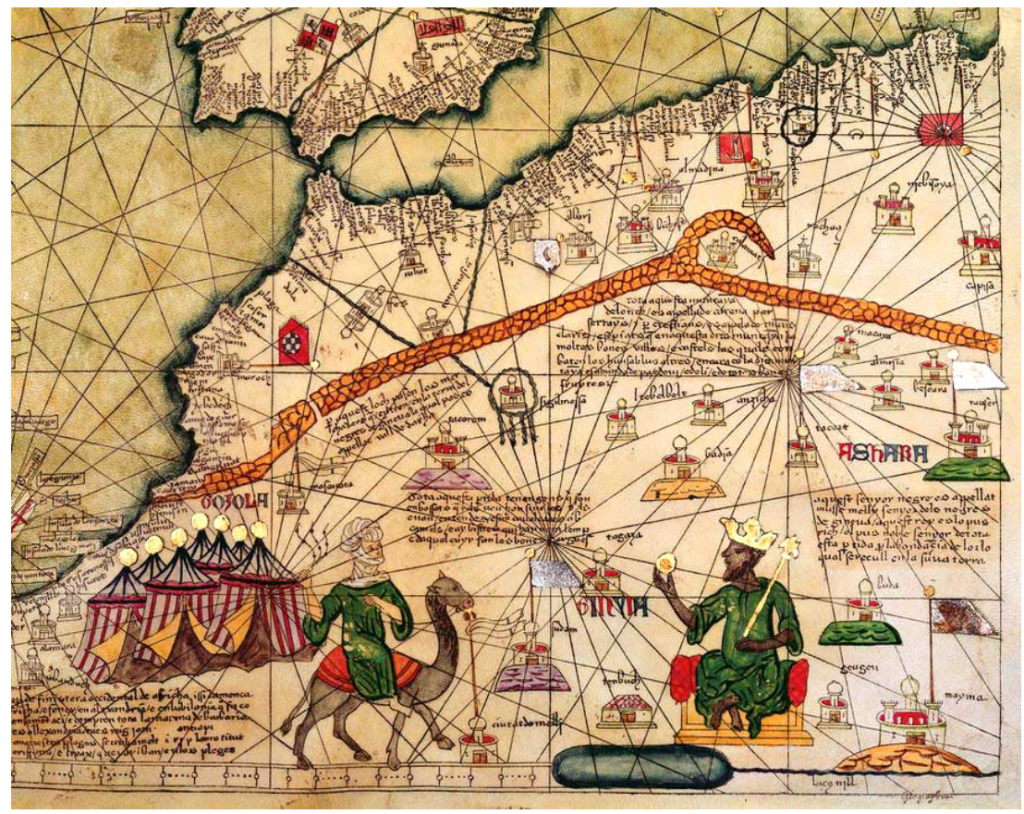
Michael Gomez: The Concept of “Movement” in Early West Africa: A Fitting Framework

We look forward to welcoming you at MSSC 2021! Please contact Alice Wolff at acw262@cornell.edu if you have any questions or if you need assistance.

All the best,

The Medieval Studies Student Colloquium Board of Directors
located in the traditional homelands of the Gayogo̱hónǫʼ (Cayuga Nation)

Thari Zweers, President
Alice Wolff, Vice-President
Lisa Camp, Treasurer
Sarah LaVoy, Secretary


Posted in Conferences | Leave a comment