Call for Papers – Haskins Society 2015 Conference

The Call for Papers for the 34th Annual Haskins Society Conference, 6-8 November 2015, held at Carleton College, is now available on the Haskins Society website at: http://www.haskinssociety.org/conference2015 with a deadline of July 17, 2015. We welcome proposals for individual papers and full sessions, and we will host two additional kinds of forums for scholarly discussion and exchange, one focused on new research or research in progress, the other on using the interdisciplinary expertise of Haskins attendees to explore problems in objects and manuscripts. See the Call for Papers for more details.

Posted in Call for Papers | Leave a comment

Reminder – Editorial Assistant for Speculum

EDITORIAL ASSISTANT for SPECULUM

speculumQUALIFICATIONS

Applicants must have strong computer and editorial skills, together with a background in any area of the humanities with a particular specialty in Medieval Studies, and must be available to start work in the fall of 2015 in Cambridge, MA. Strict attention to detail and excellent communication skills are particularly important. Reading ability in French, German, Spanish, Arabic, Latin and/or Italian is also highly desirable.

JOB DESCRIPTION

This internship will provide experience with the book review process of Speculum, the journal of the Medieval Academy of America. Duties include: sorting books; mailing books to reviewers; compiling information in a database from print books and online resources; transmitting information to the book review editors; receiving, organizing, and proofreading reviews for publication; and using an Excel-based management system (or other appropriate software).

This is a two-stage part-time paid internship. For the first three months the intern will sort and mail the review books while training under the current senior intern (12 hours per week). In January the intern will share the duties of the senior intern, including managing the database of reviews, working with the Book Review Editors, and coordinating and proofreading the reviews (up to 28 hours per week at a higher rate).

The position will begin in September 2015 and run for one year, with a possible renewal for a second year.

Preference will be given to applicants residing in the Boston area during the tenure of the job.

Submit cover letter, together with resume and up-to-date contact information for two referees to Sarah Spence, Editor, Speculum, sspence@themedievalacademy.org. Applications completed by June 15 will be given full consideration.

Posted in Jobs for Medievalists | Leave a comment

Call for Papers – New College Conference on Medieval and Renaissance Studies

The twentieth biennial New College Conference on Medieval and Renaissance Studies will take place 10–13 March 2016 in Sarasota, Florida. The program committee invites 250-word abstracts of proposed twenty-minute papers on topics in European and Mediterranean history, literature, art, music and religion from the fourth to the seventeenth centuries. In celebration of the conference’s twentieth anniversary, abstracts are particularly solicited for a thread of special sessions reflecting the conference’s traditional interdisciplinary focus: that is, papers that blur methodological, chronological, and geographical boundaries, or that combine subjects and/or approaches in unexpected ways. As always, planned sessions are also welcome. The deadline for all abstracts is 15 September 2015; for submission guidelines or to submit an abstract, please go to http://www.newcollegeconference.org/cfp.

Further anniversary events will include a retrospective panel on the conference’s forty-year history and a Saturday evening banquet. In addition, the second Snyder Prize (named in honor of the conference’s founder Lee Snyder, who died in 2012), will be given to the best paper presented at the conference by a junior scholar. The prize carries an honorarium of $400.

The Conference is held on the campus of New College of Florida, the honors college of the Florida state system. The college, located on Sarasota Bay, is adjacent to the John and Mable Ringling Museum of Art, which will offer tours arranged for conference participants. Sarasota is noted for its beautiful public beaches, theater, food, art and music. Average temperatures in March are a pleasant high of 77F (25C) and a low of 57F (14C).

More information will be posted on the conference website as it becomes available, including plenary speakers, conference events, and area attractions. Please send any inquiries to info@newcollegeconference.org.

Posted in Uncategorized | Leave a comment

Call for Papers – Animal Languages: Interspecies Communication in the Middle Ages

Call For Papers

Animal Languages:
Interspecies Communication in the Middle Ages

Editor:
Alison Langdon
Western Kentucky University

Until relatively recently, scholars have tended to focus on the symbolic valence of nonhuman animals, to read their behavior and characteristics as representative of explicitly human interests and concerns. With the advent of critical animal studies, new work has begun to critique traditional humanist scholarship by challenging any absolute distinction between the categories of “human” and “animal.” This has led to new readings of animals in the medieval world as living creatures rather than merely figurative representations of human experience and values.

Language provides a particularly rich locus for this exploration. Drawing on a tradition stretching back to Genesis, many medieval writers identified the capacity for language as evidence of possession of reason, that faculty which was seen to separate humans from all the rest of God’s creation. At the same time, many animals were understood to possess language of their own and in some cases to participate in human language. Although medieval philosophers generally deny intention and significance in animal vocalizations, a range of medieval textual traditions suggests that animals were commonly seen to communicate within and between species.

This interdisciplinary volume seeks articles of 6,000-9,000 words from all fields of medieval studies exploring language, broadly construed, as part of the continued interrogation of the boundaries of human and nonhuman animals in the Middle Ages. How, when, and with whom did animals talk in the medieval world? What kinds of communicative strategies did medieval people recognize in the animal world, and how were they interpreted? How was human meaning imposed on animal vocalizations? How does the use of animals as symbolic language in verbal and visual texts draw upon empirical understanding of nonhuman communication (body language, etc.)? How might nonhuman animals remind us of the embodied nature of language itself?

Proposals of 300-500 words should be submitted by e-mail to Dr. Alison Langdon at the following address: alison.langdon@wku.edu. Deadline for proposals is August 1, 2015. Notification of accepted proposals will be made by August 15, 2015, with complete chapters due by June 1, 2016. The volume has been invited for submission to Ashgate and Amsterdam University Press.

Posted in Call for Papers | Leave a comment

Jobs for Medievalists

https://academicpositions.harvard.edu/postings/6223Lc

Title Lecturer in Medieval Literature
School Faculty of Arts and Sciences
Department/Area English
Position Description The Department of English seeks applications for a lecturer in Medieval Literature. The appointment is expected to begin on August 1. The lecturer will be responsible for three courses, one of which will be the required survey “Arrivals: British Literature 700–1700,” and another two to be determined after consulting with the Curriculum Committee; one of those two may be an introductory Old English course. The position is for one year.Keywords:
faculty, instructor

Boston, Cambridge, Massachusetts, MA, Northeast, New England

Fields: Old English, Middle English, Medieval Drama, early British Literature.

Basic Qualifications Doctorate in English or related discipline ordinarily required by the time the appointment begins.
Additional Qualifications Competence in teaching Old English. Demonstrated excellence in teaching is desired.
Posted in Jobs for Medievalists | Leave a comment

Jobs for Medievalists

Cambridge University Library has just advertised three senior positions available within the Special Collections Division:

Head of Rare Books (salary range £38,511-£48,743)

Keeper of Manuscripts and University Archives (salary range £38,511-£48,743)

Deputy Head of Rare Books (salary range £34,233-£45,954)

Full particulars for all of these posts can be found at:

http://www.lib.cam.ac.uk/job

Applications close on Friday 26th June. Informal enquiries for the Rare Books posts are welcomed by Ed Potten (ejp62@cam.ac.uk) and for the Manuscripts and University Archives posts, by Jill Whitelock and Ben Outhwaite (jw330@cam.ac.uk and bmo10@cam.ac.uk).

Posted in Jobs for Medievalists | Leave a comment

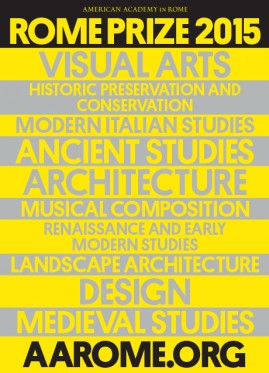
MAA News – 2015-16 Rome Prize

romeprizeThe 2015-16 Rome Prizes in Medieval Studies were recently awarded by the American Academy in Rome to two members of the Medieval Academy:

Eric Knibbs (Assistant Professor, Department of History, Williams College) was awarded the Millicent Mercer Johnsen Post-Doctoral Rome Prize, for a project titled “The Forging of Pseudo-Isidore.”

John Lansdowne (Department of Art and Archaeology, Princeton University) was awarded the Marian and Andrew Heiskell/Samuel H. Kress Foundation Pre-Doctoral Rome Prize, the first of a two-year Fellowship for dissertation research. His thesis is titled “Image Made Flesh: The Mosaic Man of Sorrows at Santa Croce in Gerusalemme in Rome.”

Posted in MAA Newsletter | Leave a comment

MAA News – MAA Grants Awarded

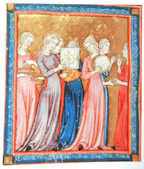
Golden Haggadah, Spain. c. 1320, British Library, Add. MS 27210, f. 15r, detail.

Golden Haggadah, Spain. c. 1320, British Library, Add. MS 27210, f. 15r, detail.

We are thrilled to announce the winners of the 2015 Dissertation Grants and the 2015 Schallek Awards.

Dissertation Grants:

The nine endowed and named Medieval Academy Dissertation Grants support advanced graduate students in medieval studies.

Hannah Elmer (Columbia University), “Sites of Life: Resuscitating and Baptizing Dead Infants in Central Europe, 1400-1600” (John Boswell Dissertation Grant)

Elizabeth Fischer (University of North Carolina at Chapel Hill), “The Representation of Space in Early Carolingian Gospel Books” (Grace Frank Dissertation Grant)

Bibiana Gattozzi (Princeton University), “The Hymns of Medieval Southern Italy: Music, Politics, and the Transformation of Local Liturgical Song” (E. K. Rand Dissertation Grant)

Justin Hastings (Loyola University Chicago), “‘Englishing’ Horace: the Influence of the Horatian Tradition on Old and Middle English Poetry” (Robert and Janet Lumiansky Dissertation Grant)

Alexandra M. Locking (University of North Carolina at Chapel Hill), “From Humble Handmaiden to Ruling Lady: Aristocratic Women in Ecclesiastical Reform and the Evolution of Female Lordship, 1049-1122 CE” (Helen Maud Cam Dissertation Grant)

Phillip Mazero (St. Louis University), “Frontier Politics: Veneto-Byzantine Relations, Civic Identity, and Imperial Hegemony, 697-1126” (Frederic C. Lane Dissertation Grant)

Christopher Mielke (Central European University), “Every Hyacinth the Garden Wears: The Archaeology of Medieval Queenship in Hungary (1000-1395)” (Charles T. Wood Dissertation Grant)

Sharon Rhodes (University of Rochester), “Turning the Tide: Fathoming the Flood in Old English Literature” (Hope Emily Allen Dissertation Grant)

Michelle Urberg (University of Chicago), “The New Vineyard: Origins, Development, and Flourishing of Birgittine Musico-Devotional Practices (c. 1350-1545)” (Etienne Gilson Dissertation Grant)

Schallek Awards:

The five Schallek Awards, given in collaboration with the Richard III Society – American Branch, support graduate students conducting doctoral research in any relevant discipline dealing with late-medieval Britain (ca. 1350-1500).

Taylor Joseph Aucoin (University of Bristol), “Shrovetide: Festival in Medieval and Early Modern Britain”

Gavin Fort (Northwestern University), “The Vicarious Middle Ages: Proxy Pilgrimage in Late-Medieval England, 1250-1550”

Jon-Mark Grussenmeyer (University of Kent), “Cardinal Kemp: The Last Lancastrian Statesman”

Lori Jones (University of Ottawa), “Changing Perceptions of the Origin (Geographical and Historical) of the Plague”

Sarah Elizabeth Wilson (Northwestern University), “Regenerative Mourning: Sorrow’s Social Uses in Late Medieval England”


Posted in MAA Newsletter | Leave a comment

MAA News – Schallek Fellow Named

RostadThe Medieval Academy of America, in collaboration with the Richard III Society – American Branch, is pleased to announce that the 2015 Schallek Fellowship has been awarded to Samuel Rostad (University of Notre Dame) for research on his dissertation, “Benedictine Popular Preaching in Late Medieval England, c. 1350-1500.” Sam will spend his Fellowship year in England studying manuscripts of Benedictine sermons.

In summarizing his dissertation, Sam writes: “For a group of regulars normally bound to silence, the Benedictines of late medieval England were a surprisingly vocal bunch. Although popular preaching from the thirteenth century on is generally associated with friars and seculars, a large body evidence – including surviving sermons, preaching licenses, and pastoral handbooks owned by monasteries – points to the active part Benedictines played in preaching to the laity in the fourteenth and fifteenth centuries. My dissertation will draw on this wide range of evidence to provide a thorough study of Benedictine popular preaching in late medieval England, a subject which has received some scholarly attention but has yet to be explored fully. A large part of the dissertation will focus on the surviving sermons themselves and what the Benedictines actually preached to the laity, the emphases and themes of their preaching. But I am also interested in a number of related questions which will provide a fuller discussion of the topic, for instance Benedictine use of pastoral aides in their sermons and their own views on preaching and their place in the pastoral life of medieval English society. In broadest terms, I hope this study will contribute to the discussion of the place of the Benedictines in late medieval religious life. As one of the most direct lines of contact between clergy and laity, as well as its increasing prominence from the thirteenth century on, preaching offers an excellent avenue into the study of Benedictine-lay religious interaction.”

Posted in MAA Newsletter | Leave a comment

MAA News – MAA @ Kalamazoo

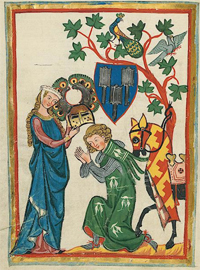
Cod. Pal. germ. 848, Große Heidelberger Liederhandschrift (Codex Manesse), Zürich, c.1300-c.1340, fol. 82v.

Cod. Pal. germ. 848, Große Heidelberger Liederhandschrift (Codex Manesse), Zürich, c.1300-c.1340, fol. 82v.

As always, the Medieval Academy will have a strong presence at Kalamazoo next week, sponsoring a Plenary lecture, two related sessions, and, through CARA and the GSC, three roundtables:

Plenary lecture: Friday, 8:30 AM, East Ballroom, Bernhard Center

Cary J. Nederman (Texas A&M University), “Modern Toleration through a Medieval Lens: A ‘Judgmental’ View”

Related sessions: Toleration of the Religious “Other” (Fri. 1:30 PM, Session 231, Valley II, LeFevre Lounge); Toleration and Council (Fri. 3:30 PM, Session 285, Valley II, LeFevre Lounge)

Graduate Student Committee session: The Public Medievalist: A Roundtable on Engaging the Public with the Middle Ages (Thurs. 3:30 PM, Session 115, Schneider 1140), followed by the GSC reception with cash bar (5:30 PM, Fetzer 2030)

CARA sessions: What’s New in Digital Humanities (A Roundtable) (Sat. 10 AM,Session 375, Schneider 1340); Medievalists in the Media (A Roundtable) (Sat. 1:30 PM, Session 433, Schneider 1340)

Further information is available on the IMC website http://wmich.edu/medieval/congress/sessions.html.

In addition, the Medieval Academy exhibit table will be staffed in shifts by Speculum editor Sallie Spence, Executive Director Lisa Fagin Davis, and Editorial Assistant Erin Pomeroy. We hope you will stop by to say hello.

Posted in MAA Newsletter | Leave a comment