Call for Papers – Medieval Anchorites in their Commumities

The 5th International Anchoritic Society Conference
Gregynog Hall, Newtown, Powys, Wales
April 22-24, 2014
Call for Papers
Medieval Anchorites in their Communities

Keynote Speakers:
Diane Watt (Surrey)
Tom Licence (UEA)
Eddie Jones (Exeter)

Much of the work undertaken in the field of medieval anchoritism, particularly within an English context, has concentrated on the vocation’s role within the history of Christian spirituality, its function as a locus of (gendered) sacred space and its extensive ideological cultural work. Indeed, in the hundred years since Rotha Mary Clay’s foundational 1914 study of  English anchoritism, The Hermits and Anchorites of England (1914), only sporadic attention has been given to the English anchorite as part of a community – whether social, intellectual, spiritual or religious – and as part of a widespread ‘virtual’ community of other anchorites and religious or ‘semi-religious’ figures spread across England and beyond.

In its focus on anchorites within their multifarious communities, this conference seeks papers attempting to unpick the paradox of the ‘communal anchorite’ and the central role often played by her/him within local and (inter)national political contexts, and within the arenas of church ideology, critique and reform.

It also seeks contributions for a Roundtable discussion on any aspect of Mary Rotha Clay’s work, its lasting legacies and the debt to her scholarship owed by new generations of scholars in the twenty-first century.

Offers of 20-minute papers are sought on any aspect of medieval anchorites in their communities including (but not restricted to):

•Spiritual circles
•Communities of discourse
•Anchoritic/lay interaction
•Anchorites and church reform
•Networks of patronage
•Networks of anchorites
•Anchorite case studies
•Anchoritic friendship groups
•Book ownership/ borrowing/ lending/ circulation
•Communities of texts: ‘anchoritic’ miscellanies/ textual travelling companions
•Textual translation, circulation and mouvance
•Non-insular influence
•Gendered communities

Abstracts of up to 500 words should be sent to Dr Liz Herbert McAvoy at anchorites2014@swan.ac.uk by Friday, August 30th 2013

Posted in Call for Papers | Leave a comment

MAA News – MAA Membership Renewals

Court of Common Pleas

Court of Common Pleas

Your membership in the Medieval Academy provides you with a growing list of benefits, ranging from the print and digital editions of Speculum, to our MAA News, Conference Calendar and Blog to book discounts and our annual meeting.

As important, your dues also help fund our growing program of support to younger scholars in the form of book subventions, research and travel grants and awards. In so many ways your dues help support medieval studies and humanistic scholarship at a time of shrinking resources and cultural change.

Paper renewal forms have now been mailed to all members who have not yet renewed their memberships online for 2013.  We hope that you will respond to this mailing at your earliest convenience or visit the website at: http://www.medievalacademy.org.
Please be as generous as you can.

Posted in MAA Newsletter | Leave a comment

MAA News – Dissertation Grant Matching Fund

Michael Psellos (left) with his student, Byzantine Emperor Michael VII Doukas., Mount Athos, Pantokrator Monastery, Codex 234, fol. 245a

Michael Psellos (left) with his student, Byzantine Emperor Michael VII Doukas., Mount Athos, Pantokrator Monastery, Codex 234, fol. 245a

The Freeman Foundation and its founder Weston Milliken have generously offered a $10,000 matching grant to the MAA to enable the Academy to award the John Boswell Dissertation Grant annually. To receive these funds, the MAA will need to raise $10,000 by June 30th. So far we have raised $3,775 of this total with $6,255 more to go.

A successful campaign would bring the number of MAA Dissertation Grants to eight annually, each named for a prominent medievalist. The Committee for Professional Development judges this award competition.

With the money already raised, the Boswell Grant is now biennial, and the first award will be made in 2013.

With $5 from each graduate student member of the MAA — or $50 from each Fellow — the MAA would easily meet this challenge. We urge them and everyone in between to make a donation in any amount to support graduate-student funding and to honor the legacy of John Boswell. Online donations can be made here.

John Boswell, a medieval historian who taught at Yale University from 1975 until his death in 1994 at age 47, was a pioneer in two fields that have developed significantly over the past two decades: the study of Christian-Muslim-Jewish relations, especially in the Iberian Peninsula, and GLBT studies. His scholarly legacy is found not only in his four monographs but also in the many students, both undergraduate and graduate, who followed him into the profession. Before his death he also served on the board of the Freeman Foundation, which has now offered this matching grant in his honor.

Posted in MAA Newsletter | Leave a comment

MAA News – MAA Book Subvention Program

"Modern Book Printing," fourth sculpture (of six) of the Berlin Walk of Ideas.

Modern Book Printing,” fourth sculpture (of six) of the Berlin Walk of Ideas.

The Medieval Academy Book Subvention Program provides funding of up to $2,500 to university or other non-profit scholarly presses to support the publication of first books by Medieval Academy members.

Applications for subventions will be accepted only from the publisher and only for books that have already been approved for publication. Eligible Academy members who wish to have their books considered for a subvention should ask their publishers to apply directly to the Academy, following the guidelines outlined at  http://www.medievalacademy.org/?page=MAA_Book_Subvention.

The deadline for applications is 1 May 2013.

Posted in MAA Newsletter | Leave a comment

MAA News – Speculum Books

shieldThe Medieval Academy is pleased to announce the revival of the Speculum Books series. As many will recall, this series is devoted to reprinting distinguished and influential articles from past issues of Speculum in paperback collections. The series aims to present the best of past scholarship, to bring new insight to the state of a scholarly field, and to trace most recent developments and desiderata for future research agendas.  Its audience includes both students and non-specialists.

Past volumes have included the highly successful and well received collections Studying Medieval Women, ed. Nancy F. Partner (1993); and Approaches to Medieval Art, ed. Lawrence Nees (1998).

Each new volume in the series will contain about six essays, an introduction and index, and will be supplemented with additional illustrations and select ancillary materials where appropriate. We plan initially to publish two volumes a year. The first volume announced is Liturgy and Art. It will be published later this year and will present an introduction by Susan Boynton and the following essays: Beth Williamson, “Altarpieces, Liturgy, and Devotion,” Speculum 79.2 (April 2004): 341-406; Carolyn Marino Malone, “The Rotunda of Sancta Maria in Dijon as ‘Ostwerk’,” Speculum 75.2 (April 2000): 285-317; Marchita B. Mauck,”The Mosaic of the Triumphal Arch of S. Prassede: A Liturgical Interpretation,” Speculum 62.4 (October 1987): 813-28; Meredith Parsons Lillich,”King Solomon in Bed, Archbishop Hincmar, the ‘Ordo’ of 1250 and the Stained-Glass Program of the Nave of Reims Cathedral,” Speculum 80.3 (July 2005): 764-801; Cynthia Hahn, “Seeing and Believing: The Construction of Sanctity in Early Medieval Saints’ Shrines,” Speculum 72.4 (October 1997): 1079-1106; and Margot Fassler,”Mary’s Nativity, Fulbert of Chartres, and the Stirps Jesse: Liturgical Innovation circa 1000 and Its Afterlife,” Speculum 75.2 (April 2000): 389-434.

The Speculum Books Board has been appointed for its prominence and cross-disciplinary expertise. It includes Susan Boynton (Columbia University); John Contreni (Purdue University); Colum Hourihane, chair (Princeton University); Wendy Scase (Birmingham University); and William Tronzo (University of California, San Diego).

Posted in MAA Newsletter | Leave a comment

MAA News – Speculum in Print

inprintNow that the digital version of Speculum, including the entire archive dating back to 1926, is available free to all members of the Medieval Academy, several members have already requested that we discontinue sending them print Speculum. This saves paper, printing, postage and shelf space.  Would you too like to opt out of the print?

This is not an automatic change. Members will continue to receive the print edition unless they positively opt out. We will be happy to accommodate any requests in writing, via email, specifying that a member no longer wants to receive print copies. Once this request is initiated, quarterly print copies of Speculum will no longer be mailed to that member. If a member decides to opt back in to the print version, the MAA also has to be notified in writing. We will, however, not be able to provide print copies retrospectively for those issues mailed during a member’s opt-out period.

To opt-out please email: info@themedievalacademy.org.

Posted in MAA Newsletter | Leave a comment

MAA News – Center for Digital Theology Receives Andrew W. Mellon Foundation Grant

James Ginther, Digital Theologist.

James Ginther, Digital Theologist.

Saint Louis University has received a grant of $933,000 over two years from the Andrew W. Mellon Foundation in support of software development of a tool for the editing of scholarly works. MAA member James Ginther, PhD, Director of the Center for Digital Theology and Professor of Medieval Theology, will lead the project. Prof. Ginther is also the chair of the MAA Digital Initiatives Advisory Board.

The grant will fund the development and implementation of a web-based application that will assist scholars in the creation and publication of scholarly digital editions. In addition, the grant will fund six editing projects as use cases, ensuring that the new digital tool will be able to facilitate different forms of scholarly research as well as communication from print to web-based to dynamic editions.

The project has been a dream of Ginther for more than a decade as he has sought to use computational methods to increase the efficiency and effectiveness of scholarly editing.

“Scholarly editing in the digital world is not just about using a computer,” Ginther notes. “A digital editing tool allows for scholars around the world to share both their data and findings. Perhaps its real power will be in the opportunity for scholars to move seamlessly from one editing method to another, so as to discover the best way to produce editions of the highest quality.”

Scholarly editions of texts are the bedrock of the Humanities, Ginther adds, and the more effective tools scholars have to create these works, the more rigorous the scholarship built upon them will be.

The Center for Digital Theology creates multimedia and electronic products that support research and teaching in Theological Studies. Housed in the Department of Theological Studies, the Center also seeks to support other disciplines in the Humanities.

The Center’s research has produced databases of medieval texts, 3DRT models of medieval churches, and databases that integrate text and image from the Middle Ages. The Center’s most recent project was T-PEN, an open-source tool for digital transcription, which was funded by the Andrew W. Mellon Foundation in 2010.

The Center is part of an international consortium that collaborates to build interoperable tools for the digital Humanities. Participating universities also include Stanford, Yale, Oxford, John Hopkins, Waterloo, Drew and Fribourg (Switzerland). For this project, Ginther also will work with scholars at Indiana University, the Arizona State University and York University in the United Kingdom.

Posted in MAA Newsletter | Leave a comment

MAA News – Fellows’ Elections 2013

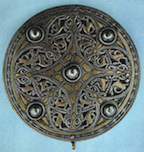
Strickland Brooch, 9th c., silver with gilt niello and blue glass.

Strickland Brooch, 9th c., silver with gilt niello and blue glass.

The Fellows’ Elections for 2013 have added five new Fellows and three new Corresponding Fellows to the roster of scholars who have made notable contributions to furthering the stated purposes of the Academy, which are “to conduct, encourage, promote and support research, publication, and instruction in medieval records, literature, languages, arts, archaeology, history, philosophy, science, life, and all other aspects of medieval civilization, by publications, by research, and by such other means as may be desirable.”

The new Fellows are Robert E. Bjork, (English, Arizona State University), Caroline Astrid Bruzelius (Art History, Duke University), Thomas Madden (History, St. Louis University), Teofilo Ruiz (History, University of California, Los Angeles) and Jocelyn Wogan-Browne (English, Fordham University). These bring the number of Fellows to 118 of the 125 total possible.

The new Corresponding Fellows are Wendy Davies (History, University College London), Claude Gauvard (History, L’Université Paris I, Pantheon-Sorbonne) and Dominique Iogna-Prat (History, École des Hautes Études en Sciences Sociales). Three new Corresponding Fellows will join the current 62, bringing the number of Corresponding Fellows to 65.

Formal inductions will take place at the Annual Meeting in Knoxville, on Saturday, 6 April at 4:00 PM in Hilton Knoxville Ballroom on the Mezzanine Level.

Posted in MAA Newsletter | Leave a comment

MAA News – MAA Election Results

Golden Haggadah, Spain. c. 1320, British Library, Add. MS 27210, f. 15r, detail.

Golden Haggadah, Spain. c. 1320, British Library, Add. MS 27210, f. 15r, detail.

The MAA elections closed on 15 January 2013. Almost 25 percent of the membership voted in the election, up 15% from last year and well above the average for learned society participation. Thank you!

The ballots will be presented at the Annual Business Meeting of the Medieval Academy in Knoxville on Friday, 5 April at 1:00 PM in Hilton Knoxville Ballroom on the Mezzanine Level.

The newly elected Officers are:
President: Richard W. Unger (History, University of British Columbia)
First Vice-President: William Chester Jordan (History, Princeton University)
Second Vice-President: Barbara Newman (English, Northwestern University)

The new Councillors are:
Susan Einbinder (Literature, University of Connecticut)
Thomas Madden (History, St. Louis University)
Elizabeth Morrison (Manuscript Studies, Getty Museum)
Anders Winroth (History, Yale University)

The new members of the Nominating Committee are:
Scott Bruce (History, University of Colorado, Boulder)
Ken Pennington (History, Catholic University)

The members of the Medieval Academy congratulate their new officers and councillors, who will begin their terms at the close of the 2013 Annual Meeting, and the new members of the Nominating Committee, who will begin their terms at their meeting during the 2013 Annual Meeting.

The members also extend thanks to all those who generously stood for election.

Posted in MAA Newsletter | Leave a comment

MAA News – President’s Column


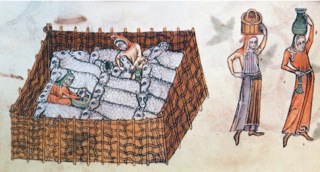
From the Luttrell Psalter. London, British Library, MS Add. 42130, fol. 163v.

From the Luttrell Psalter. London, British Library, MS Add. 42130, fol. 163v.

Occupy the Middle Ages


Maryanne Kowaleski 


Peasants — a catch-all term for rural dwellers who made their living by farming land or raising livestock — represented about 80 to 90 percent of the population during the Middle Ages, but they rarely receive the scholarly attention they deserve. Twice in the last six years, I have had the opportunity (as part of searches for a new medievalist colleague at Fordham) to read dozens of syllabi for medieval survey courses. Both times I have been struck by how few of these syllabi even contained the word “peasant” or “agriculture.” Royalty, aristocrats, clergy, heretics, mystics, barbarians, Muslims, Jews, Crusaders, merchants, and even marginal people such as lepers and criminals make the cut, but not the social group responsible for the vast majority of the pre-industrial economy. Medieval peasants cannot rise up and shout “We are the 90 percent!” so I want to use my final presidential column to shout out on their behalf, even though they do not quite reach the 99 percent of the Occupy Wall Street movement.


I have received varied answers when asking teachers why they spend so little class time on the peasantry. Some claim to “cover” the subject (in, for example, a primary-source reading on the Great Famine, or in introducing the Commercial Revolution and growth of towns). Others answer that with only fifteen weeks in the semester, they had to make hard choices, and decided it was more important to expose students to the medieval roots of contemporary issues such as women and work or medieval multiculturalism. Still others suggest that the powerlessness of illiterate peasants make them easier to omit than kings or popes. And finally, some respond that the urban and suburban backgrounds of most of our students render the agricultural world of the medieval peasantry too foreign and seemingly irrelevant. All these are reasonable responses, but none justifies virtually obliterating such a crucial component of medieval life. Peasants were individually powerless but collectively powerful — witness the impact of new agricultural technologies on the food supply and urbanization, or peasant revolts, and even the eventual waning of serfdom. And peasants are most certainly not irrelevant in our global world, in which income inequality, agricultural productivity, and land reform are compelling and unresolved concerns.


Graduate students also need to encounter peasants in our courses. They too often have little idea of the life of the working majority in the Middle Ages. Some have been introduced to the classic manorial system of England and northern France, but few have heard anything about sharecropping peasants in Tuscany or transhumance in Spain and the Alps. As a result, graduate students are rarely interested in researching anything to do with agriculture; the cultural turn has been bad for peasants. Of almost two hundred applications that I read between 2007 and 2012 for my school’s openings in medieval history, none concentrated on peasants or agriculture. I’d like to think that the focus on cultural and intellectual history in our most recent search precluded applications from those working on rural economy and society, but given the proclivity for recent PhDs to apply widely in the field, I may be wrong. On the upside, for reasons I am hard-pressed to explain, scholarly interest in the medieval peasantry has not waned nearly as much in Europe as it has in North America.


Perhaps Europeans know how fascinating and relevant medieval peasants can be and have discovered the rich resources available to teachers in this field. New textbooks that highlight social history can provide good coverage. A recent spate of secondary works that draw on documentary evidence with “disciplined imagination” have also been written with a student audience in mind. Abundant printed translations of primary sources — ranging from court rolls, account rolls, lists of customs, rentals, and charters to archaeological and demographic sources — are readily available to undergraduates seeking material for a senior thesis. These resources make it easy to integrate sections on the peasantry into classes on women, family, lay devotion, crime, and national surveys of, for example, medieval England. For graduate students, the opportunities for comparative work, particularly between northern and southern Europe, or across the English Channel, have tremendous potential. There are also many possibilities for studies that explain regional differences in inheritance regimes, or images of the peasant in medieval literary or religious texts, or the material culture of the peasantry as evident in inventories, references to pledged goods, and archaeological evidence. In both our teaching and our research, we can and should make more use of this rich trove of scholarship and sources about the 90 percent on whom all the rest of medieval society and culture so depended.

Posted in MAA Newsletter | Leave a comment