Call for Papers – 16th International Congress of Medieval Canon Law

CALL FOR PAPERS
16th International Congress of Medieval Canon Law
Saint Louis University
19 – 25 July 2020

The 16th International Congress of Medieval Canon Law, co-sponsored by ICMAC (Iuris Canonici Medii Aevi Consociatio/International Society of Medieval Canon Law) and Saint Louis University, will take place on the university’s campus in St. Louis, Missouri, USA, from Sunday, July 19, through Saturday, July 25, 2020.  These quadrennial Congresses, alternating sides of the Atlantic, constitute the premier academic conference in the field of medieval canon law.  Traditionally they have drawn scholars from many countries, including not only medievalists and canonists, but also those who study related fields, such as Western jurisprudence and legal norms, Roman law, ecclesiastical and papal history, theology and biblical exegesis, manuscript studies, and the history of culture, society, and ideas.

ICMAC and the Congress organizers, Steven A. Schoenig, S.J., and Atria A. Larson, are pleased to announce the following plenary speakers for the Congress:

Professor Bruce Brasington (West Texas A&M University, USA)

Prof. Dr. Gisela Drossbach (University of Augsburg, Germany)

Professor Mia Korpiola (University of Turku, Finland)

Dr. Titus Lenherr (Diocese of Sankt Gallen, Switzerland)

Professor Rob Meens (Utrecht University, The Netherlands)

Professor Kenneth Pennington (The Catholic University of America, USA)

Professor Robert Somerville (Columbia University, USA)

The Academic Committee welcomes proposals on any topic touching upon medieval canon law, including, but not limited to, the following themes:

  • Texts and Jurisprudence
  • The Influence of the ius commune on the Western Legal Tradition and International Law
  • Canon Law and Local Ecclesiastical History
  • Canon Law, Theology, and Pastoral Care
  • Medieval Law in Comparative Perspective

The chronological focus of the Congress is typically on c. 500 – c. 1500, but select papers or sessions may also be accepted on Early Christian Canon Law and, in light of the 500th anniversary of Martin Luther’s burning of the Corpus iuris canonici, Canon Law and the Reformation.

The Academic Committee invites proposals for individual 20-minute papers or complete sessions of four 20-minute papers.  Papers may be delivered in the following languages:  English, French, German, Italian, or Spanish.  Scholars not presenting in English are encouraged to utilize PowerPoint presentations and/or to provide written English summaries of their papers.

Regular sessions will not feature papers on text-editing projects.  Updates on critical editions or other text-editing projects will be showcased in a poster session during the Congress.  Scholars who wish to present on such projects may submit two proposals if they desire, one for the text-editing poster session and another for a regular session.

All proposals must include, for each participant, the following information:  name (with title); position and institutional affiliation; email address; postal address; language of presentation; working title of paper (or poster presentation); and a 200-250 word abstract of the paper (or poster project).  Proposals for papers, poster presentations, or sessions should be submitted through a Google Form on the Congress website (icmcl2020.wordpress.com).

Proposals are due on August 15, 2019.

More information about the Congress, its sessions, special instructions for the poster session, accommodations, travel, and Saint Louis University will eventually be found on the Congress website (icmcl2020.wordpress.com).  Questions may be directed to icmcl2020@gmail.com.
Posted in Call for Papers | Leave a comment

The Arthur H. Dadian and Ara Oztemel Chair of Armenian Art at Tufts University and the Mary Jaharis Center for Byzantine Art and Culture at Hellenic College Holy Cross in Brookline, MA, are pleased to announce our next East of Byzantium workshop. Friday, March 29, 2019, 10:00 am–1:00 pm Harvard Faculty Club, 20 Quincy Street, Cambridge, MA A Medieval Armenian Text in its Eurasian Context A workshop for students focusing on a history of the Islamic conquest and rule of Armenia by the 8th-century Armenian priest Łewond. Led by Sergio La Porta, Fresno State, and Alison M. Vacca, University of Tennessee, Knoxville Advance registration required. Registration closes March 26. Additional information and registration at https://eastofbyzantium.org/upcoming-events/a-medieval-armenian-text-in-its-eurasian-context/. East of Byzantium is a partnership between the Arthur H. Dadian and Ara Oztemel Chair of Armenian Art at Tufts University and the Mary Jaharis Center for Byzantine Art and Culture at Hellenic College Holy Cross in Brookline, MA, that explores the cultures of the eastern frontier of the Byzantine empire in the late antique and medieval periods. For questions, contact Brandie Ratliff, Director, Mary Jaharis Center for Byzantine Art and Culture (mjcbac@hchc.edu).

The London International Palaeography Summer School (LIPSS) at the Institute of English Studies, University of London is now accepting applications for its summer programme. Applications are accepted on a rolling basis until a course is full.

The London International Palaeography Summer School is a series of intensive courses in Palaeography and Manuscript Studies. Courses range from a half to two days duration and are given by experts in their respective fields from a wide range of institutions.

Courses fees range from Half-Day fees of £50 (standard) and £45 (student), to Five-Day fees of £450 (standard) and £400 (student). The full breakdown of fees can be found here.

Posted in Summer Programs | Leave a comment

East of Byzantium Workshop, March 29, 2019

The Arthur H. Dadian and Ara Oztemel Chair of Armenian Art at Tufts University and the Mary Jaharis Center for Byzantine Art and Culture at Hellenic College Holy Cross in Brookline, MA, are pleased to announce our next East of Byzantium workshop.

Friday, March 29, 2019, 10:00 am–1:00 pm
Harvard Faculty Club, 20 Quincy Street, Cambridge, MA

A Medieval Armenian Text in its Eurasian Context
A workshop for students focusing on a history of the Islamic conquest and rule of Armenia by the 8th-century Armenian priest Łewond. Led by Sergio La Porta, Fresno State, and Alison M. Vacca, University of Tennessee, Knoxville

Advance registration required. Registration closes March 26. Additional information and registration at https://eastofbyzantium.org/upcoming-events/a-medieval-armenian-text-in-its-eurasian-context/.

East of Byzantium is a partnership between the Arthur H. Dadian and Ara Oztemel Chair of Armenian Art at Tufts University and the Mary Jaharis Center for Byzantine Art and Culture at Hellenic College Holy Cross in Brookline, MA, that explores the cultures of the eastern frontier of the Byzantine empire in the late antique and medieval periods.

For questions, contact Brandie Ratliff, Director, Mary Jaharis Center for Byzantine Art and Culture (mjcbac@hchc.edu).

Posted in Announcements | Leave a comment

Mary Jaharis Center Lecture, March 28, 2019

The Mary Jaharis Center for Byzantine Art and Culture at Hellenic College Holy Cross in Brookline, MA, is pleased to announce the spring lecture in its 2018–2019 lecture series:

Thursday, March 28, 2019, 6:15–7:45 pm
Harvard Faculty Club, 20 Quincy Street, Cambridge, MA

Dropping a Medieval Chronicle (and Putting it Back Together): Reading the Byzantine Chronography of Theophanes and George the Synkellos through Manuscripts, Maps, and Text Analysis
Jesse W. Torgerson, Wesleyan University

Jesse W. Torgerson reconsiders the Chronography of George the Synkellos and Theophanes and looks to rejuvenate study of medieval chronicles.

Details at https://maryjahariscenter.org/events/dropping-a-medieval-chronicle-and-putting-it-back-together.

Mary Jaharis Center lectures are co-sponsored by Harvard University Standing Committee on Medieval Studies.

For questions, contact Brandie Ratliff, Director, Mary Jaharis Center for Byzantine Art and Culture (mjcbac@hchc.edu).

Posted in Announcements | Leave a comment

MAA News – 2019 Annual Meeting Roundup, part 1: The Program

The 2019 Annual Meeting (University of Pennsylvania, 7-9 March) was a great success, with more than 500 attendees, four plenary sessions, more than 200 papers, receptions at the Penn Museum of Art and Archaeology and at the Philadelphia Museum of Art, hands-on workshops, pop-up manuscript exhibits, and more. The full program, which was centered on idea of “The Global Middle Ages,” is available here.
The opening plenary, “Interconnection and Separation: Medieval Perspectives on a Modern Problem,” was delivered by Nora Berend (University of Cambridge), who charged the attendees to think carefully about the use of the term “Global Middle Ages.” MAA President David Wallace (University of Pennsylvania) focused his plenary lecture on Medieval Studies in the 1930s, discussing the work of medievalists in Europe and in the United States and considering how their work reflected the time in which they lived and foreshadowed the uses (and mis-uses) of medieval history and narrative then and now. The Fellows’ Plenary was delivered by Father Columba Stewart (Hill Museum and Manuscript Library (HMML), and St. John’s School of Theology and Seminary), who spoke movingly and powerfully about the critical work being carried out by HMML to digitize, preserve, and protect ancient libraries in the Middle East and other war-torn regions of the world.

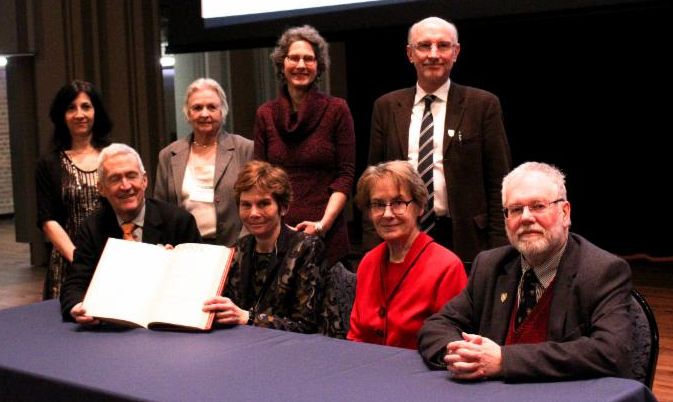
Newly-inducted Fellows of the Medieval Academy of America (L-R, T-B): Sara Lipton, Susan Mosher Stuard, Amy Remensnyder, Walter Pohl, Thomas Kelly, Celia Chazelle, Linne Mooney, and Keith Busby

In the CARA plenary roundtable “Working in the Middle: Writing the Global Medieval Textbook,” five scholars presented their work on a forthcoming textbook that will introduce students to a wider view of what we mean when we talk about the Middle Ages – broadening the traditional scope of European medieval studies to include Africa, Byzantium, the Middle East, India, the Mediterranean, and Asia. The K-12 Committee session addressed questions of how K-12 educators can participate in these globalizing efforts. The Graduate Student Committee and the Inclusivity and Diversity Committees’ joint session “MOC (Medievalists of Color), Graduate Students, and Race: Classes We Teach, Classes We Take” addressed the importance of developing curricula that are both expansive and inclusive, and the necessity of outreach to and mentoring of students of color.

Mentoring was a thread that ran throughout the conference, with several dozen mentoring pairings arranged by the Graduate Student Committee and a new event on Friday morning, a Mentorship Reception co-sponsored by the Inclusivity and Diversity Commitee and by the Graduate Student Committee. We hope to continue to host this event in the future. The annual meeting of the Committee on Centers and Regional Associations (CARA) took place on Sunday morning and was attended by more than forty CARA delegates, each of whom was there representing their program or department. The morning began with a roundtable that continued the valuable discussions of the previous days, “Taking Up the Global Challenge: Expanding the Purview of Medieval Studies–Questions, Solutions, Innovations.”

The Annual Meeting was supplemented by a graduate student workshop centered on digitized manuscripts; several “pop-up” manuscript exhibits curated by graduate students; five hands-on workshops; and a lightening-round session showcasing more than a dozen digital humanities projects.

We are extremely grateful to Lynn Ransom, Julia Verkholantsev, the Program Committee, the graduate student volunteers, and the University of Pennslvania staff for their work in organizing and implementing such a splendid meeting. We look forward to seeing you at UC Berkeley next year!

Posted in MAA Newsletter | Leave a comment

MAA News – 2019 Annual Meeting Roundup, part 2: Council Decisions

The Council of the Medieval Academy held its annual meeting on Thursday morning, March 7, and, among other items of business, considered the report of the Centennial Committee. With the submission of a final report and list of recommendations, the Centennial Committee has completed its charge and has been formally dissolved. We are all extremely grateful for their three years of hard work and valuable service. A variety of Centennial Committee recommendations will be considered by the Council annually for the next several years and will be publicly announced if and when they are approved.

By-Laws Changes: Based on Centennial Committee recommendations, several changes to the By-Laws were approved and will be implemented over the course of the next year. The specifics will be announced in the coming months.

Support for Independent, Contingent, and Academic-Adjacent Scholars: The Council adopted a Position Paper composed by Laura Morreale and others laying out the issues facing medievalists who are, by choice or necessity, not employed as full-time faculty. The Position Paper proposes a visionary way forward. The Council has charged President Ruth Mazo Karras with the formation of an Ad Hoc Committee on Professional Pathways to study the issue and propose a series of recommendations to the Executive Committee and Council over the course of the next year. In the coming months, you will hear much more about this initiative to support our colleagues who are independent, contingent, or academic-adjacent.

Posted in MAA Newsletter | Leave a comment

MAA News – 2020 Annual Meeting Call for Papers

The 95th Annual Meeting of the Medieval Academy of America will take place on the campus of the University of California, Berkeley on 26-28 March 2020. The meeting is jointly hosted by the Medieval Academy of America, the Program in Medieval Studies of the University of California, Berkeley, and the Medieval Association of the Pacific. The Call for Papers is online here. Submissions are due on 1 June.
Posted in MAA Newsletter | Leave a comment

MAA News – MAA@Kzoo

As always, the Medieval Academy of America will have a strong presence at the International Congress on Medieval Studies in Kalamazoo (May 9-12).
1) The Friday morning plenary, sponsored by the Medieval Academy, will be delivered by Bissera V. Pentcheva (Stanford University), “Icons of Sound and the Exultet Liturgy of Southern Italy” (Session 151, Friday, 8:30 AM, Bernhard, East Ballroom). Two related sessions organized by Prof. Pentcheva will take place on Friday at 1:30 PM (Session 236) and 3:30 PM (Session 294). Both sessions will take place in Sangren 1750.

2) On Friday at 3:30 PM, the Graduate Student Committee is sponsoring a roundtable titled “Stepping into the Professions: Tips on Navigating a Variety of Career Paths for Medievalist Graduate Students and Early Career Scholars” (Session 285, Fetzer 2016). The GSC reception will take place immediately afterwards in the same room.

3) On Thursday at 1:30 PM, the Committee for Centers and Regional Associations (CARA) is sponsoring a roundtable on “Teaching a Diverse and Inclusive Middle Ages” (Session 58, Fetzer 1005).

4) The annual CARA Luncheon will take place on Friday at noon (Bernhard, President’s Dining Room). We hope you will attend as a representative of your institution, center, program, or institution. There is no fee to attend, but pre-registration is required. All are welcome! Click here to register.

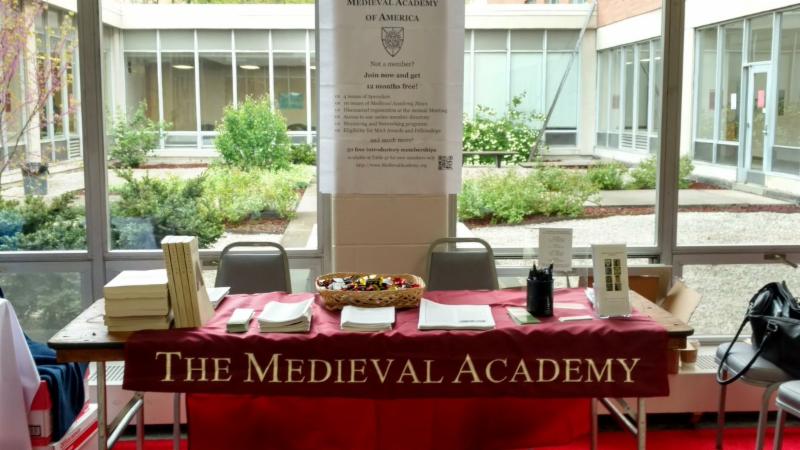
5) Finally, we invite you to stop by our staffed table in the exhibit hall to introduce yourself, transact any Medieval Academy business you may have, or pick up some chocolate to keep you going during those long afternoon sessions.

See you at the ‘Zoo!

Posted in MAA Newsletter | Leave a comment

MAA News – Upcoming Deadlines

Interoperability and Medieval Manuscripts: A Digital Humanities Workshop

The Medieval Academy of America is now accepting applications for “Interoperability and Medieval Manuscripts,” a three-day digital humanities workshop co-sponsored by The Medieval Academy and the Beinecke Rare Book and Manuscript Library at Yale University. Co-taught by Benjamin Albritton (Computing Info Systems Analyst, Stanford University Libraries) and Lisa Fagin Davis (Executive Director, Medieval Academy of America), the workshop will take place at the Beinecke Rare Book and Manuscript Library from 9-11 July 2019.

Participants in this three-day intensive workshop will be introduced to the International Image Interoperability Framework (IIIF) in combination with shared-canvas viewers and annotation servers, learning how this technology can facilitate new methodologies in manuscript and art history research. Working with their own images, participants will 1) upload their images into a IIIF server (if they aren’t already served by a IIIF-compliant platform); 2) present the images in a shared-canvas viewer; 3) work with the instructors to develop annotations and tags in keeping with their research project. Due to physical space limitations, the course is limited to twelve participants. Applications are welcomed from medievalists at all levels and will be judged primarily on the potential that interoperable images hold for the applicant’s research project or professional goals. Participants should already have access to or possession of the images they will be working with, if the images are not already online and IIIF-compliant. The workshop is tuition-free, but participants are responsible for travel, lodging, and incidental expenses. To help offset these costs, all participants traveling and staying overnight for the workshop will receive a $300 stipend courtesy of the Beinecke Rare Book and Manuscript Library.

Applications must be received by June 1. Click here for more information and to apply.

MAA/CARA Summer Scholarships

The MAA/CARA Summer Scholarships support graduate students and especially promising undergraduate students participating in summer courses in medieval languages or manuscript studies. Applicants must be members of the Medieval Academy in good standing with at least one year of graduate school remaining and must demonstrate both the importance of the summer course to their program of study and their home institution’s inability to offer analogous coursework. Click here for more information and to apply. The due date for applications has been extended to 30 March.

MAA Book Subventions

The Medieval Academy Book Subvention Program provides grants of up to $2,500 to university or other non-profit scholarly presses to support the publication of first books by Medieval Academy members. The deadline for proposals is 1 May 2019. Click here for more information.

Posted in MAA Newsletter | Leave a comment

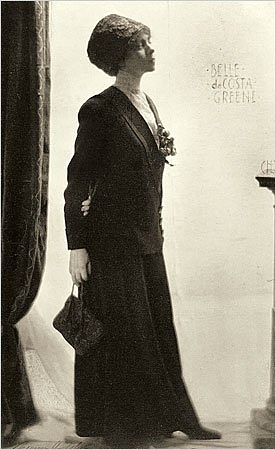
MAA News – Inaugural Belle da Costa Greene Award

We are very pleased to announce that the inaugural Belle da Costa Greene Award has been presented to Tarren Andrews (University of Colorado, Boulder).

In 2018, the Medieval Academy of America established the Belle da Costa Greene Award to support the work of a medievalist of color. Da Costa Greene (1883-1950) was a prominent American art historian and the first librarian of the Pierpont Morgan Library in New York. She was also the second woman, and first person of color, to be elected a Fellow of the Medieval Academy. Throughout her career, she passed as a white woman. This award explicitly acknowledges that the Medieval Academy of America has been, and remains, enmeshed in a world where racial ideologies have material effects that are often deleterious-for individuals and for scholarship alike.

Tarren Andrews’s project, “Indigeneity Outside Indigenous Studies: Encounters with Indigenous Futures and Medieval Pasts,” responds to the challenges of practicing an intellectually rigorous and responsible medieval studies in a racialized world by offering a truly global approach to medieval studies. The Inclusivity and Diversity Prize Committee is impressed by the project’s deeply historical approach to the concepts of time that arise at the intersections of medieval and indigenous pre- and postcolonial studies.

Andrews will use the award to travel to an indigenous studies conference in New Zealand, with the objective of interrogating the methodologies and the ethical positions of Indigenous and Eurocentric studies. Andrews’s project promises to enlarge our definitions of the “medieval,” and thereby to expand our understanding of our past, present, and future worlds. This is a project we are honored to support.

Click here to support the Belle da Costa Greene Fund in support of medievalists of color.

Posted in MAA Newsletter | Leave a comment